
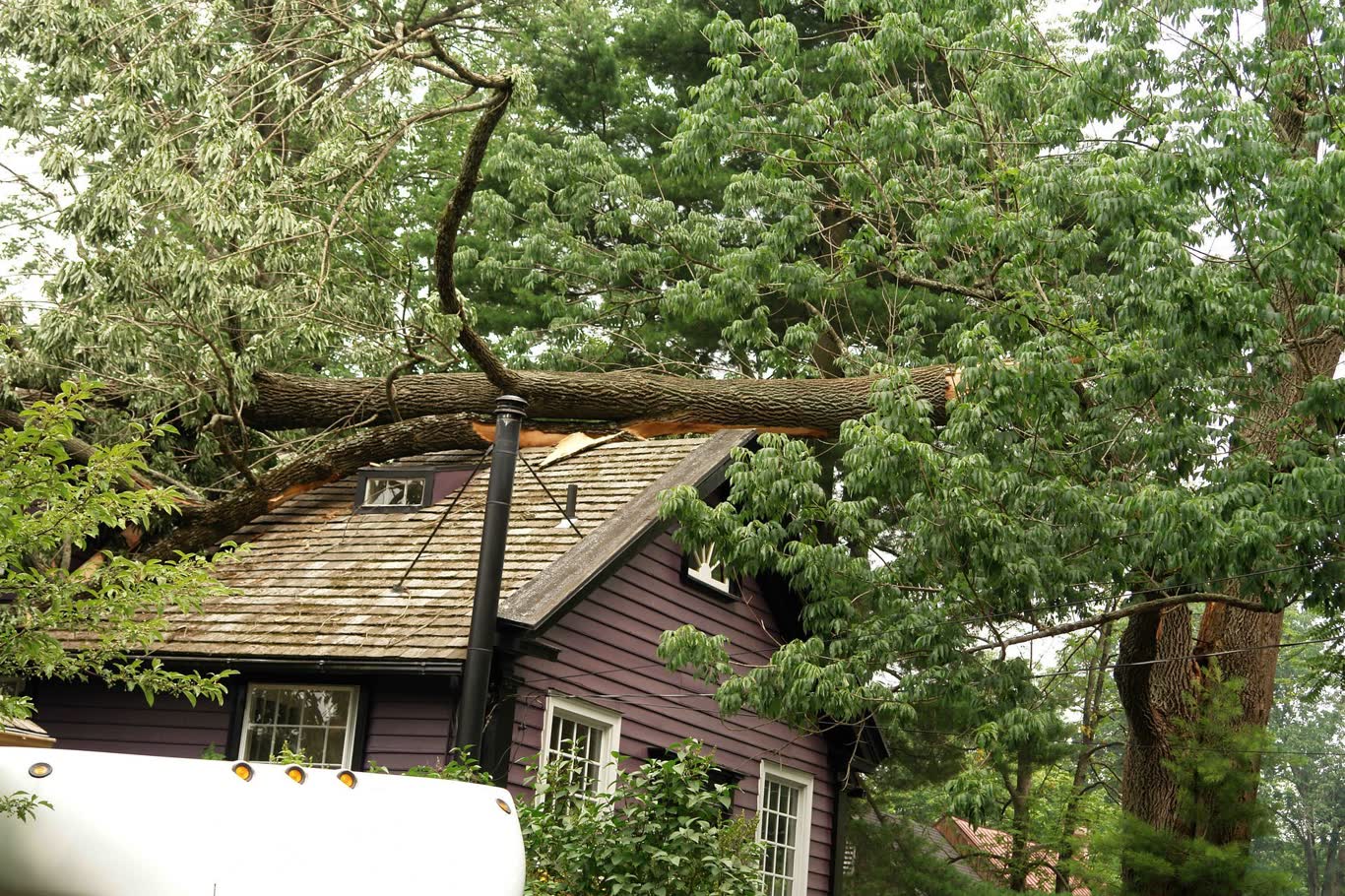
Hurricane season on the Treasure Coast runs through November, and most named storms pass close enough to test every roof in St. Lucie, Martin, Palm Beach, and Indian River counties — whether or not your home takes a direct hit. Knowing what to look for, and what to leave to a professional, keeps you safe and keeps your insurance claim on solid ground.
What Should You Check From the Ground After a Storm?
Most of the damage worth documenting is visible without ever leaving the yard. Walk the perimeter of your home and look for:
- Missing or displaced shingles or tiles — bare patches of roof deck or underlayment showing through
- Granules collecting in gutters or downspouts — a sign of impact damage to asphalt shingles, even when the shingles themselves look intact
- Bent, lifted, or missing flashing around the chimney, vent pipes, and roof edges
- Debris on the roof surface — branches, palm fronds, or roofing material from elsewhere that landed during high winds
- Sagging or uneven roof lines visible from across the street
- Gutters pulled away from the fascia or hanging loose after wind load
Binoculars let you check ridge lines and higher slopes without a ladder. A drone or a neighbor's upstairs window can help on a two-story home.
What Interior Signs Point to Roof Damage?
Roof damage doesn't always show from outside first. Inside the house, check:
- Ceiling stains or discoloration, especially new ones that weren't there before the storm
- Peeling paint or bubbling drywall near ceiling lines or around light fixtures
- A musty smell in upstairs rooms or closets, which can signal moisture intrusion before a stain appears
- Attic access — if you can safely check, look for daylight coming through the roof deck, damp or matted insulation, and water staining on rafters
Catching an interior sign early, before a small leak becomes a ceiling collapse, is one of the most valuable things a homeowner can do in the days after a storm.
Is It Ever Safe to Get on the Roof Yourself After a Storm?
Generally, no. Storm cleanup is one of the more common causes of fall injuries in the days after a hurricane, and a roof is the worst place to find that out. Wet or wind-loosened shingles, hidden soft spots in the decking, and debris underfoot all make an untrained climb the wrong move — even for a roof that looks fine from the ground.
A licensed, insured roofer carries the fall-protection equipment and knows how to walk a storm-damaged roof surface without making the damage worse. If you must get a closer look yourself, stay off the roof and use a phone camera zoomed in from a stable position on the ground or from a window.
How Should You Document Storm Damage for Insurance?
Florida insurers evaluate hurricane roof claims closely, and documentation from before any cleanup or repair is the strongest evidence you can provide.
- Photograph everything first. Every sign from the checklist above, from multiple angles, before you move debris or attempt a temporary fix.
- Note the date and the storm. Tie your photos to a specific named storm or wind event whenever possible.
- Don't discard damaged material until your contractor or adjuster has had a chance to see it, if it's safe to leave in place.
- Get a written inspection report from a licensed contractor. This carries more weight with adjusters than homeowner photos alone.
- Contact your insurer promptly to open the claim — most policies set a deadline for reporting storm damage.
For the step-by-step claims process, including hurricane deductibles and homeowner rights, see our Florida roof insurance claim guide.
Storm Damage vs. Everyday Wear
Not everything you find after a storm is storm-caused. Curling shingles, faded color, and granule loss that's spread evenly across the whole roof often point to age and UV wear rather than a specific wind event — and insurers draw a hard line between the two. For the full breakdown of how Florida adjusters tell the difference, see our guide to storm damage vs. normal wear.
What Dalton Roofing Recommends After Every Storm
Once you've completed a safe ground-level and interior check:
- Call (561) 586-6646 or request a free roof inspection — sooner is better, before the post-storm scheduling rush fills up.
- If you have active leaking or exposed decking, ask about storm & emergency roof repair for temporary protection until permanent repairs can be scheduled.
- Keep your photos and any written estimate together in one place for your insurance file.
- Don't sign anything with a door-to-door storm chaser. Verify a Florida DBPR license before any contractor sets foot on your roof.
Dalton Roofing holds Florida State Certified Roofing Contractor license #CCC1330147 and has served Port St. Lucie and the Treasure Coast since 2004, with 24/7 storm response.