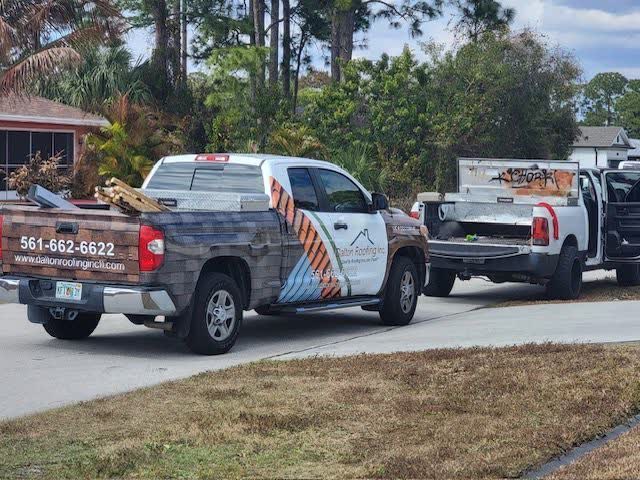
Commercial Roofing
for the Treasure Coast
South Florida's flat roofs, TPO membranes, modified bitumen systems, and metal roofing take a beating from hurricanes, salt air, and relentless sun. Since 2004, Dalton Roofing has kept commercial properties watertight across the Treasure Coast and Palm Beach County — on time, to code, and without surprises.
The Right Roof System for Your Building
Not every commercial flat roof is the same situation — substrate condition, drainage slope, occupancy type, and budget all drive the system selection. Dalton Roofing installs four primary commercial systems and specifies the right one for your building rather than defaulting to whatever's fastest. Here is what each system actually involves.
TPO Roofing — Mechanically Attached & Fully Adhered
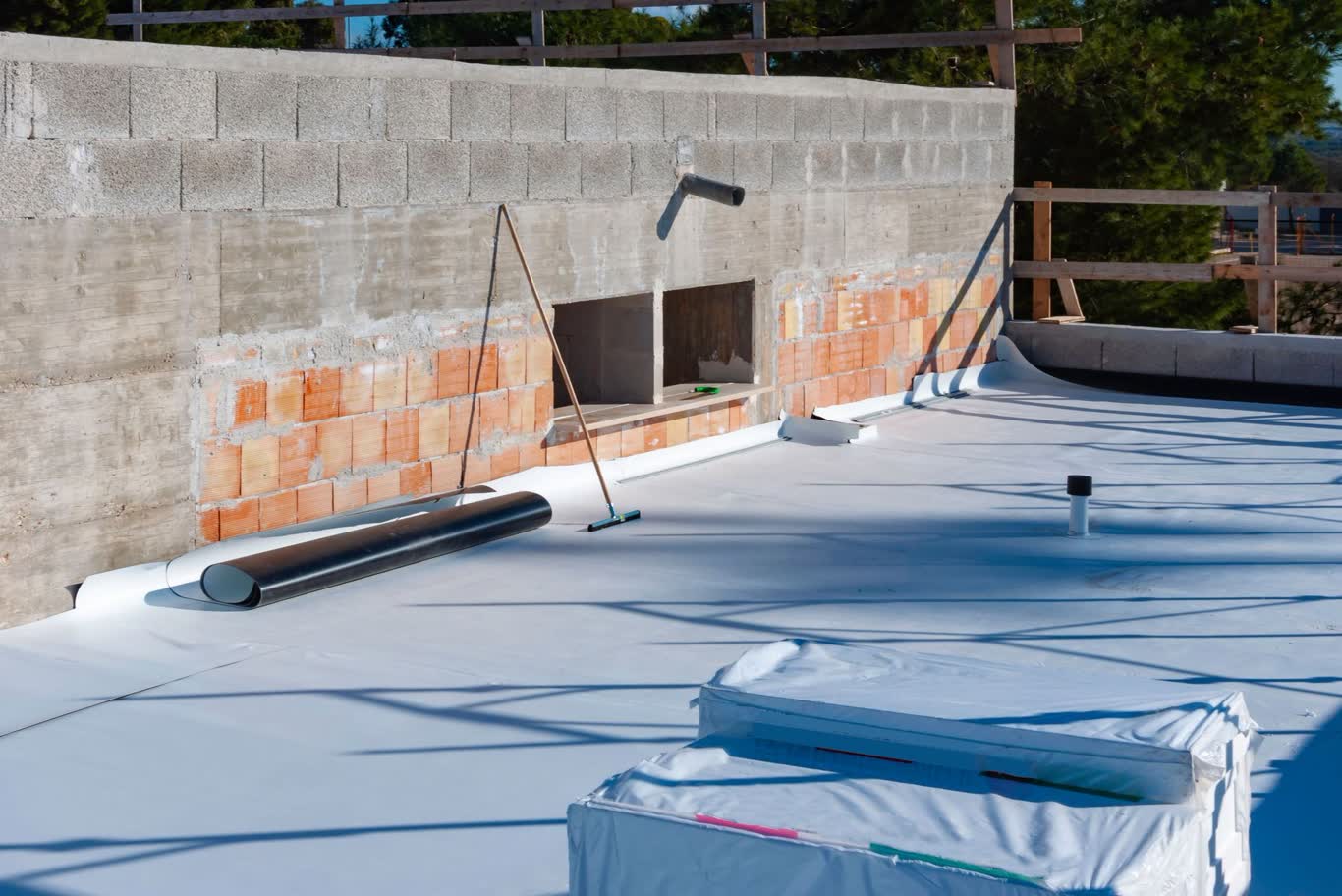
Thermoplastic polyolefin (TPO) has become the dominant single-ply membrane for South Florida commercial roofing for good reason: it combines high reflectivity (reducing cooling loads in our climate), excellent chemical resistance, and heat-welded seams that outperform the taped or glued seams found on older systems.
There are two correct installation methods, and the choice matters for your building. Mechanically attached TPO uses fasteners and plates driven through the membrane and insulation into the deck — faster to install, excellent for new construction on steel or concrete, and the method of choice when wind-uplift is the primary concern (FM or ASCE 7 ratings can be achieved through fastener spacing). Fully adhered TPO bonds the entire membrane to the insulation board below using bonding adhesive — heavier upfront labor cost, but it eliminates the bridging over fastener heads, reduces noise, and is typically specified on occupied buildings where minimizing disruption is critical.
Membrane thickness matters: 45-mil is the minimum we install; 60-mil is our standard for South Florida commercial work; 80-mil is available for high-traffic roofs or facilities with rooftop equipment. All seams are heat-welded with hot-air guns at a minimum 1.5-inch overlap, creating welds that are stronger than the membrane itself when done correctly.
Modified Bitumen / Hot-Mop — How the Layered Process Works
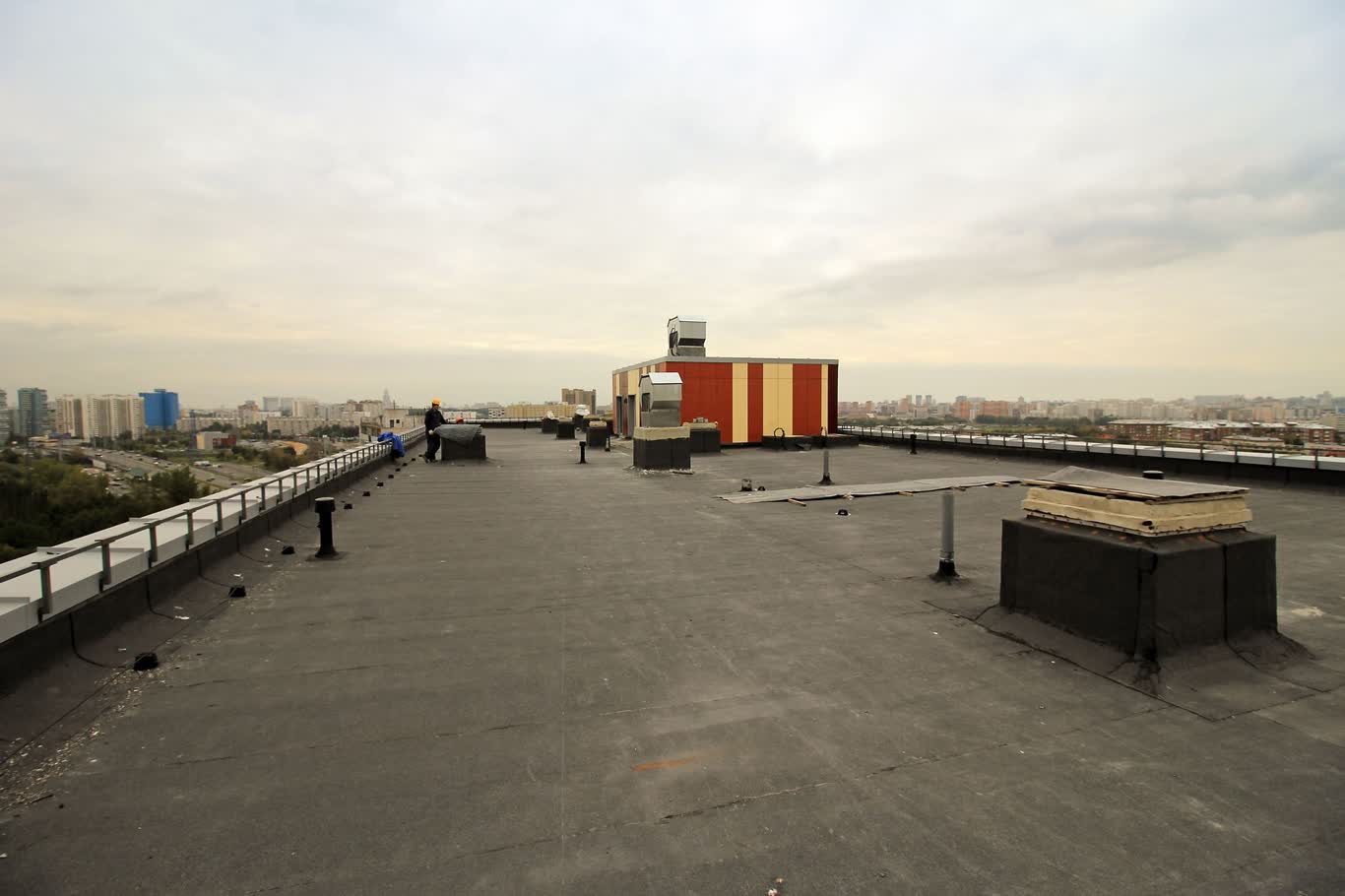
Modified bitumen (mod-bit) is the evolution of the traditional built-up roof (BUR), and the hot-mop method remains one of the most durable systems available for South Florida commercial buildings — particularly older structures with wood decks or existing BUR that needs a compatible cap sheet.
The correct hot-mop process is a layered system, not a single coating. Starting from the deck: a mechanically fastened base sheet goes down first, creating a stable substrate and vapor retarder. Hot asphalt (heated to 375–425°F in a kettle) is mopped over the base, and a second ply of fiberglass-reinforced felt is immediately embedded into the hot asphalt while it is still fluid. That lamination is repeated — typically two to three moppings with corresponding plies — before the final modified bitumen cap sheet is torched or mopped in place. The cap sheet is a polymer-modified asphalt membrane, either SBS (rubber-modified, which remains flexible in cold) or APP (plastic-modified, which is more UV-stable and better suited to Florida's heat). The result is a fully adhered, multi-layer assembly with no single point of failure: if one layer is breached, the next catches it.
We also install torch-applied mod-bit where the spec or fire code allows, and cold-applied systems for occupied buildings where open flame is not permitted.
Commercial Metal Roofing — Standing Seam & Exposed Fastener
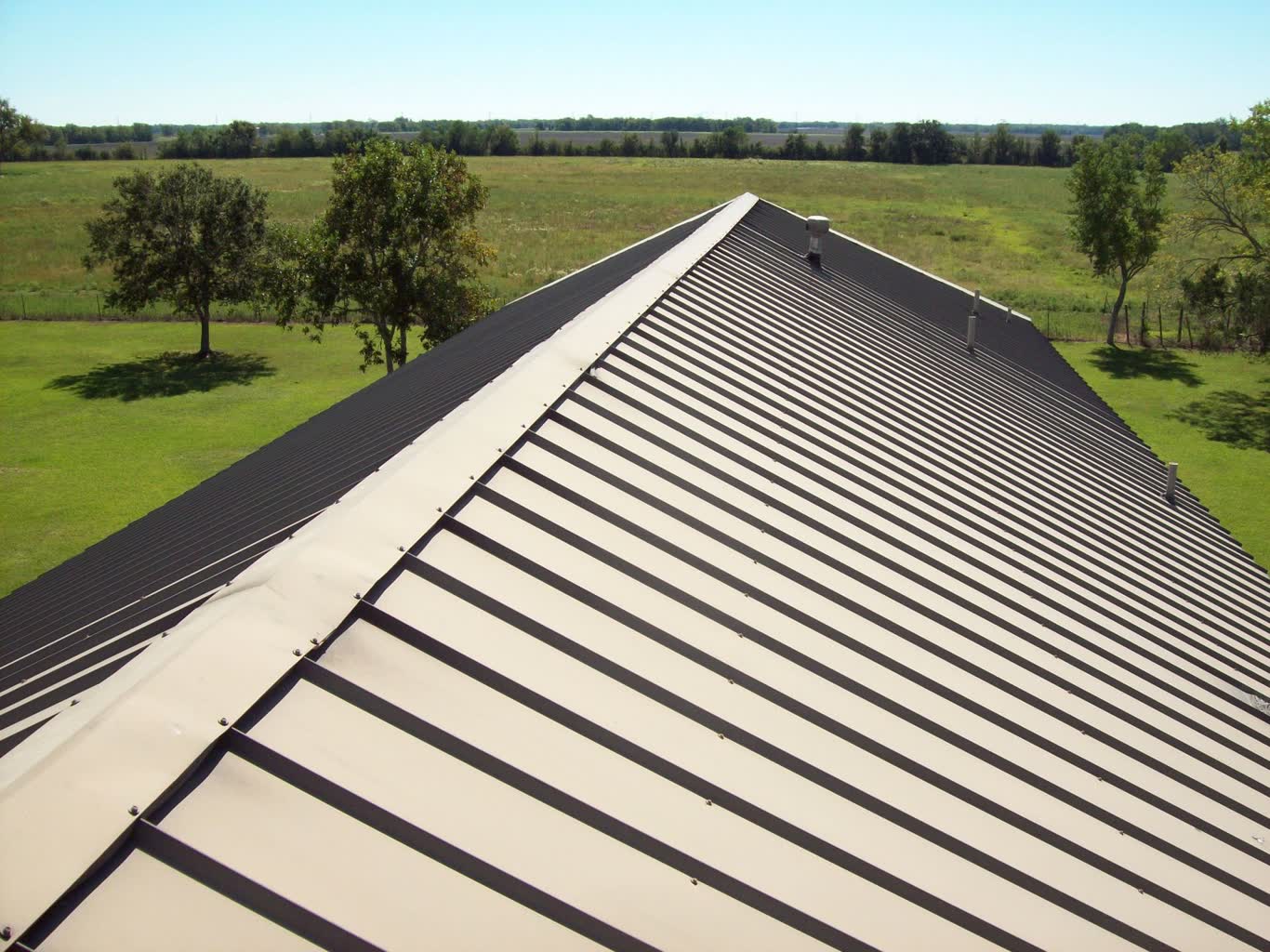
Metal is the premium long-life choice for commercial properties with moderate to steep slopes — warehouses, retail buildings, churches, and agricultural structures in particular. South Florida's combination of intense UV, heavy rain cycles, and salt-air environment means material selection matters as much as installation technique.
Standing-seam metal panels interlock at raised seams, hiding all fasteners inside the panel profile. This eliminates exposed fastener penetrations — the primary leak point in any roof — and allows the panels to float thermally across the deck without splitting or buckling as temperatures swing from 55°F overnight lows to 100°F+ afternoon roof surface temperatures. For coastal commercial properties, we specify Galvalume or Kynar-coated steel, or aluminum where salt-air corrosion is a primary concern.
Exposed-fastener metal panels (R-panel, PBR-panel) are the cost-effective choice for interior commercial and agricultural applications where aesthetics are secondary. We install neoprene-washered fasteners and specify oversize holes to allow thermal movement without backing out — a common failure mode on improperly installed panels.
Commercial Roof Coatings — Extend Life, Reduce Energy Costs
A roof coating is not a paint-over-problems solution — it is a legitimate restoration strategy for commercial roofs that are in fair-to-good structural condition but have aged membranes, surface oxidation, or minor seam fatigue. When the deck and insulation are sound and the existing roof passes a moisture scan, a coating system can add 10–15 years to a roof's service life at 30–50% of tear-off cost.
We install silicone and acrylic elastomeric coatings over TPO, modified bitumen, and BUR substrates. Silicone is the better choice for roofs with standing water (it is unaffected by ponding) and for maximum reflectivity — a white silicone coating can achieve ENERGY STAR-qualifying solar reflectance, which translates directly to lower cooling bills for your building. Acrylic is the choice for roofs with good drainage where recoatability and surface adhesion matter more.
Before any coating installation, we pressure-wash the surface, probe for wet insulation, repair all open seams and flashings, and prime the substrate. Skipping these steps produces failures within 12 months — which is why we warranty our coating work separately from the product warranty.
What Every Commercial Property Owner Along the Treasure Coast Needs to Know
Commercial roofing in Port St. Lucie and West Palm Beach is not the same problem it is in other parts of the country. Four specific stressors converge here that are either absent or far milder in most other markets — and ignoring them in system specification is how properties end up with premature failures, insurance disputes, and emergency repairs mid-season.
- Hurricane wind uplift: Palm Beach and St. Lucie Counties fall in HVHZ-adjacent wind zones. Commercial roofs must be specified and fastened to meet FBC wind uplift requirements — not merely code-minimum for inland markets. We design and document uplift assemblies for permit submission.
- Salt-air corrosion: Coastal proximity accelerates oxidation of steel decking, fasteners, and flashings. Within a few miles of the Atlantic, we specify stainless or hot-dip galvanized fasteners, Galvalume substrates, and aluminum or polymer-coated flashing rather than standard galvanized steel, which typically degrades within 5–8 years of coastal exposure.
- Ponding and drainage: South Florida's flat commercial roofs routinely hold water after the 6–8-inch rain events that arrive with afternoon thunderstorm season. Ponding accelerates membrane degradation, adds structural load, and voids most manufacturer warranties after 48 hours. We audit drain locations, slope, and drain sizing before finalizing any commercial scope — re-roofing without fixing drainage is a short-term fix.
- Cool-roof energy savings: Florida's commercial buildings spend heavily on HVAC cooling. A white TPO or silicone-coated roof can reduce roof-surface temperatures by 50–80°F on a peak summer afternoon, cutting cooling load and qualifying for ENERGY STAR certification. We can provide reflectance data to support green building or utility incentive applications.
Commercial Roof Maintenance Programs — The Cheapest Repair Is the One You Prevent
A commercial flat roof that is not inspected and maintained typically fails 30–40% earlier than its rated service life. The culprits are predictable: clogged internal drains that pond water against seams and flashings, lap seam edges that lift and admit water during wind events, and penetration flashings around HVAC equipment that crack as thermal cycling works them loose over years of expansion and contraction.
Our commercial maintenance program addresses all of these before they become claims. Twice-yearly visits — spring before hurricane season and fall after it — give us a systematic look at every seam, every drain, every penetration flashing, and every parapet cap detail. After each visit you receive a written condition report with photos, recommended actions ranked by urgency, and documented warranty compliance if your membrane manufacturer requires it.
Re-roof vs. tear-off: maintenance visits also give us early warning on when a roof is approaching end-of-life. We core-test to check insulation moisture content, probe seams, and assess deck condition — so when a re-roof is necessary, you have a planned project on your schedule rather than an emergency decision after a storm.
Spring Inspection (Pre-Hurricane)
Full membrane and seam audit, drain clearing, flashing seal check, condition report — before the season's worst weather arrives.
Fall Inspection (Post-Hurricane)
Damage documentation, storm-impact assessment, drain clearing, emergency patch if needed — after the season closes.
Drain Clearing & Flow Test
Interior and exterior drains cleared, scuppers inspected, flow verified — eliminates ponding before it voids your warranty.
Written Condition Report
Timestamped photos, findings ranked by urgency, recommended next steps. Supports warranty compliance documentation.
What Two Decades of South Florida Commercial Work Looks Like
We are not the largest roofing company in South Florida. We are the one that picks up the phone, shows up on time, and explains what we are doing and why. That combination, over 20+ years, has earned 369 reviews across all platforms with 4.8 stars on Google from 137 verified reviewers.
State-Certified License #CCC1330147
Florida-licensed for commercial roofing statewide. Pull our license anytime at the DBPR portal — it is current, active, and has been since 2004.
We Pull Our Own Permits
Commercial work in St. Lucie, Martin, and Palm Beach Counties requires proper permitting. We handle the permit application, inspections, and final sign-off — no gray-area work.
Minimal Business Disruption
Commercial timelines are coordinated around your operations. We phase work on occupied buildings, schedule noisy tear-off during off-hours when needed, and communicate daily status.
Financing Available
Commercial roof replacement is a significant capital expenditure. We offer financing options so your property is protected now without straining your operating budget.
Bilingual Team — English & Spanish
We serve South Florida's entire business community. Hablamos español — communicate in the language that is most comfortable for you and your team.
4.8 Stars Across 137 Google Reviews
4.8 stars on Google from 137 verified reviewers. Earn a reputation like that by doing right by every client.
Ready for a Commercial Roofing Assessment?
Commercial buyers research longer — we get it. When you're ready, our licensed team comes out, inspects your system, and gives you a straight answer on what it needs. No pressure, no obligation.
Commercial Roof Emergency? We Respond 24/7
A storm breach on a commercial building cannot wait until Monday. Our emergency response team covers Port St. Lucie, West Palm Beach, and the surrounding region around the clock — temporary tarping, moisture documentation for insurance, and same-day repair scoping when conditions allow. See our dedicated storm emergency page for full details. Call us now.
Commercial Roofing Across the Treasure Coast & Palm Beach County
Our commercial crews are based on the Treasure Coast and serve both markets with the same team — no out-of-area subcontractors, no unfamiliar faces on your roof.
Treasure Coast
Port St. Lucie, Fort Pierce, Stuart & Surrounding Areas
Palm Beach County
West Palm Beach, Jupiter, Wellington & Surrounding Areas
Common Commercial Roofing Questions — Answered
Direct answers from a team that has worked on South Florida commercial roofs for over 20 years.
Get a Free Commercial Roofing Estimate
Serving commercial properties across Port St. Lucie, West Palm Beach, and all of South Florida. Our commercial inspections are always free — no obligation, no pressure.