What Types of Tile Does Dalton Roofing Install?
Tile is a broad category. The material, profile, and weight differ significantly across types — and those differences affect your roof deck, your HOA options, and your long-term costs.
- Concrete tile — the most common tile type on the Treasure Coast. Made from Portland cement, sand, and water, it runs about 9–12 lbs per sq ft, costs less than clay, and comes in flat, low-profile, and barrel profiles. Coated color can fade over 15–20 years; integral-color options hold up better.
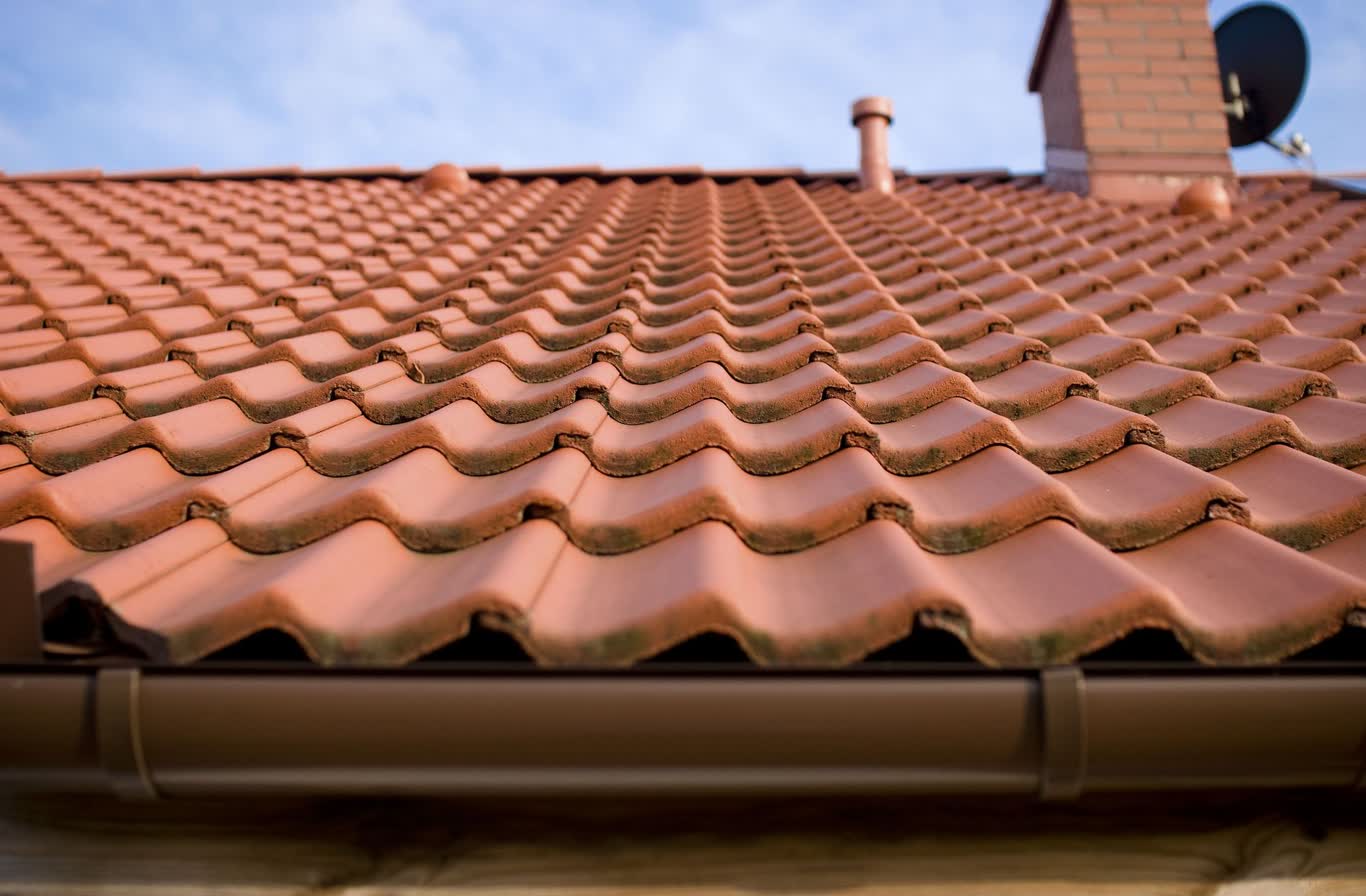
- Clay tile — fired ceramic, denser and heavier (10–15 lbs per sq ft) than concrete, and typically more expensive. The color is fired into the material and does not fade, which is why clay tile keeps its look for 50+ years. Common on Mediterranean and Spanish-style homes across Palm Beach County and the Treasure Coast.
- Flat / low-profile tile — a cleaner, more contemporary look than barrel profiles and lighter in weight. More common on modern and transitional architecture, available in both concrete and clay.
- Barrel / S-tile (Spanish) — the classic South Florida silhouette of alternating convex and concave tiles. Among the heaviest profiles (11–14 lbs per sq ft for concrete), so verified structural capacity matters. Properly fastened per Florida Building Code, the interlocking profile resists wind uplift well.
Why Choose Tile for a South Florida Roof?
Tile has a long track record in Florida's climate for reasons that go beyond aesthetics.
- Longevity: concrete tile typically lasts 40–50 years in Florida's climate; clay tile frequently exceeds 50 years. The underlayment — not the tile itself — is what will eventually need replacement.
- Hurricane and wind performance: tile installed and fastened per Florida Building Code, with correct fastener count, adhesive foam at eaves, and proper hip/ridge detailing, performs well in high-wind conditions. Installation quality matters more than the material itself.
- Energy efficiency: tile profiles create an air gap between the tile and the underlayment deck, reducing heat transfer into the attic compared to a flat-laid material — a meaningful benefit in South Florida summers.
- Curb appeal and home value: tile is the dominant roofing aesthetic in many Treasure Coast and Palm Beach County neighborhoods, often meets HOA requirements, and can be a factor in insurance premium negotiations.
- Fire resistance: concrete and clay tile are non-combustible and both carry Class A fire ratings, the highest available.
What Should You Know Before Choosing Tile?
Tile is a strong, long-lived choice — but it is not the right fit for every structure or every budget.
Structural Weight
Tile is significantly heavier than asphalt shingle or metal. Concrete barrel tile can add 900–1,200 lbs per roofing square compared to shingle. Before installing tile on a home that previously had shingles, the roof deck and structural framing need to be assessed to confirm they can support the load — we evaluate this at your free inspection.
Underlayment Is the Waterproofing Layer
The tile itself is not the waterproof layer — the underlayment beneath it is. High-quality underlayment (typically a self-adhering modified bitumen membrane or 30-year synthetic) is the critical component in a tile roof system. On re-roofs, we always remove and replace the underlayment regardless of tile condition.
Installation Quality Drives Performance
Tile's hurricane performance depends almost entirely on proper installation — correct fastener count per tile, foam adhesive at eave tiles, and proper mortar or foam set at hips and ridges. We install to Florida Building Code with the permit and inspection process to document it.
Broken Tiles Can Be Repaired
Individual cracked or broken tiles are normally repairable without a full tear-off, as long as the underlayment beneath is intact. Walking on tile improperly is the leading cause of cracked tiles after installation — we use proper staging and foam padding during any work performed on a tile roof.
How Does a Tile Roofing Project Work, Start to Finish?
- 01 — Inspect & assess structure: we evaluate deck condition and structural framing capacity for tile weight — especially important when transitioning from shingle — and identify any deck repairs needed first.
- 02 — Tile & color selection: we walk you through concrete vs. clay, profile options, and color choices, confirm HOA compliance where applicable, and provide samples before ordering.
- 03 — Permits: we pull all required permits for your county before work begins. Tile re-roofing requires a permit in St. Lucie, Martin, and Palm Beach Counties.
- 04 — Tear-off, underlayment & install: old material is removed, the deck is inspected and repaired as needed, and new underlayment goes down before a single tile is set. Tile is then fastened per code, with foam adhesive at eaves and mortar or foam at hips and ridges.
- 05 — Final inspection & warranty: we walk the completed project with you, deliver your warranty documentation, and confirm the county inspection passed before we consider the job done.
Why Choose Dalton Roofing for Your Tile Roof?
- Licensed CCC1330147 — Florida State Certified Roofing Contractor, verifiable anytime at the DBPR portal.
- Family-owned since 2004 — a South Florida family business, not a franchise or national chain.
- Tile installation experience across the Treasure Coast and Palm Beach County, in both concrete and clay systems.
- Permits & code compliance — we pull permits and pass county inspection on every tile project.
- Bilingual, English & Spanish — hablamos español.
- 4.8★ · 137 Google reviews, built one honest job at a time.
Comparing roofing materials? See also Metal Roofing, Shingle Roofing, and Roof Replacement.