
This article is general information for Florida homeowners — not legal or insurance advice. Your coverage, deductibles, and deadlines depend on your specific policy. Always verify the details with your carrier and a licensed professional.
The 8-Step Process to File a Roof Insurance Claim
- Make safe, temporary repairs to stop further water damage — tarp the open area, but photograph it first and keep all receipts.
- Document everything — dated photos and video of every roof slope and any interior water damage.
- Read your policy — locate your hurricane deductible, coverage limits, and named-peril terms.
- Report the claim to your insurer promptly — Florida requires notice within one year of the date of loss for policies issued on or after Dec. 16, 2022.
- Get a licensed roofer's written inspection and estimate — and verify the contractor's license first.
- Request your Homeowner Claim Bill of Rights — your insurer must provide it within 14 days of your first claim communication.
- Meet the adjuster with your documentation and keep a written log of every contact and payment.
- If the claim is denied or underpaid, use Florida's free mediation program through the state Insurance Consumer Helpline.
What Should You Do First After Roof Storm Damage?
Protect people first, then prevent the loss from getting worse. Stay off a wet or storm-damaged roof — that work belongs to professionals. If water is actively entering the home, your Florida policy requires you to take reasonable steps to mitigate further damage, such as tarping an open section or moving valuables out of the way.
Do two things at once: stop the water, and preserve the evidence. Photograph and video the damage before you cover it, then save every receipt for tarps, materials, and emergency labor — those mitigation costs are typically reimbursable, but only if documented.
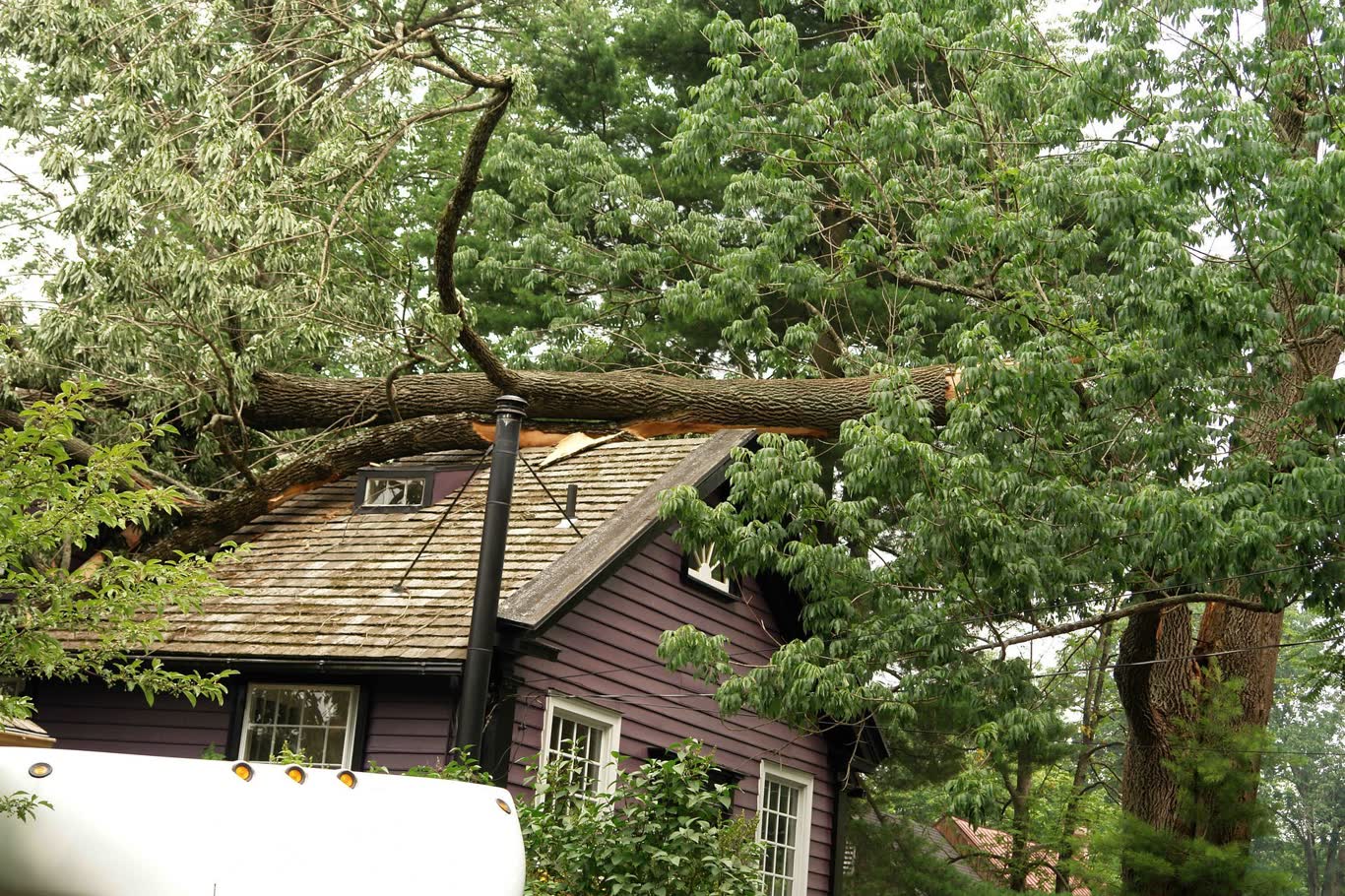
If the damage is severe — a tree through the roof, a large section peeled back, or interior ceiling collapse — call a licensed contractor for emergency stabilization. Dalton Roofing provides 24/7 storm emergency roof repair across St. Lucie, Martin, Indian River, and Palm Beach counties.
How Do You Document Roof Damage for an Insurance Claim?
Documentation is what wins claims. Florida insurers frequently dispute roof claims by arguing the damage was pre-existing or maintenance-related rather than storm-caused, and the burden of proof falls on you, the homeowner.
From the ground, photograph and video every slope of the roof and all four elevations of the home — missing or displaced shingles, lifted flashing, dented metal, and debris impact points. Inside, document water stains, wet insulation, and any visible daylight in the attic, noting the date and time.
If you took dated “before” photos during a pre-season roof inspection, pair them with the post-storm images — a before-and-after record is far stronger than after-photos alone. Store copies in two places (a cloud folder and an email to yourself) so an independent timestamp exists if your phone is lost.
What Is a Hurricane Deductible in Florida?
Before you call your insurer, find your declarations page and read it. The single most important number is your hurricane deductible, which is separate from — and usually much larger than — your standard “all other perils” deductible.
Under Florida law (Statute 627.701), insurers must offer hurricane deductible options set at 2 percent, 5 percent, or 10 percent of your dwelling coverage limit, with a low flat-dollar minimum also available — calculated against the insured value of your home, not the repair cost. A 2 percent deductible, for example, works out to a meaningful out-of-pocket cost before coverage begins — multiply the percentage against your own dwelling coverage limit to find your number.
It's triggered when the National Hurricane Center issues a hurricane warning for any part of Florida and applies once per calendar year. Knowing your number tells you whether a repair is even worth filing — if the damage estimate is below your deductible, a claim may not pay out at all.
| Feature | Standard Deductible | Hurricane Deductible |
|---|---|---|
| What triggers it | Most covered losses — fire, theft, non-hurricane wind | A hurricane, once the NHC issues a warning for any part of Florida |
| How it's calculated | A flat dollar amount set by your policy | A flat-dollar minimum, or 2%, 5%, or 10% of your dwelling limit (Statute 627.701) |
| How often it applies | Per claim | Once per calendar year, same insurer |
| Typical out-of-pocket | Smaller and fixed | Often much larger — a percentage of your full dwelling coverage limit, not a small flat amount |
How Long Do You Have to File a Roof Insurance Claim in Florida?
Florida tightened its claim-reporting deadlines in late 2022. Under Florida Statute 627.70132, for policies issued or renewed on or after December 16, 2022, you must notify your insurer of a new or reopened claim within one year of the date of loss, and a supplemental claim within 18 months.
For weather events, the “date of loss” is the date a hurricane made landfall, or the date NOAA verifies a tornado, windstorm, or other weather event — not the day you noticed the damage. Because Florida policies renew annually, this one-year window now applies to nearly every in-force policy in the state, so do not wait to report roof damage.
When you call, have your policy number, date of loss, and documentation ready. Ask for a claim number, your adjuster's contact information, and written confirmation of what you reported, then keep a dated log of every conversation.
| Type of claim | Deadline to notify insurer | What it means |
|---|---|---|
| New (initial) claim | Within 1 year of the date of loss | Your first report of the loss to the insurer |
| Reopened claim | Within 1 year of the date of loss | A previously closed claim reopened for additional costs on damage already disclosed |
| Supplemental claim | Within 18 months of the date of loss | Additional loss or damage from the same event on an already-open claim |
These deadlines apply to policies issued or renewed on or after December 16, 2022. Policies that took effect earlier may follow the prior two-year reporting rule, so check your specific policy language.
Why Get a Licensed Roofer's Written Estimate?
The insurer's adjuster works for the insurance company. You are entitled to your own licensed contractor's assessment, and a detailed written estimate gives you an independent number to compare against the carrier's offer.
A thorough estimate itemizes the scope: which slopes are affected, whether it's repairable or needs full roof replacement, materials, labor, and code-required upgrades. If the adjuster's figure is well below your contractor's, that documented gap is the basis for a supplement.
Be cautious of unlicensed “storm chasers” who appear after major storms offering fast, cheap repairs — their work is unregulated and may not meet Florida Building Code. Verify any contractor's license through the Florida DBPR before signing anything. Dalton Roofing, Lic. CCC1330147, offers a free, written Port St. Lucie roofing inspection report.
What Is the Florida Homeowner Claim Bill of Rights?
Florida gives residential policyholders a specific set of protections. Under Florida Statute 627.7142, your insurer must provide a Homeowner Claim Bill of Rights within 14 days of receiving your initial claim communication.
It summarizes your rights in plain language, including that within 60 days of filing, subject to your policy terms, you should receive full payment, payment of the undisputed portion, or a written denial. Keep your copy with your claim file and use it to hold the carrier to its timelines. It's a summary, not the full body of Florida law, and doesn't create a private lawsuit by itself — but it's a useful checklist as the claim moves forward.
What Happens When the Insurance Adjuster Inspects the Roof?
When the insurer's adjuster inspects your roof, be present if you can. Walk them through your documentation, point out every area of damage, provide your contractor's written estimate, and take your own photos of the inspection.
Afterward, you'll receive a claim summary and, if approved, a settlement amount. Read it against your own estimate line by line. If items are missing or the figures are low, dispute the amount — that's exactly what the supplemental-claim process (within 18 months of the date of loss) is for. Keep a written log of every call, who you spoke with, and what was promised; a clear paper trail is your strongest asset if the claim becomes a dispute.
What If Your Roof Claim Is Denied or Underpaid?
A denial or low offer is not the end of the road. Florida's Department of Financial Services runs a free mediation program for disputed residential property insurance claims through its Division of Consumer Services. A neutral, state-certified mediator sits down with you and your insurer to try to resolve the dispute without litigation, free to homeowners in most circumstances.
To request mediation or get one-on-one help, call the state Insurance Consumer Helpline at 1-877-MY-FL-CFO (1-877-693-5236), staffed Monday through Friday — the same office takes formal complaints if your insurer isn't handling the claim properly. If mediation doesn't resolve the dispute, you may have additional remedies, including legal action; consult a Florida attorney about your specific situation.