
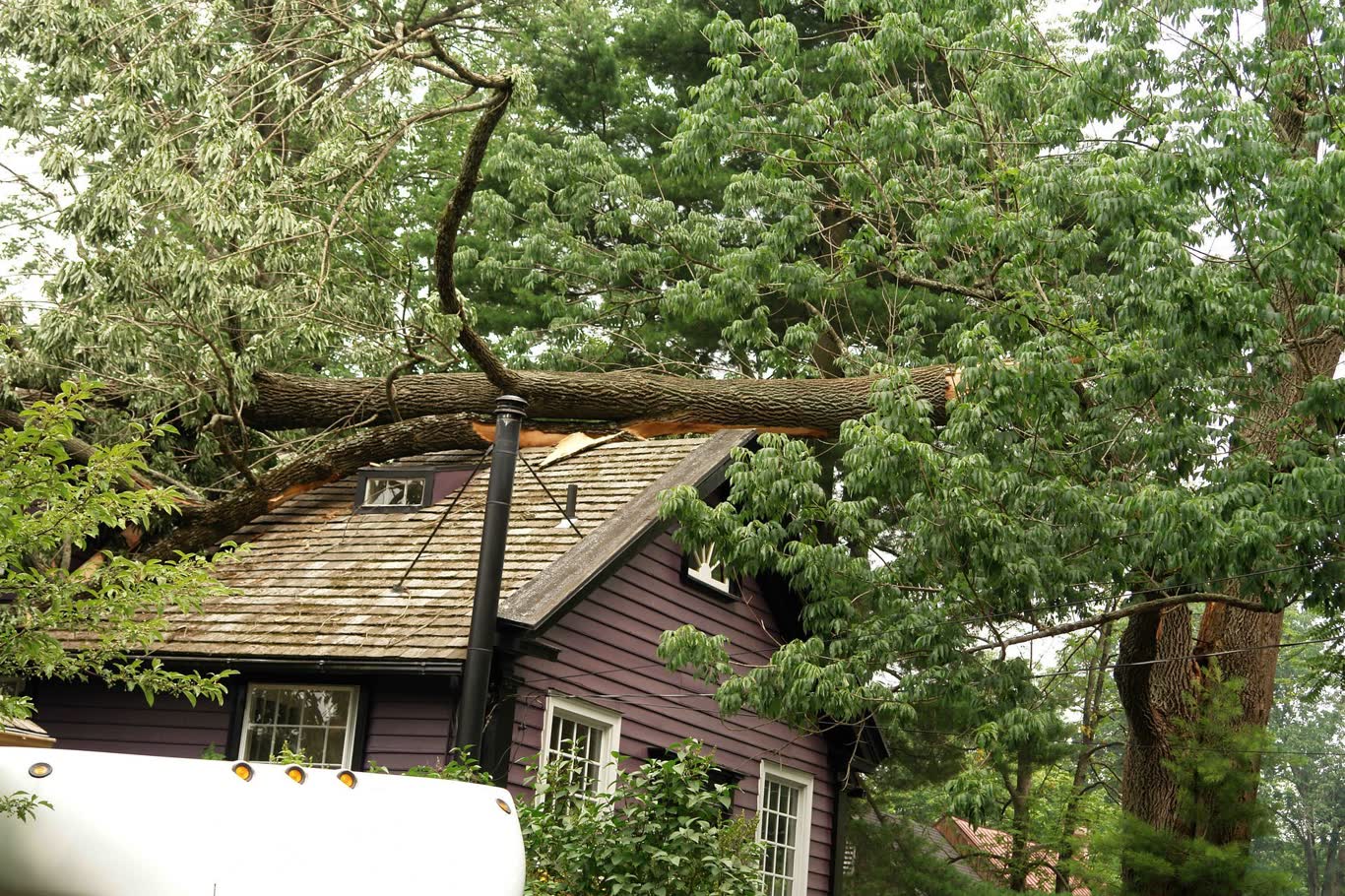
Before June 1 — the official start of Atlantic hurricane season — every homeowner on Florida's Treasure Coast should complete a basic roof health check. The six steps below cover the inspection, maintenance, and documentation tasks that protect your home from wind and water damage, and position you to file a successful insurance claim if a named storm reaches St. Lucie, Martin, Indian River, or Palm Beach County.
What Is the Hurricane Roof Prep Checklist?
- Book a licensed roofer to inspect your roof by May 31 — before contractor calendars fill.
- Clean gutters, downspouts, and flat-roof drains so tropical rain can drain freely.
- Trim any branch or palm frond within 10 feet of the roofline.
- Repair loose shingles, deteriorated flashing, and open nail pops now — not after a watch is issued.
- Photograph and video every roof slope from ground level; save files to a cloud folder dated before the season.
- Secure or remove satellite dishes, HVAC vent caps, and roof-mounted hardware before sustained winds arrive.
- Confirm hurricane clips or straps connect your roof to wall framing — ask your roofer during the inspection.
- Save a licensed roofer's emergency number before a storm is named — lead times expand to days once a watch is posted.
Why Schedule a Professional Roof Inspection Before June 1?
The most important thing a Treasure Coast homeowner can do before hurricane season is have a licensed contractor walk the roof. Spring appointments are available; once a named storm threatens the coast, that same contractor will be unavailable for inspections for days or weeks.
A professional inspection covers what a ground-level walk-around misses: loose or back-nailed shingles that will lift in sustained winds, deteriorated pipe-boot flashings that let water track into the structure, soft decking that indicates rot or delamination underneath, and the condition of ridge caps and hip endings — the first elements to fail in high winds.
Your roofer will also check roof-to-wall connections. Florida Building Code requires hurricane clips or straps in the Wind-Borne Debris Region that covers the Treasure Coast, but older homes built before code updates may fall short. Knowing this before a storm allows time to reinforce the connection or at minimum document the condition for your insurer.
Dalton Roofing offers free roof inspections across St. Lucie, Martin, Indian River, and Palm Beach counties. The Florida Division of Emergency Management also publishes a pre-season checklist at FloridaDisaster.org for broader household preparedness beyond the roof.
How Do You Clean Gutters and Flat-Roof Drains Before a Storm?
A tropical storm or hurricane can drop four to ten inches of rain in a matter of hours. If gutters are clogged with oak leaves, pine needles, or salt-air debris — common on Florida's Atlantic coast — that water overflows, pools against fascia boards, and backs up under shingles.
On flat or low-slope commercial roofs (common on Treasure Coast strip centers and office buildings), blocked internal drains cause ponding that adds significant structural load and drives water through even small membrane seams. Pre-season drain clearing is as important as a shingle inspection for flat-roof systems.
After cleaning, run a garden hose test: fill each gutter section and watch the downspout discharge. If water drains slowly or backs up, there's an obstruction lower in the run. Check that all gutter hangers are firmly attached — salt air corrodes the fasteners over time, and a gutter that detaches in a storm can take fascia and soffit with it.
Check for low points (sags) in gutter runs where debris accumulates; these often need re-pitching. If gutters are more than 15 years old and show visible rust or seam separation, consider replacing them before the season rather than patching.
How Far Back Should Trees Be Trimmed From the Roofline?
Flying and falling debris is one of the primary causes of roof damage during Atlantic tropical events. On the Treasure Coast, two species account for most roof impacts: live oaks, whose large overhanging limbs can be 30 to 50 feet long, and queen and sabal palms, whose fronds become projectiles once sustained winds exceed 40 mph.
The general rule: no branch or frond should overhang within 10 feet of the roofline. Beyond impact risk, branches that rest on or drag across shingles accelerate granule loss and hold moisture against the surface, reducing the useful life of the material.
Large live oak limbs require a certified arborist — removing them improperly can destabilize the tree and create a larger hazard. Palm frond clearing is within DIY range for palms under 15 feet, but taller specimens require professional equipment. Schedule trimming in May or early June while arborists are available; after a storm watch is issued, you will not find an available crew.
After trimming, collect and remove all cut debris from the yard. Loose fronds and limb sections left on the ground become airborne in hurricane-force winds.
Why Document Your Roof's Condition Before the Season?
This step costs nothing and is the most overlooked. Florida insurers routinely challenge hurricane roof claims by arguing that damage was pre-existing rather than storm-caused. The burden of proof falls on the homeowner.
Before June 1, photograph every slope of your roof from the ground — all four elevations. Walk the yard perimeter and capture the ridge line, gutters, chimneys, skylights, and any previous repair patches. If you have a safe means of accessing the attic, photograph the underside of the decking as well.
Then do the same at the end of each season. A before-and-after visual record from dated photos, paired with a written inspection report from a licensed contractor, is far stronger than photographs alone when negotiating with an adjuster after a storm.
Store copies in at least two places: a cloud folder (Google Drive or iCloud) and an email sent to yourself, which creates an independent timestamp. Do not rely solely on your phone's camera roll — devices get lost or destroyed in storms.
If you have not had a recent inspection and want documentation from a professional, Dalton Roofing provides written inspection reports as part of our free inspection service.
What Roof-Mounted Equipment Needs to Be Secured?
Satellite dishes, HVAC equipment curbs, ridge and gable vent covers, solar panel mounting rails, and antenna masts are all common on Treasure Coast homes. Each is a potential projectile if mounting hardware fails under sustained winds.
Before the season, check that all mounting bolts are tight and that sealant around roof penetrations (conduit runs, curb flanges, pipe boots) is intact and flexible. Silicone and rubber sealants degrade in Florida's UV and salt-air environment faster than in other regions; annual inspection of every roof penetration is a reasonable maintenance interval.
If you have a satellite dish you no longer actively use, remove it before the season. The mounting footprint creates a wind-uplift point that can lift surrounding shingles even if the dish itself stays attached. Solar panel installers typically include mounting torque inspection in annual maintenance plans; confirm yours is current.
For HVAC units on flat roofs, verify the curb flashing is sealed and that the unit is secured to the curb per manufacturer specs. Unsecured condensers have been displaced by tropical storm winds well below hurricane threshold.
Why Have a Licensed Roofer on Standby Before a Storm Is Named?
When the National Hurricane Center issues a watch for the Treasure Coast, every reputable roofing contractor in St. Lucie, Martin, Indian River, and Palm Beach counties will have a full schedule within hours. Homeowners who call after a watch is posted find weeks-long waits for non-emergency repairs.
The more serious risk is unlicensed contractors — sometimes called “storm chasers” — who travel to storm-affected areas and offer quick repairs at high prices. Their work is not regulated, carries no warranty, and may not meet Florida Building Code. You can verify any contractor's Florida license at the Department of Business & Professional Regulation's online lookup tool.
Dalton Roofing has served the Treasure Coast and Palm Beach County with 20+ years of experience. We carry Florida State Certified Roofing Contractor license #CCC1330147 and maintain 24/7 emergency storm response capability. Adding our number to your contacts before the season means you have a licensed contractor ready when it matters.
For storm damage after a tropical event, see our storm emergency roof repair page for what to expect and how to start a claim.
Pre-Season vs. Post-Storm: What to Check
Use this reference before the season starts and again after any tropical event passes within 100 miles of the Treasure Coast.
| Area | Before the Season (May–June) | After a Storm |
|---|---|---|
| Shingles & tiles | Look for curling, cracking, missing tabs, or heavy granule loss in gutters | Check for blow-offs, displaced pieces, and exposed decking |
| Flashing (chimney, vents, skylights) | Re-seal deteriorated caulk; check for lifted or separated edges | Inspect for lifted, separated, or missing sections; check for interior staining below |
| Gutters & downspouts | Clean debris; re-anchor loose hangers; check for corrosion at seams | Clear storm debris; look for dents, detached sections, or downspout separation |
| Roof deck & attic | Probe for soft spots or moisture staining through an attic inspection | Check for sagging, visible daylight, wet insulation, or active drips |
| Overhanging trees | Trim branches and palm fronds 10+ feet from roofline | Document fallen limbs; check impact points for punctures or shingle displacement |
| Roof-mounted equipment | Tighten hardware; re-seal penetrations; remove unused dishes or antennas | Inspect for loosened, shifted, or missing equipment; check surrounding flashings |
If you have not had a licensed contractor inspect your roof this spring, now is the time. Dalton Roofing offers free inspections with no commitment across St. Lucie, Martin, Indian River, and Palm Beach counties. See Port St. Lucie roofing, or for anything urgent call (561) 662-6622 any time, 24/7.