
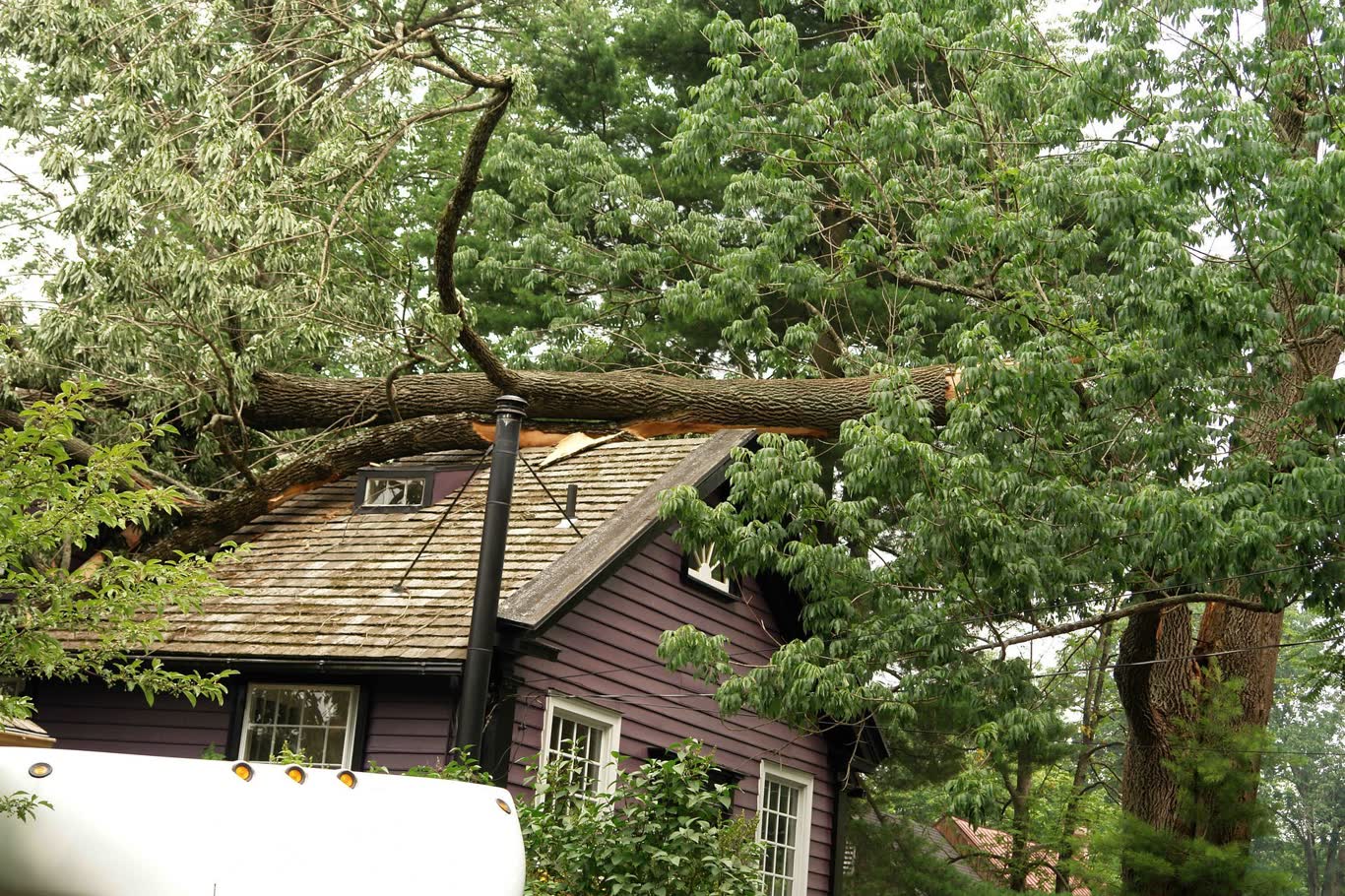
A hurricane just passed through your Treasure Coast neighborhood and your roof has damage. What happens in the next 24 hours matters enormously — not just for your home, but for your insurance claim. Water intrusion compounds quickly, adjusters look at what you did (or didn’t do) after the storm, and unlicensed storm chasers will be knocking on doors by morning. This guide gives you the five immediate steps, in order, from a licensed Florida roofing contractor who has worked post-storm response across St. Lucie, Martin, Indian River, and Palm Beach counties with 20+ years of experience.
First 24 Hours After Hurricane Roof Damage
- Stay safe — wait for the official all-clear before going outside or onto the roof.
- Document all visible damage with dated photos and video before moving any debris.
- Stop further water intrusion — install an emergency tarp over any exposed decking or open sections.
- Call a licensed Florida roofer — verify the license before anyone gets on your roof; avoid unlicensed storm chasers.
- Notify your insurer and start your claim — Florida law sets a one-year deadline from the date of loss; don’t wait.
Is It Safe to Go Outside Right After a Hurricane?
Not until local emergency management or law enforcement has issued an official all-clear. In the hours after a hurricane, the Treasure Coast faces hazards that are not always visible from a window: downed power lines that may still be energized, standing water over road surfaces and drainage channels, destabilized trees and fence panels, and storm surge that can linger in low-lying areas of St. Lucie and Martin counties well after the eye passes.
While you wait, do an interior inspection. Go to your attic with a flashlight and look for visible daylight through the deck boards (a sign of missing or displaced shingles above), sagging or wet insulation, or active dripping. Check ceilings on the top floor for water stains or bulges, and note where the intrusion is occurring — this information is useful for both your roofer and your adjuster.
If a ceiling is actively bulging, it may be holding pooled water. Protect the floor below and carefully puncture the lowest point of the bulge from the side — not directly beneath it — with a screwdriver to drain it in a controlled stream. Do not use electrical outlets or switches in rooms where water is dripping. Florida Division of Emergency Management publishes county-level updates at FloridaDisaster.org — wait for the county all-clear before beginning any outdoor inspection.
How Should I Document Roof Damage Before an Adjuster Arrives?
Before you move debris, remove any temporary covers, or start cleaning, document the damage thoroughly. This step is the foundation of a successful insurance claim. Florida insurers routinely dispute whether roof damage was caused by a covered storm event or whether it was pre-existing wear, and your documentation is the evidence that establishes the storm caused it.
Walk the full perimeter of your home and photograph every slope of the roof from the ground — all four elevations. Capture missing or displaced shingles, exposed decking, impact points from fallen branches or debris, lifted or separated flashing around chimneys, vents, and skylights, damaged gutters and downspouts, and any structural deformation. Do the same in the attic. Take video as well as photos — video captures the full context that a static image can miss.
Every photo and video should be automatically time-stamped by your device. After shooting, immediately back everything up to a cloud folder and send a backup email to yourself with key images attached — your phone can be lost or damaged, but cloud storage cannot. If you had a pre-storm inspection report from a licensed contractor, retrieve it now; a before-and-after paper trail is far more persuasive with an adjuster than photographs alone. Dalton Roofing provides free written inspection reports that serve exactly this purpose for next storm season.
How Do I Stop Water Intrusion With an Emergency Tarp?
Once it is safe to be outside, your next priority is mitigating further water damage. Florida law requires homeowners to take reasonable steps to prevent additional damage after a covered loss — this is called the duty to mitigate. Failing to act can give your insurer grounds to dispute secondary water damage, arguing it resulted from your inaction rather than the storm itself.
An emergency tarp over any exposed decking or open roof section is the standard mitigation measure. Use heavy-duty polyethylene sheeting (at minimum 6 mil thickness) and secure it well past the damaged area to direct water away from the opening. Run the tarp over the ridge line if possible so water cannot pool at the top edge, and weight or anchor the edges — do not rely on tape alone.
Do not get on a wet, debris-covered, or potentially structurally compromised roof. If you cannot safely access the roof yourself, call a licensed roofing contractor for emergency tarping service — a licensed contractor has fall-protection equipment and can assess whether the decking is safe to walk before accessing it. Keep all receipts from any emergency tarping materials or contractor labor; most Florida homeowners policies cover emergency mitigation expenses as part of the storm claim. For 24/7 storm emergency roof repair across the Treasure Coast, Dalton Roofing maintains emergency response capability during active storm events.
How Do I Spot a Storm-Chaser Contractor After a Hurricane?
After every major storm event on the Treasure Coast, unlicensed contractors arrive from out of state or out of area and offer quick repairs at high prices. These “storm chasers” are aggressive — they knock on doors, claim to have spotted damage from the street, and pressure homeowners to sign contracts on the spot. Their work is unregulated, carries no enforceable warranty, and may not meet Florida Building Code requirements for the Wind-Borne Debris Region that applies to St. Lucie, Martin, Indian River, and Palm Beach counties.
Before any contractor gets on your roof, verify their Florida license at MyFloridaLicense.com, the official licensing portal of the Florida Department of Business and Professional Regulation. Search by name or license number — a valid Florida State Certified Roofing Contractor license begins with the prefix CCC, and an unlicensed contractor will not appear in the database.
Additional red flags: a contractor who cannot provide proof of liability insurance and workers’ compensation coverage, who demands full payment upfront, or who pressures you to sign an Assignment of Benefits (AOB) document. Florida has significantly restricted AOB abuse in recent years — signing over your claim rights can complicate your ability to manage the process and limit your options if the repair work is deficient. Dalton Roofing holds Florida State Certified Roofing Contractor license #CCC1330147, verifiable at MyFloridaLicense.com, with 20+ years of experience and documented local references. Call (561) 662-6622 for post-storm response in Port St. Lucie, Fort Pierce, and surrounding communities.
How Soon Do I Need to Notify My Insurer After Storm Damage?
Contact your insurance company as soon as it is safe to do so — within 24 to 72 hours of discovering damage. Most Florida insurers have 24/7 claims lines and expect prompt notification. Before you call, have ready your policy number, the property address, a description of the damage, and your documentation photos.
When you reach the claims department, get a claim number and the name and direct contact for the adjuster assigned to your file. Ask what the inspection timeline is and whether you should wait for the adjuster before completing any permanent repairs (temporary mitigation such as tarping is generally fine to proceed with).
Under Florida Statute §627.70132, as amended in 2022, homeowners must notify their insurer of a hurricane or windstorm claim within one year of the date of loss. The date of loss is the date the storm caused damage, not the date you discovered it — do not assume you have years to file. If you are unsure, consult a licensed public adjuster or attorney who handles property insurance claims. Keep a written log of every conversation with your insurer: the date, who you spoke with, what was said, and any next steps you were given. Florida Statute §627.70131 requires insurers to acknowledge receipt of your claim within 14 days and pay or deny the claim within 90 days, with some exceptions for catastrophic events.
Do and Don’t: First 24 Hours After Hurricane Roof Damage
Use this quick reference to avoid the common mistakes that complicate insurance claims and lead to additional property damage.
| Situation | Do | Don’t |
|---|---|---|
| Right after the storm | Wait for the official county all-clear; inspect from inside | Go outside while winds are active, power lines are down, or standing water is present |
| Documenting damage | Photograph all four sides, attic, and interior staining; back up to cloud immediately | Move debris or begin cleanup before documenting; rely only on your phone’s camera roll |
| Stopping water intrusion | Install a heavy-duty tarp over exposed decking; keep all receipts | Wait until the adjuster visits to install the tarp — secondary damage may not be covered |
| Choosing a roofer | Verify the license at MyFloridaLicense.com before signing anything | Sign a contract with a door-to-door contractor before verifying their license and insurance |
| Filing the claim | Notify your insurer within 24–72 hours; get a claim number and adjuster contact | Wait weeks or months to call — the statutory deadline is one year from the date of loss |
| Signing paperwork | Read every document carefully; ask what you are signing | Sign an Assignment of Benefits (AOB) without understanding it transfers your claim rights |