
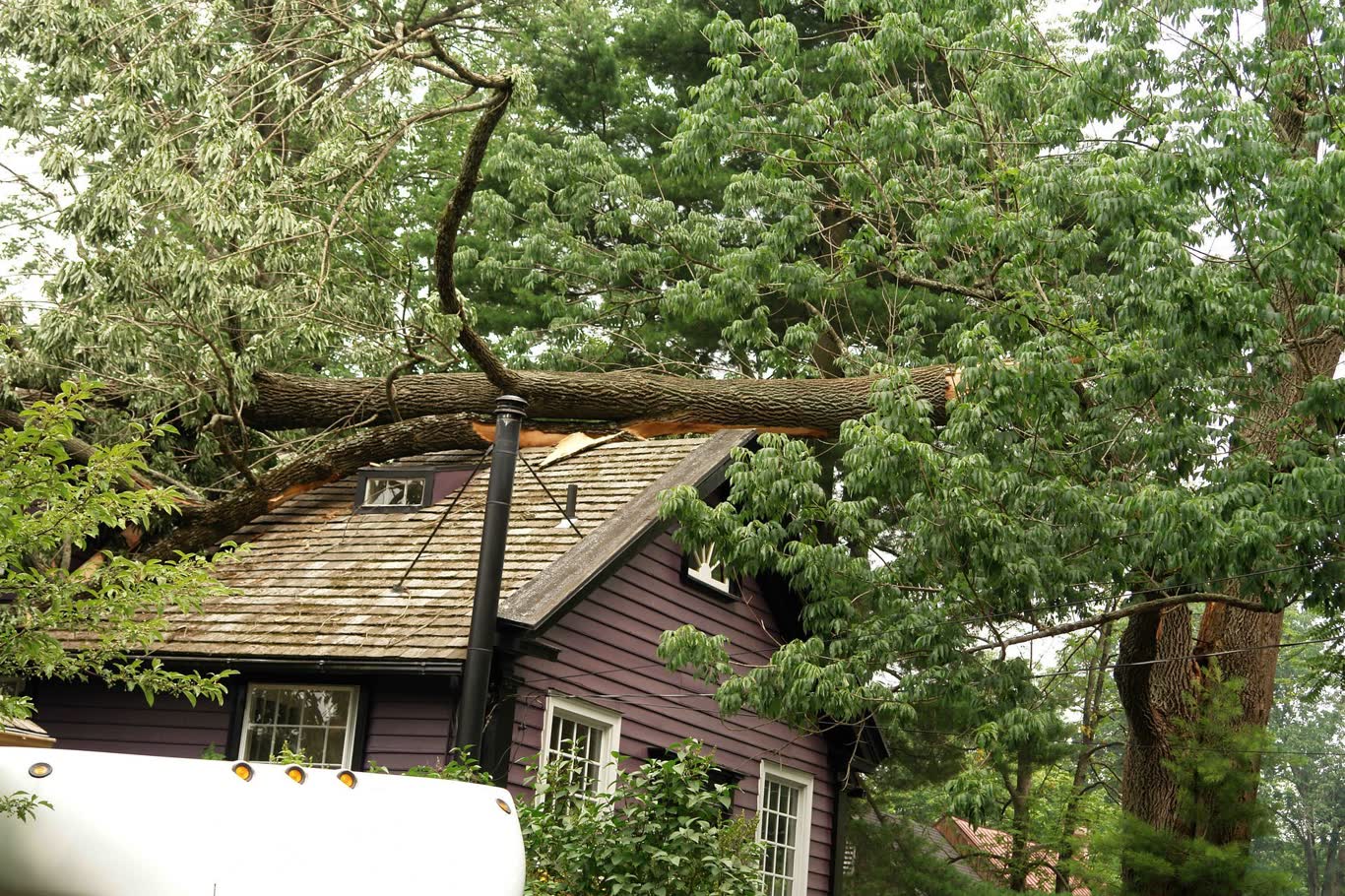
Homeowners across St. Lucie, Martin, Indian River, and Palm Beach counties file roof claims after every named storm — and every season, some of those claims get denied because the damage looks like wear, not weather. Which category your roof falls into is what decides whether the claim pays out, and the line between the two is narrower than most homeowners expect.
Why Does the Storm-vs-Wear Distinction Decide Your Claim?
A Florida homeowners policy is built around covered perils — sudden, accidental events such as wind and hail. Wear and tear is not a peril; it is a near-universal policy exclusion. That single line in your policy is where most disputed roof claims are won or lost.
When you report roof damage after a named storm, the adjuster is asking one question: did this storm cause this damage, or was the roof already failing? Storm damage tends to be concentrated, directional, and tied to a datable event — a cluster of lifted shingles on the wind-facing slope, an impact puncture under a fallen limb. Normal wear is diffuse and uniform: the whole roof ages at roughly the same rate.
Insurers do not deny claims arbitrarily. They deny — or reduce — claims where the evidence points to deterioration rather than a sudden loss. Understanding how that line is drawn helps you recognize real storm damage, document it correctly, and avoid filing a claim that was never going to be covered.
What Does Florida Insurance Treat as Storm Damage?
Covered storm damage is sudden and traceable to a specific weather event. On Treasure Coast roofs, it typically shows up in a few recognizable forms:
- Wind damage: shingles that are creased, lifted, torn off, or missing — usually concentrated on the windward slope and along edges, ridges, hips, and corners, where uplift forces are highest.
- Hail damage: soft bruises or fractured mat where impacts knocked granules loose, plus dents in metal panels, vents, and gutters in a random, scattered pattern.
- Impact damage: punctures and crushed areas from fallen limbs or wind-borne debris.
- Storm-driven water intrusion: leaks and interior staining that appear in the hours and days after the event, not slow stains that predate it.
The common thread is timing and cause: the damage was not there before the storm, and its pattern matches wind, hail, or impact rather than the even, all-over fatigue of an aging roof. A licensed contractor's post-storm inspection documents that pattern in a way an adjuster can act on. If you have storm damage now, our storm emergency roof repair team can tarp, inspect, and document it.
What Does Florida Insurance Treat as Normal Wear?
Standard homeowners policies exclude losses caused by wear and tear, deterioration, and lack of maintenance — conditions treated as the homeowner's responsibility rather than a sudden accident. Florida's intense UV, heat, and salt air make these signs appear faster here than in most of the country, but they are still aging, not storm loss:
- Widespread granule loss and bald spots from years of sun exposure.
- Curling, cupping, or clawing shingle edges, and shingles that have grown brittle and crack when flexed.
- Dried, separated sealant at flashings and penetrations; rusted or backed-out fasteners.
- Algae streaking, moss, and ponding stains that build up gradually over seasons.
- Pre-existing leaks and damage from postponed maintenance.
None of this is a reason to neglect the roof — the opposite is true. A roof showing heavy wear is far more likely to suffer real, claimable damage in the next storm, and far harder to defend if the insurer argues the damage was pre-existing. Routine upkeep through a roof repair visit keeps small wear items from becoming the reason a future claim is denied.
How Can You Tell Storm Damage from Normal Wear?
Use this side-by-side as a starting point — only a licensed inspection can confirm the cause, but these are the cues an adjuster weighs.
| What You See | Likely Storm Damage (covered peril) | Likely Normal Wear (excluded) |
|---|---|---|
| Shingles | Creased, lifted, torn, or blown off in a cluster | Curled, brittle, or cracked uniformly across the roof |
| Pattern & location | Concentrated on the wind-facing slope, edges, and ridges | Even, all-over aging on every slope at a similar rate |
| Granule loss | Fresh bruises in a scattered hail-impact pattern | Gradual thinning and bald spots from years of UV exposure |
| Flashing & seals | Lifted, separated, or missing after the event | Dried, cracked, or shrunken sealant from age |
| Metal & vents | Fresh dents or impact marks; displaced caps | Rust, corrosion, and loosening from age and salt air |
| Timing & cause | Appears suddenly, traceable to a dated storm | Develops slowly; no single event explains it |
How Does Roof Age Affect Coverage in Florida?
Roof age does not, by itself, turn storm damage into excluded wear — but it shapes whether you can get or keep coverage, and how a claim is paid. Florida law sets specific limits here. Under Florida Statute 627.7011:
- An insurer may not refuse to issue or renew a homeowners policy on a roof that is less than 15 years old solely because of the roof's age.
- For an older roof, the insurer also may not refuse solely because of age if an authorized inspection shows the roof has at least 5 years of useful life remaining.
That makes a pre-season inspection valuable beyond catching damage: a written report establishing remaining useful life can protect your eligibility for coverage on an older roof. Florida law also allows some policies to apply a separate roof deductible; where one applies, the insurer may limit the roof payment to actual cash value until you provide proof you have paid that deductible. The exact terms vary by carrier, so confirm them on your declarations page or with your agent. Our guide on how old a roof can be for insurance in Florida walks through this in more depth.
A current, documented inspection report is the simplest way to stay ahead of all of this. Dalton Roofing provides written reports as part of our free roof inspection across the Treasure Coast and Palm Beach County.
Actual Cash Value vs. Replacement Cost: What's the Difference?
Even when storm damage is clearly covered, how much you receive depends on your policy's valuation basis. This is the second place roof age quietly matters.
| Valuation Basis | What It Pays | Effect of Roof Age |
|---|---|---|
| Replacement Cost Value (RCV) | The cost to repair or replace the roof at current prices, with no deduction for age | Age has little effect; you recover the full cost of like-kind repair |
| Actual Cash Value (ACV) | Replacement cost minus depreciation for the roof's age and condition | An older roof is depreciated more, so the payout is lower |
Read your declarations page to see which basis applies to your roof, and remember that a separate roof deductible (where your policy has one) is subtracted on top of this. Knowing both numbers before a storm tells you whether a given repair is even worth filing — if the estimate is below your deductible, a claim may not pay out at all. For a step-by-step walkthrough of the filing process, see our guide on how to file a roof insurance claim in Florida.
How Do You Document a Roof So a Claim Holds Up?
Because Florida insurers routinely argue that roof damage was pre-existing wear, the burden of proving a sudden storm loss falls on the homeowner. Documentation is what shifts that argument in your favor.
- Photograph the roof before the season. Capture all four elevations from the ground, plus the ridge, gutters, chimneys, skylights, and any prior repairs. These dated “before” images establish the roof's condition.
- Get a written inspection report from a licensed contractor. A professional report carries far more weight with an adjuster than homeowner photos alone — and, as noted above, can document remaining useful life for coverage purposes.
- Re-photograph after any storm. A clear before-and-after comparison is the strongest evidence that the damage is new and storm-caused.
- Store copies in two places. A cloud folder plus an email to yourself creates an independent timestamp that survives a lost or damaged phone.
If you have not had a recent inspection, Dalton Roofing serves homeowners across St. Lucie, Martin, Indian River, and Palm Beach counties, including Port St. Lucie roofing clients, with free written inspections you can keep on file.
What Are Florida's Claim Deadlines, and What If You're Denied?
Florida tightened its claim-reporting deadlines in late 2022. Under Florida Statute 627.70132, for policies issued or renewed on or after December 16, 2022, you must give your insurer notice of a new or reopened claim within one year of the date of loss, and notice of a supplemental claim within 18 months. For a hurricane or windstorm, the date of loss is generally when the storm made landfall or is verified by NOAA. Report suspected storm damage promptly rather than waiting.
If a claim is denied or underpaid and you believe the damage is storm-caused, you have options short of a lawsuit. Florida's Department of Financial Services runs a free residential property mediation program: a neutral, certified mediator meets with you and your insurer to try to settle the dispute, and the insurer pays the cost of the mediation. The dispute must be above a set minimum amount after your deductible. You can request mediation or one-on-one help through the state Insurance Consumer Helpline at 1-877-MY-FL-CFO (1-877-693-5236), or learn more at the Department's Mediation and Neutral Evaluation page.
Throughout, keep a licensed contractor's written estimate on file so the true cost of the repair is never in question. That single document anchors both your claim and any mediation that follows.
This article is general information for Florida homeowners — not legal or insurance advice. Your coverage, deductibles, valuation basis, and deadlines depend on your specific policy. Always verify the details with your carrier and a licensed professional.