
What Are the Signs of Poor Attic Ventilation?
Most homeowners never go into the attic, so the first signs are usually in the living space or on the shingles:
- A hot attic or hot upstairs rooms. Heat that cannot escape pushes into the ceiling below and makes the upper floor hard to cool.
- Higher cooling bills. An attic that holds heat makes the air conditioner work harder, especially in the summer months.
- Curling, cupping or blistering shingles. Trapped heat from below accelerates shingle aging.
- Rust on nails, metal flashing or fasteners in the attic. Moisture that cannot escape corrodes metal.
- Dark stains, damp spots or a musty smell on the underside of the roof deck or the rafters.
- Damp or compressed insulation that no longer insulates well.
None of these alone proves the attic is badly ventilated, but two or more together is a strong reason to have it checked.
Why Do Ventilation Problems Show Up Faster in Florida?
Florida gives a roof three things at once: long hours of direct sun, high outdoor humidity, and heavy rain. Warm air holds more moisture, so in a home with little airflow, humid air from the living space and the outdoors settles into the attic and stays there. The sun then heats the roof covering all day, which raises the temperature inside the attic. Problems that a cooler climate might take many years to show can appear much sooner here. That is why a Florida roof is worth checking for ventilation on a regular schedule, not only after a storm.
How Does Poor Ventilation Shorten a Roof’s Life?
Heat and moisture are the two main ways a roof ages from the inside. Shingles are rated for a service life that assumes a reasonable attic temperature. When the attic runs much hotter, the asphalt in shingles softens and oxidizes faster, and the granules loosen. Moisture trapped against the deck can warp or soften the wood over time, and the underlayment beneath the shingles has to work harder. The shingles may look fine from the ground long after the damage has started. Our guide to how long a roof lasts in Florida covers the wider picture, and shingle roofing explains the shingle options we install.
Can Poor Ventilation Look Like a Roof Leak?
Yes. Warm, humid air condenses on cold surfaces in the attic, especially overnight, and the water drips onto the insulation and ceiling. The stain looks like a leak, but the roof may not be leaking at all. Our guide to why a roof leaks on a clear day explains how to tell condensation from a real water path. Ventilation is one of the first things to check when the stain comes back after a repair.
What Ventilation Options Does a Florida Roof Use?
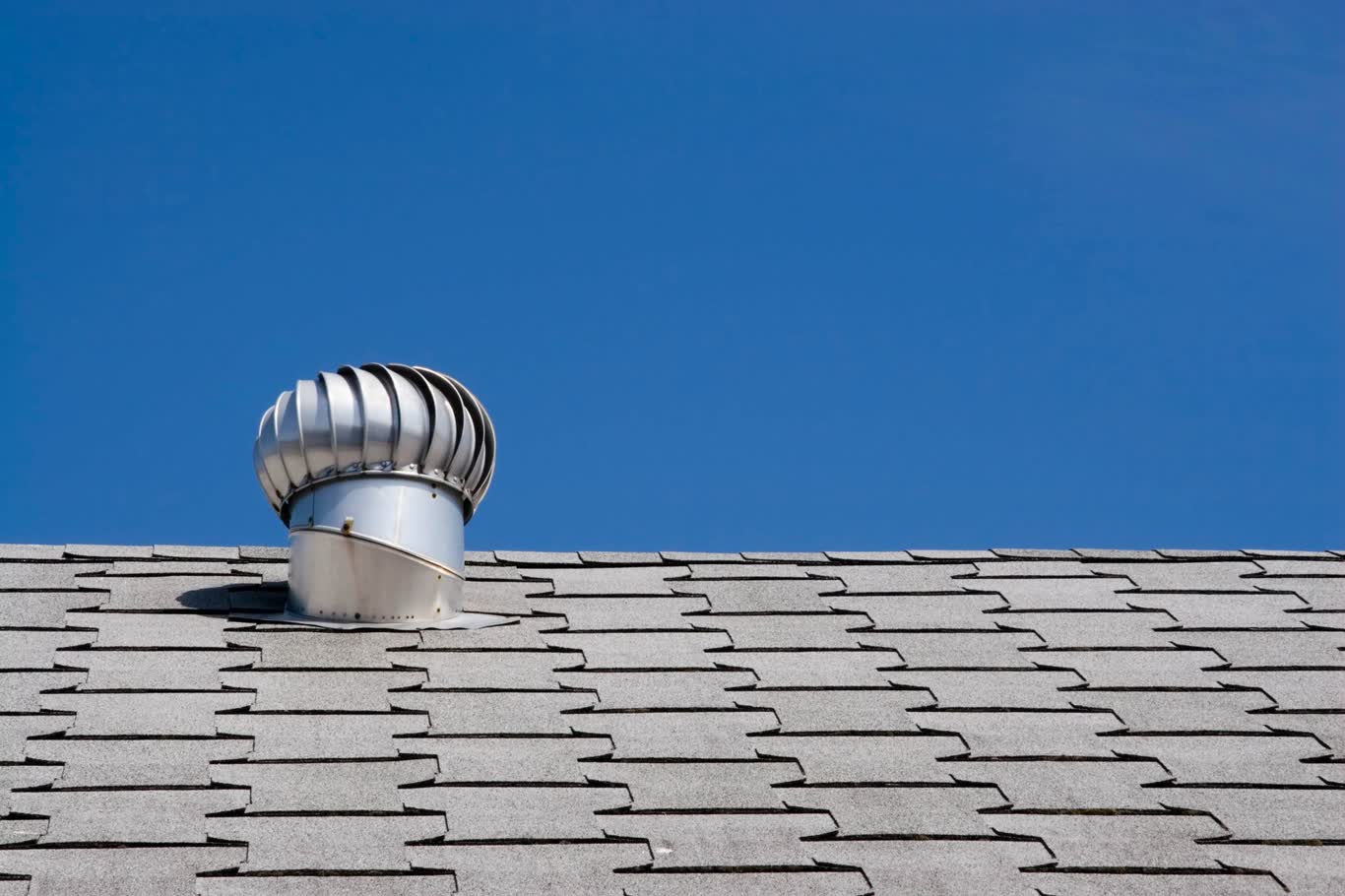
Most roofs use a balance of intake and exhaust. Intake vents, usually soffit vents at the eaves, let cooler air in at the bottom. Exhaust vents, such as ridge vents, gable vents, or roof-mounted vents, let hot air out at the top. Some homes add a powered attic fan. The right mix depends on the roof shape, the size of the attic, and what is already installed. Blocked soffits are a common problem: insulation, paint or pests can close off the intake, and then the exhaust cannot pull air through. A roofer checks both ends of the system instead of guessing from one vent.
Does a New Roof Include Ventilation Work?
It depends on the estimate, so ask for it in writing. Vent changes are part of the scope on some jobs and not on others, and a good estimate lists them separately so you can see what is included. If the inspection finds a ventilation problem, we will say so and explain what it means for the roof, before any work starts. Roof repair and roof inspection pages cover what each visit includes.
What Dalton Roofing Recommends
Ventilation is rarely fixed with one part. A homeowner who sees a hot attic or a recurring stain should treat it as a system question: are the intake vents open, is the exhaust moving air out, and is moisture reaching the deck from the living space below. Answering those questions in order is faster and cheaper than replacing shingles or repairing the same stain again and again. Our recommendations for doing that are below.
- Check the attic on a hot day. If it is far hotter than the rooms below, or if you see any of the signs above, ask for an attic check.
- Look at the soffits from the ground. Insulation, paint or debris blocking the vents is a fast fix to plan.
- Do not ignore a recurring stain. If a ceiling stain keeps coming back after a roof repair, check the attic ventilation before paying for another repair.
- Get the attic included in the inspection. Our free roof inspection covers the attic and gives you a written summary.
Seeing one or more of these signs? Dalton Roofing will check the attic and the roof, then give you a straight answer. Schedule a free roof inspection or call (561) 662-6622. Se habla español.