In Florida, most roofs last 15 to 30 years depending on material: asphalt shingles roughly 15–25 years, metal 30–70 years, and tile 50+ years, though tile's underlayment often fails first around 20–25 years. Intense UV, heat, humidity, salt air, and hurricanes push every material toward the shorter end of its range.
How long does each roofing material last in Florida?
Material choice is the single biggest factor. Here's what to expect from the most common roofing systems, as general industry estimates rather than guarantees.
Asphalt shingles: 15 to 25 years
The most common — and most affordable — roofing material in Florida. Basic 3-tab shingles last around 15 to 20 years; heavier architectural (dimensional) shingles are rated 20 to 30 years nationally but more realistically reach 15 to 25 years here. Attic ventilation and prompt repairs help reach the upper end. See shingle roofing options.
Metal roofing: 30 to 70 years
One of the longest-lasting, most hurricane-resistant choices. Standing-seam systems, with hidden fasteners, commonly last 40 to 70 years; exposed-fastener panels run roughly 20 to 30 years since the fasteners wear first. Coastal salt air can affect finishes, so a marine-grade coating is worth discussing. See metal roofing, or compare it in metal vs. shingle roofing in Florida.
Tile roofing: 50+ years, with a catch
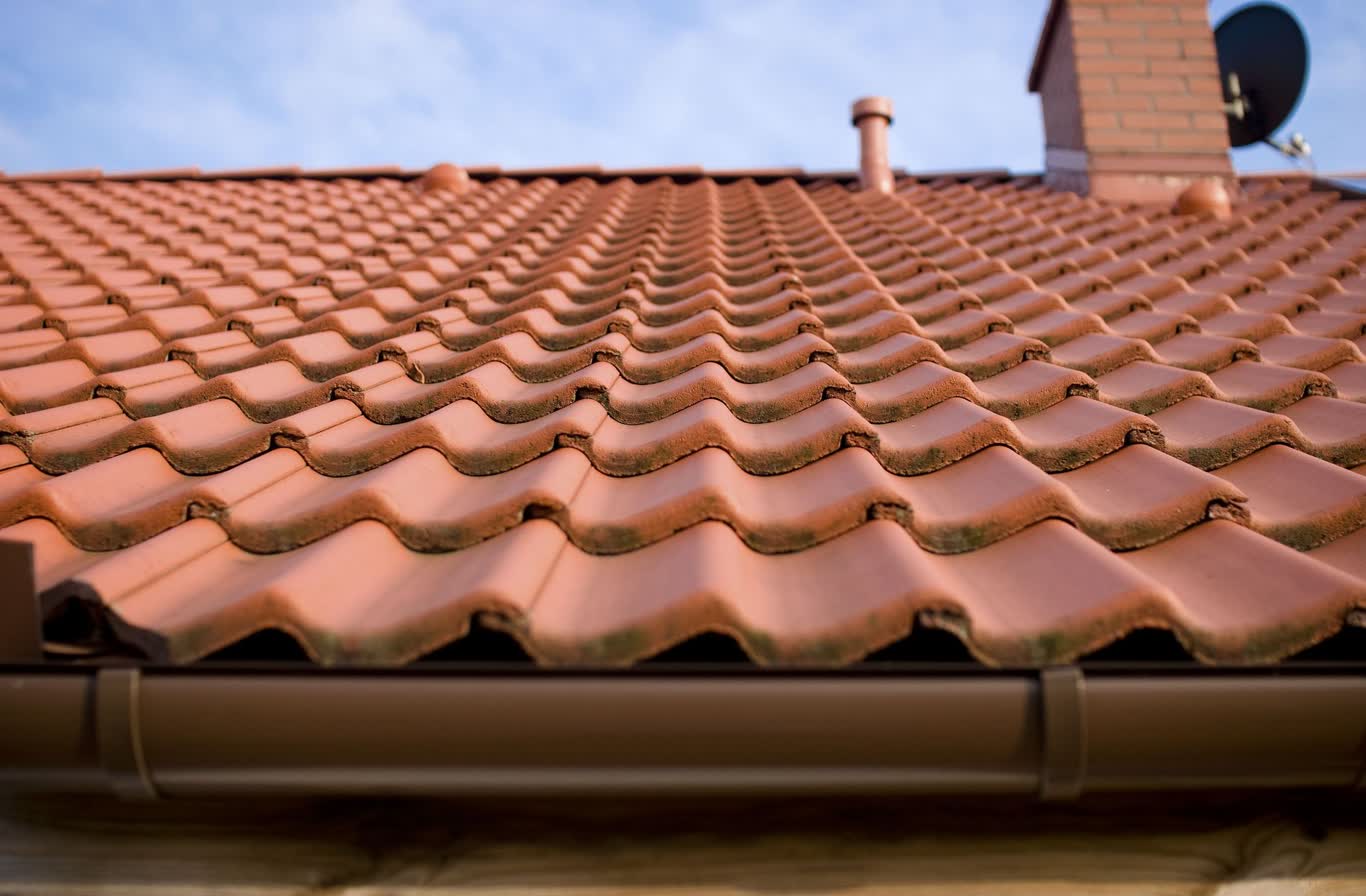
Concrete and clay tile can last 50 years or more and stands up well to heat and wind. The catch is the underlayment beneath it, which typically needs replacement around 20 to 25 years in Florida’s heat. Many “tile roof replacements” are really underlayment replacements — the tile is removed, underlayment renewed, and tile re-laid. See tile roofing.
Flat and low-slope roofs: 15 to 30 years
Common on commercial buildings and some modern homes. Single-ply membranes like TPO generally last 20 to 30 years; modified bitumen and built-up systems run 15 to 20 years. Ponding water and UV are the main enemies, so drainage matters more than on a sloped roof. See our commercial roof lifespan guide.
How do Florida roofing materials compare side by side?
Lifespan figures are general industry estimates; the climate factor explains what pulls each material toward the lower end of its range.
| Roofing material | Typical lifespan | Florida climate factor |
|---|---|---|
| 3-tab asphalt shingle | 15–20 years | UV and heat accelerate granule loss; often replaced sooner near the coast |
| Architectural asphalt shingle | 20–30 yrs (often 15–25 in FL) | Florida sun and humidity push real-world life toward the lower end |
| Standing-seam metal | 40–70 years | Excellent in heat and wind; coastal salt air can affect fasteners and finish |
| Exposed-fastener metal | 20–30 years | Fasteners and washers are the usual wear point in salt air |
| Concrete or clay tile | 50+ years (tile) | Tile outlasts the underlayment beneath it |
| Tile underlayment | 20–25 years | Usually the first part of a tile roof to fail in Florida’s heat |
| Flat / low-slope (TPO, mod. bitumen) | 15–30 years | Ponding water and UV are the main stressors; drainage is critical |
Why do roofs wear out faster in Florida?
The same material that lasts 30 years in a temperate state often lasts noticeably fewer years here. Four forces do most of the damage.
- Ultraviolet radiation. Intense, near-year-round sun breaks down asphalt binders in shingles and degrades sealants and membranes on flat roofs, making them brittle sooner than in a cloudier climate.
- Heat. Roof-surface temperatures can climb well above air temperature. Daily thermal cycling — hot days, cooler nights — loosens fasteners, cracks tiles, and lifts shingle edges over time.
- Humidity and rain. High humidity and frequent heavy rain feed algae, mold, and rot. Dark streaks on shingle roofs are algae colonies; constant moisture shortens the life of the decking and underlayment beneath the surface.
- Salt air and storms. Coastal salt corrodes metal fasteners, flashings, and gutters, and hurricane-season winds lift and tear roofing nearly every year — why a Florida roof generally runs shorter than the national average.
What are the signs a Florida roof needs to be replaced?
Age is only part of the story — installation and maintenance matter too. Have a licensed roofer look if you notice:
- Curling, cupping, cracking, or missing shingles; bald spots where granules have worn away
- Dark algae streaks, moss, or mold; cracked, slipped, or broken tiles
- Daylight, water stains, or a musty smell in the attic; sagging rooflines or soft decking
- Rusted or lifting flashing around chimneys, vents, and skylights
A professional inspection is the only reliable way to know if repair or replacement is smarter. Dalton Roofing offers free inspections with a written report.
How does roof age affect Florida homeowners insurance?
Your roof’s age affects more than leaks — it affects your insurance. Under Section 627.7011, Florida Statutes:
- An insurer may not refuse to issue or renew a homeowners policy solely because of roof age if the roof is less than 15 years old (s. 627.7011(5)(b)).
- For a roof that is 15 years or older, the insurer must allow you to obtain an inspection from an authorized inspector at your own expense before requiring replacement. If that inspection shows the roof has 5 or more years of useful life remaining, the insurer may not refuse coverage solely because of roof age (s. 627.7011(5)(c)).
A documented inspection becomes more valuable as your roof ages — it can decide whether your policy renews. More in our roof age & insurance guide.
A related point on repairs: under a 2022 law (Senate Bill 4-D), if your roof was built or replaced to the 2007 Florida Building Code or later, generally only the damaged section — not the entire roof — must meet current code, even past 25% affected. See Florida's 25% roof rule, explained, and our roof replacement guide for when repair beats replacement.
General information, not legal or insurance advice — terms vary by carrier and policy.
How can you get more years out of a Florida roof?
Maintenance is the most cost-effective way to reach — or beat — the upper end of your material’s lifespan:
- Inspect annually and again after any major storm.
- Keep it clean and draining — clear gutters, downspouts, and flat-roof drains.
- Trim overhanging branches that drop debris and hold moisture on the surface.
- Fix small problems fast — a lifted shingle or failed flashing shortens the whole roof's life.
- Keep attics ventilated to reduce the heat buildup that bakes shingles from below.
Dalton Roofing has served the Treasure Coast and Palm Beach County since 2004. Need an inspection or a full replacement in Port St. Lucie and beyond? We'll give you an honest assessment of where your roof stands.
Frequently asked questions
How long does a roof last in Florida?
Why do roofs wear out faster in Florida than in other states?
Which type of roof lasts the longest in Florida?
How long does a tile roof last in Florida?
Can my insurance company drop me because my roof is old?
How do I know when my Florida roof needs to be replaced?
How can I make my roof last longer in Florida?

Javier Solis, Owner · FL Lic. #CCC1330147
Owner of Dalton Roofing Inc, family-owned since 2004. This article summarizes general industry lifespan estimates and public statutes as of September 2026 — not legal or insurance advice, so confirm current rules with your agent.