
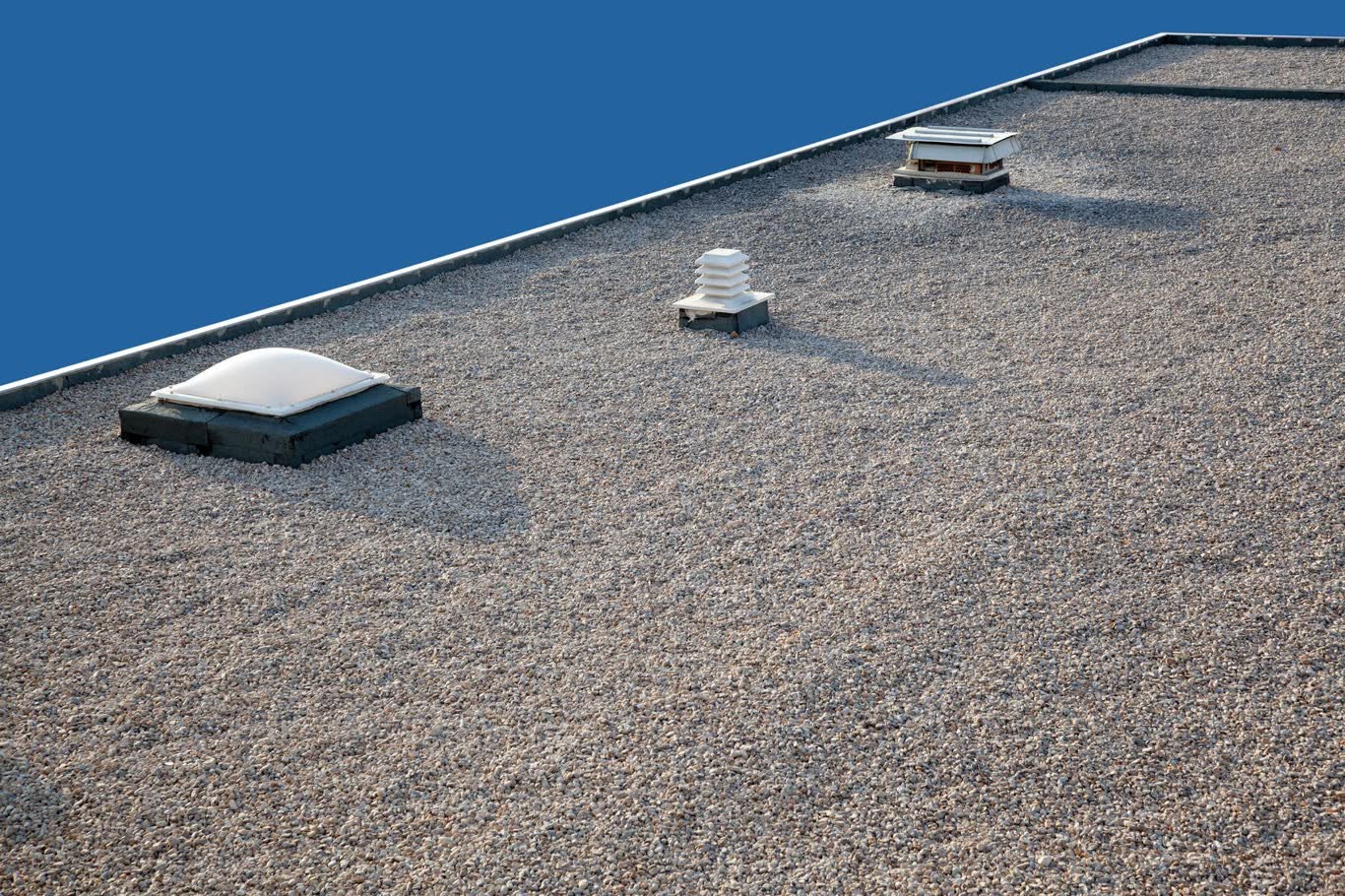
What Counts as a “Flat Roof” on a Florida Home?
True dead-flat roofs are rare on houses — almost every flat-looking roof has a slight built-in slope toward drains or scuppers, which is why roofers call it “low-slope” rather than flat. On a typical Palm Beach County home, you’ll find this kind of roofing on:
- Florida room or sunroom additions
- Attached garages and carport tie-ins
- Porch and entryway roofs
- Older ranch-style homes with a built-up or modified bitumen main roof
- The transition section where an addition meets a sloped shingle or tile roof
If your home is mostly shingle or tile but has one of these sections, that section ages on its own timeline — and often needs attention years before the rest of the roof does.
How Long Does a Flat Roof Last in Florida?
Lifespan depends heavily on the material and how consistently it’s maintained. General industry ranges, which run toward the shorter end in South Florida’s UV and heat, look like this:
| System | Typical lifespan in Florida | Notes |
|---|---|---|
| Built-up roof (tar and gravel) | About 15–20 years | Older technology, still found on many existing homes |
| Modified bitumen | About 15–20 years | Torch-down or self-adhered; common on additions and garages |
| Single-ply membrane (TPO/PVC) | About 20–25 years | Reflective, seams are the key maintenance point |
| Spray polyurethane foam (SPF) | 20+ years with recoating | Lifespan depends on staying on a recoat schedule |
Ranges are general market information, not a guarantee for any specific roof. Installation quality, drainage design, and how well the surface is maintained all move the number.
Why Do Flat Roofs Leak More Than Sloped Roofs?
A shingle or tile roof sheds water fast because gravity does most of the work on a steep pitch. A flat or low-slope roof depends on a much smaller amount of pitch, plus properly placed drains or scuppers, to move water off before it can cause damage. When that system is compromised — a clogged drain, a low spot that’s settled over time, a seam that’s opened up — water can pond and sit directly against the roofing membrane instead of running off. The most common failure points are:
- Ponding water that doesn’t drain within about 48 hours after rain.
- Seams between sheets of membrane, which are the weakest point in any single-ply or modified bitumen system.
- Flashing at the wall tie-in — where a flat addition meets the house or a sloped roof, a joint that has to be sealed correctly or it becomes the first place water gets in.
- UV breakdown of the surface coating, which leaves the membrane underneath exposed and brittle over time.
This is why a flat roof problem is rarely the “whole roof” — it’s almost always one of these specific points, which is good news for repair cost and speed once it’s correctly diagnosed.
What Are the Signs Your Flat Roof Needs Attention?
- Standing water that’s still there 48 hours after the last rain.
- Bubbling or blistering in the membrane surface.
- Cracked, alligatored, or peeling coating.
- Separated or lifting seams between membrane sheets.
- Soft spots underfoot when walking the roof (a sign of trapped moisture in the substrate).
- Interior ceiling stains directly below the flat section, especially near the wall tie-in.
One of these is worth watching; more than one is worth a call. See what a free roof inspection covers.
Flat Roof vs. Sloped Roof: What’s the Difference for a Homeowner?
| Factor | Flat / low-slope | Sloped (shingle or tile) |
|---|---|---|
| How it sheds water | Slight pitch + drains/scuppers, needs to be maintained clear | Gravity, largely self-clearing |
| Most common failure point | Ponding, seams, wall flashing | Individual shingles/tiles, flashing at penetrations |
| Inspection frequency | Annually, plus after major storms | Annually is standard for most homes too |
| Typical materials | Built-up, modified bitumen, TPO/PVC, spray foam | Asphalt shingle, concrete/clay tile, metal panel |
| Repair approach | Often localized (patch the failed area) | Often localized (replace affected shingles/tiles) |
How Should You Maintain a Flat Roof in Florida?
Here’s what we recommend for any flat or low-slope section:
- Inspect it at least once a year, plus after any major storm, walking the surface if it's safe to do so.
- Keep drains and scuppers clear of leaves and debris so water has somewhere to go.
- Check for ponding 48 hours after a heavy rain — standing water that lingers is the single biggest early-warning sign.
- Address small issues immediately. A small blister or open seam is a quick, inexpensive repair; left alone, it becomes a saturated substrate and a much bigger job.
- Keep foot traffic to a minimum unless it's a designed walkable surface — repeated foot traffic wears the coating faster than weather alone.
- Budget for recoating on a spray-foam or single-ply system per the manufacturer's schedule, not just when a problem appears.
Do Flat Roofs Need a Permit to Repair or Replace in Palm Beach County?
Yes — a flat roof follows the same permitting rules as any other re-roof in Florida. A full recover or replacement requires a permit through your local building department, and the same Notice of Commencement and inspection requirements apply. For the full walkthrough of who pulls the permit and what HOA approval involves, see our guide to roof permits and HOA approval in Florida.
This article is general information, not an engineering or insurance assessment. Confirm details for your specific roof with a licensed contractor.
Not sure what condition your flat roof section is in? Dalton Roofing inspects flat and low-slope roofing on homes across Palm Beach County — additions, garages, and older tar-and-gravel roofs included — and gives you a straight answer before recommending a repair or a full recover. Schedule a free roof inspection or call (561) 662-6622. Se habla español.