Homeowners and commercial property managers across St. Lucie, Martin, Palm Beach, and Indian River counties ask the same question every roofing season: does metal actually hold up here, or is it just a good sales pitch? The honest answer has three parts — wind, heat, and salt air — and each one comes down to what's actually specified on the panel, not the word “metal” alone.
Are Metal Roofs Good in Florida for Hurricane-Force Wind?
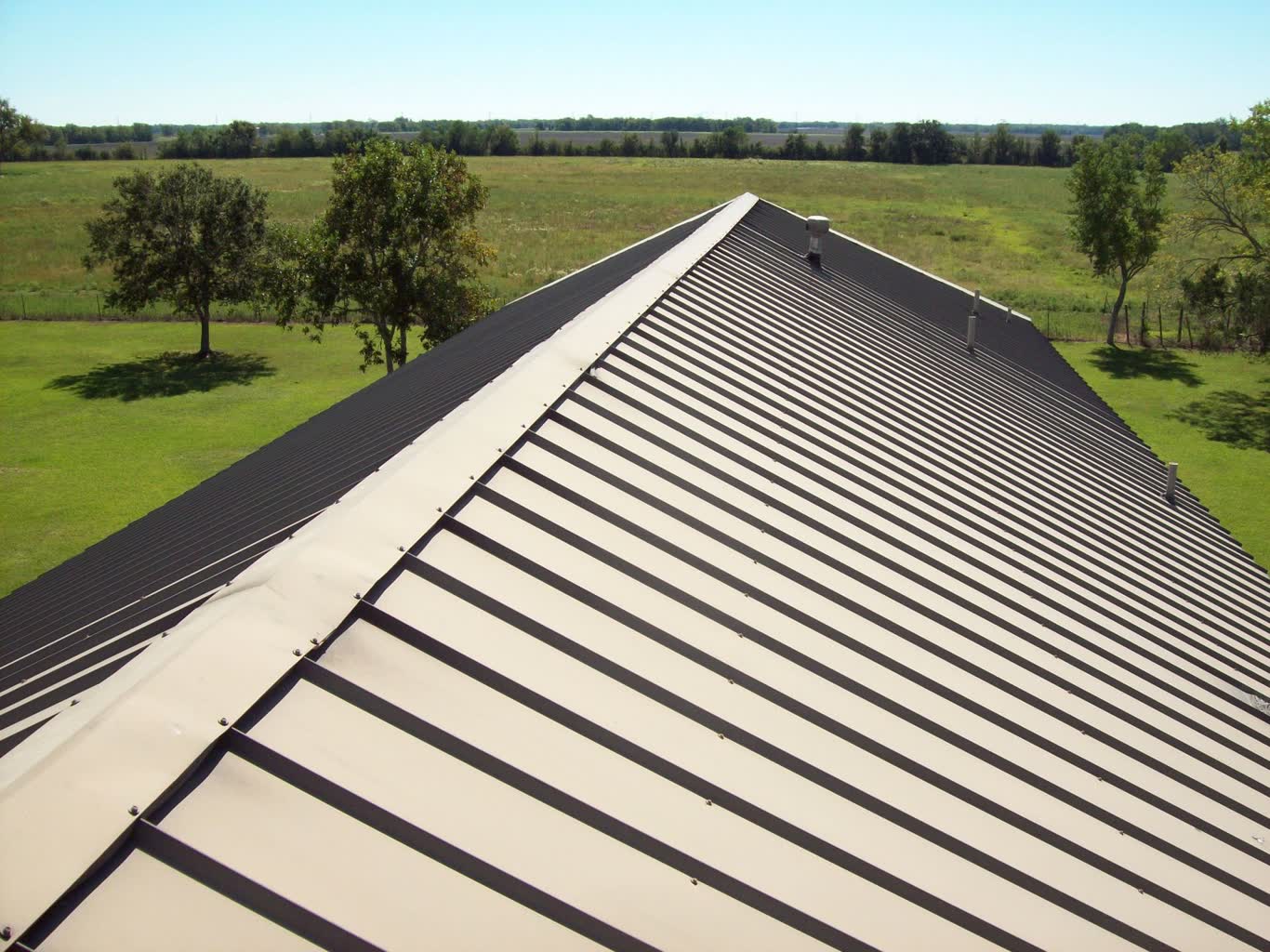
Wind performance is the strongest argument for metal roofing on the Treasure Coast. Standing-seam metal systems use concealed fasteners, continuous panel-to-panel engagement, and mechanically seamed ribs. Together, these details give the roof assembly higher wind-uplift resistance than exposed-fastener panels or many shingle systems (Source: McElroy Metal, “Metal Roofing in Coastal Areas”). Every roofing product installed here also needs product approval documentation for the wind-uplift pressures of the specific wind zone it's going into under Florida's building code system. A roofer should be able to show you that documentation for the exact panel and fastening pattern going on your roof, not just a general claim that “metal is wind-rated.”
Installation details matter as much as the panel itself. Reinforced edge flashing, tighter fastener spacing near eaves and corners, and corrosion-resistant fasteners (hot-dipped galvanized or stainless steel) are standard coastal-installation practices manufacturers recommend for high-wind, high-salt sites (Source: McElroy Metal). A metal roof installed without those details isn't performing the way the marketing implies.
How Does a Metal Roof Handle Florida Heat and Sun?
Metal reflects more of the sun's energy off the roof surface than it absorbs, compared with darker, more absorptive materials — but how much depends heavily on the color and coating. According to ENERGY STAR, an effective “cool roof” needs both high solar reflectance (how much sunlight bounces off) and high thermal emittance (how well the surface releases the heat it does absorb); lighter-colored roofing naturally scores well on both, while newer coating technologies can bring some darker colors closer to that performance too.
For a Florida roof exposed to direct sun most of the year, that reflectance difference affects attic temperature and, in turn, how hard your HVAC system has to work — which is why color selection matters more here than in a cooler climate.
What Color Metal Roof Is Best in Florida?
For pure heat performance, lighter colors — whites, light grays, tans — reflect the most sunlight and keep the roof surface cooler (Source: ENERGY STAR). If you want a darker panel for aesthetic or HOA reasons, ask specifically about the paint system's solar reflectance index rather than assuming any dark color performs the same; newer coating technologies can bring some darker finishes closer to that performance, but not every dark finish uses them.
Color also interacts with your neighborhood's HOA guidelines and the surrounding roofline, so this is a decision worth making with both the heat data and the visual result in front of you — not either one alone.
How Long Do Metal Roofs Last in Florida?
This question gets answered with a single number online more often than it should be. In reality, a metal roof carries two separate warranties, and its practical lifespan depends on both:
- Finish warranty — covers the paint against fading and chalking. Premium Kynar 500 (PVDF) coatings commonly carry finish warranties in the 30- to 35-year range from coating manufacturers (Source: Drexel Metals, “35-Year Kynar 500 Warranty”).
- Substrate warranty — covers the metal panel itself against corrosion and rust-through. This is a separate document with its own terms and, for steel substrates, its own distance-from-saltwater conditions (Source: McElroy Metal).
McElroy Metal's own warranty guidance is blunt about reading past the headline: a warranty advertised as “lifetime” or “45 years” can still fine-print you down to a fraction of that coverage within a few years if you don't read the exclusions. The practical takeaway for a Florida buyer: ask your contractor for both warranty documents before you sign, not just the number on the brochure.
Does a Metal Roof Lower Your Insurance in Florida?
It can — but it isn't automatic, and no roofer can promise you a specific discount. Florida Statute 627.0629 requires insurers to include actuarially reasonable discounts, credits, or rate differentials in their filings for verified wind-resistant construction and roofing features, including roof covering performance and roof-to-wall strength. Those features are documented on the state's uniform mitigation verification inspection form, which Florida Statute 627.711 directs the Financial Services Commission to create by rule. Whether your specific metal roof qualifies, and how large the credit is, depends on your wind mitigation inspection results and your carrier's own filed discount table.
If lowering your premium is part of why you're considering metal, the inspection itself — not the roofing material alone — is what your insurer will actually price against. Our wind mitigation inspection guide walks through what that inspection covers.
How Does Salt Air Affect a Metal Roof on the Treasure Coast?
Salt air is a corrosion problem, and the fix is substrate selection, not just “buying metal.” Manufacturers recommend aluminum for high-salt-exposure sites because it resists corrosion naturally, while steel substrates need a protective coating — Galvalume outperforms standard galvanized steel, and some manufacturers offer coastal-specific steel substrates engineered for salt-laden air (Source: McElroy Metal).
Distance from the water matters to the warranty, too. Standard steel substrate warranties commonly exclude or shorten coverage for installations close to the shoreline — McElroy's own coastal guidance cites roughly 1,500 feet as a common exclusion threshold, though the exact distance varies by manufacturer and product line (Source: McElroy Metal). If your property sits within a mile or so of the Intracoastal or the ocean, get the substrate warranty terms in writing before you decide between aluminum and coated steel.
Metal Substrate Comparison for Coastal Florida Properties
| Substrate | Salt-air corrosion resistance | Typical fit | Wind-system compatibility |
|---|---|---|---|
| Aluminum | Naturally corrosion-resistant | Sites close to saltwater / high salt exposure | Works with standing-seam wind-rated systems |
| Galvalume-coated steel | Stronger than standard galvanized; coating-dependent | Inland to moderate coastal exposure | Works with standing-seam wind-rated systems |
| Standard galvanized steel | Lowest of the three; more exposed to rust at edges/penetrations | Inland sites, away from direct salt exposure | Works with standing-seam wind-rated systems |
Source: McElroy Metal, “Metal Roofing in Coastal Areas”. Confirm substrate recommendations against your property's actual distance from saltwater with your roofing contractor.
What Should You Budget for Ongoing Metal Roof Upkeep?
Metal roofing needs less routine maintenance than shingle roofing, but “less” isn't “none.” A coastal Florida metal roof holds up best with a simple, repeatable upkeep routine:
- Schedule an annual roof inspection — ideally before hurricane season, so any loose fasteners, sealant failure, or panel movement gets caught before storm season tests it. Our free roof inspection covers this.
- Rinse accumulated salt residue off panels if you're near the coast — salt buildup accelerates corrosion at fastener heads and seams over time.
- Check fasteners, sealant, and flashing at every penetration — vents, skylights, HVAC curbs, and chimneys are where coastal metal roofs actually fail first, not the open panel field.
- Keep gutters and valleys clear of debris so water sheds the way the system was designed to shed it.
- File both warranty documents — finish and substrate — somewhere you can find them, and note any distance-from-saltwater conditions that apply to your specific property.
For commercial flat and low-slope metal or coated systems, the same logic applies at a larger scale — see our commercial roofing page for what a maintenance program looks like on a warehouse or retail roof.
Key Takeaways
- Metal roofs perform well in Florida's wind climate when the system is properly engineered and installed — the panel type alone doesn't guarantee wind performance.
- Lighter colors reflect more heat; darker colors can perform closer to that level only with newer coating technologies, so ask for the paint system's data.
- A metal roof can qualify for a Florida wind mitigation insurance discount, but the inspection results and your carrier's filed rate table decide the amount, not the roofing material by itself.
- “How long does it last” splits into two separate warranties — finish (paint) and substrate (the metal itself) — and they're not interchangeable numbers.
- Salt air makes substrate choice (aluminum vs. coated steel) a real decision, not a preference, especially within roughly a mile of the coastline.
- Upkeep is lighter than shingles but still requires an annual inspection and attention to fasteners, sealant, and penetrations.
Considering metal for a home or commercial property in St. Lucie, Martin, Palm Beach, or Indian River County? Dalton Roofing offers free roof inspections, works on both residential and commercial metal systems, and can walk you through financing options before you commit to a substrate or finish. See the full lineup on our metal roofing page, or contact us to talk through what fits your property. For emergency storm damage, call (561) 662-6622 or visit storm & emergency roof repair any time, 24/7.