
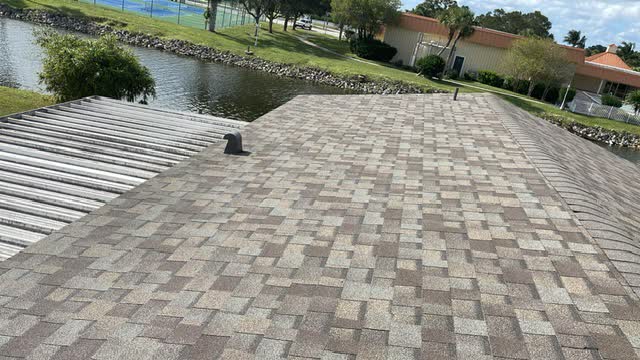
What Is a Wind Mitigation Inspection?
A wind mitigation inspection is a focused assessment of the features that determine how your home holds up in high wind. Unlike a general home inspection or a roof condition report, it looks at a specific set of construction details — from how your roof deck is nailed down to whether your windows are impact-rated — and records them on a single state form your insurer recognizes.
That form is the Uniform Mitigation Verification Inspection Form (OIR-B1-1802), issued by the Florida Office of Insurance Regulation. Once completed, it travels with your insurance file and tells your carrier exactly which wind-resistant features your home already has.
The inspection itself is non-invasive and usually takes under an hour. The inspector photographs each qualifying feature, because the form requires documented proof — at least one photo or document for every attribute claimed. If you have ever wondered why two nearly identical homes on the same Treasure Coast street pay very different insurance premiums, the wind mitigation form is often the reason. See our roof inspection page for what a Dalton Roofing inspection covers.
Why Does a Wind Mitigation Inspection Lower Your Premium in Florida?
The savings are not a courtesy — they are required by Florida law. Under Section 627.0629, Florida Statutes, every residential property insurer must include in its rate filings actuarially reasonable discounts, credits, or other rate differentials for homes with construction features that reduce windstorm losses.
The statute names the categories specifically: roof strength, roof covering performance, roof-to-wall strength, opening protection, and the strength of windows, doors, and skylights. In other words, the same features the OIR-B1-1802 form documents are the features the law requires insurers to reward.
Since October 1, 2023, Florida law has also required each insurer to publish the hurricane mitigation discounts it offers on its website, so homeowners can see what credits are available before they buy. You can read the state’s overview of these requirements at the Florida Office of Insurance Regulation.
There is no fixed dollar figure or percentage. The actual credit depends on your home’s features, your carrier, and your policy — which is exactly why the inspection matters: it is the only way to document what you already qualify for.
What Does the OIR-B1-1802 Form Document?
The form records a defined set of mitigation features. Each one you can verify may earn a credit; together they make up your home’s wind-resistance profile:
- Roof covering — the material and whether it meets the current Florida Building Code or a stricter product-approval standard.
- Roof deck attachment — the fastener type and spacing tying the sheathing to the trusses.
- Roof-to-wall connection — the hardware tying the roof structure to the walls, from simple toe nails to strap wraps.
- Roof geometry — hip roofs, which slope on all sides, generally shed wind load better than gable or flat shapes.
- Secondary water resistance — a sealed underlayment barrier that keeps water out if the roof covering is torn away.
- Opening protection — impact-rated windows, doors, garage doors, and shutters across all openings.
The OIR-B1-1802 form was updated effective April 1, 2026, to better reflect current engineering, including new performance-based options for roof-to-wall attachments. A current inspection uses the latest version of the form.
Who Can Perform a Wind Mitigation Inspection, and How Long Does It Last?
Not just anyone can sign the form. Under Section 627.711(2)(a), Florida Statutes, the OIR-B1-1802 must be completed and signed by an authorized inspector — a category that includes licensed general, building, or residential contractors, professional engineers, architects, and certain qualified inspectors. The Florida Office of Insurance Regulation advises homeowners to verify an inspector’s authorization before hiring.
Dalton Roofing is a Florida State Certified Roofing Contractor (license #CCC1330147) serving St. Lucie, Martin, Indian River, and Palm Beach counties. Because we work on these roofs every day, we can identify mitigation features accurately and document them the way insurers expect.
A completed form is valid for up to five years, provided no material changes are made to the structure and no inaccuracies are found. That is what makes the inspection such an efficient purchase: one report can support premium credits across multiple policy renewals. After five years — or sooner if you replace the roof or make a major change — you will need a new inspection to keep the credits current.
Is a Wind Mitigation Inspection Free Through Any Florida Program?
Florida runs a state program, My Safe Florida Home, administered by the Florida Department of Financial Services, that has offered free wind mitigation inspections along with matching grants toward approved improvements such as roof reinforcement and opening protection.
Eligibility rules and funding are set each legislative cycle and can change from year to year, so availability is not guaranteed at any given time. Check the official program site at MySafeFLHome.com for current eligibility and whether applications are open.
If the program is not accepting applications when you need it, a private wind mitigation inspection is typically a modest one-time fee — and the premium credits it unlocks often offset that cost within the first policy term. This is worth weighing alongside our roofing finance options if you are planning mitigation upgrades.
This article is general information, not insurance or legal advice. Verify discounts, eligibility, and program availability with your insurance carrier and the official state sources.
Does a New Roof Affect Your Wind Mitigation Credits?
Yes. A roof replacement is one of the biggest opportunities to improve your wind mitigation profile. A new roof built to current Florida Building Code can upgrade several items on the form at once — the roof covering, the deck attachment, and often the roof-to-wall connection and secondary water resistance.
Because those features carry meaningful credit weight, many Treasure Coast homeowners find that a code-compliant roof replacement changes their insurance picture, not just their roofline. The step homeowners most often miss: order a fresh wind mitigation inspection after the new roof is finished, so the upgraded features actually reach your insurer. A new roof with no updated form means your carrier may keep rating you on the old, weaker construction.
If you are weighing a replacement, ask your contractor which mitigation features the new system will improve, and build the follow-up inspection into the project from the start.
Which Roof-to-Wall Connection Type Is Strongest?
The roof-to-wall connection is one of the most influential items on the wind mitigation form. The connection types below run from weakest to strongest in their resistance to wind uplift. The exact rating method was refined in the April 2026 form revision, but the relative order of these connection types is stable.
| Connection Type | What It Is | Relative Wind-Uplift Resistance |
|---|---|---|
| Toe nails | Nails driven at an angle through the truss or rafter into the wall’s top plate | Lowest of the rated connection types |
| Clips | Metal connectors fastened to the truss and top plate, but not wrapping over the top | Stronger than toe nails |
| Single wraps | A metal strap that wraps over the top of the truss or rafter, secured on one side | Stronger than clips |
| Double wraps | A strap that wraps over the truss or rafter and is secured on both sides | Strongest of the standard connection types |
An inspector verifies the connection type from inside the attic, where the trusses meet the exterior walls. Homes built or re-roofed under newer code editions are more likely to have strap connections; older homes may still rely on toe nails — useful to know whether you are insuring, upgrading, or replacing the roof.
Key Takeaways
- A wind mitigation inspection documents six construction features on the state's OIR-B1-1802 form, and Florida law requires insurers to credit the ones you qualify for.
- The form is valid up to five years — one inspection can support premium credits across multiple policy renewals.
- Only inspectors authorized under Section 627.711(2)(a), Florida Statutes can sign the form; verify authorization before hiring.
- A code-compliant roof replacement can upgrade several items on the form at once, but only if you order a new inspection afterward.
- My Safe Florida Home may offer free inspections and matching grants, but eligibility and funding change each legislative cycle.
Want the credits your roof already earns? Dalton Roofing can inspect your roof and document the mitigation features your insurer rewards, with a written report you keep. Schedule a roof inspection, review our roof replacement options, or call (561) 662-6622 any time.