What Should Drive the Decision: Budget or Time Horizon?
There is no single "best" roof for every Florida home. The two materials win on different fronts: asphalt shingles are the budget choice and the most common roof in the state, while standing-seam metal is the longevity choice that costs more today and pays it back over decades.
If you plan to stay in your home for 20 years or more, the math often favors metal — you may never replace the roof again. If you expect to sell within a handful of years, or need to keep the project affordable, a quality architectural-shingle roof delivers strong protection at a far lower upfront price. The sections below break down each factor that should drive your decision on the Treasure Coast.
Which Costs Less Upfront, Metal or Shingles?
Cost is the most common deciding factor, and here shingles have a clear edge. An asphalt-shingle roof is typically the least expensive option to install, while a metal roof generally costs significantly more — often two to three times the price of shingles for the same home, depending on the metal system, panel profile, and roof complexity.
That premium buys material that lasts far longer, so the comparison isn't just sticker price. A useful way to frame it is cost per year of service: a shingle roof spreads its lower price over a shorter life, while a metal roof spreads a higher price over a much longer one. For a homeowner staying put, the annual cost can favor metal even though the day-one check is larger.
Because pricing depends heavily on roof size, pitch, access, tear-off, and the specific product, the only reliable number is a written estimate for your roof. Dalton Roofing provides free, no-obligation estimates for both metal roofing and shingle roofing across the Treasure Coast and Palm Beach County.
How Long Does Each Roof Last in Florida?
Lifespan is where metal pulls ahead decisively. In Florida's heat, intense UV, and coastal salt air, a quality metal roof typically lasts about 40 to 70 years, while an asphalt-shingle roof typically lasts about 15 to 25 years. These are general ranges — actual service life depends on the product grade, installation quality, ventilation, and how close the home sits to the ocean.
Florida shortens both numbers compared with cooler climates. Relentless sun bakes the asphalt in shingles and accelerates granule loss, and salt-laden air on the Treasure Coast adds another layer of wear. Metal's longer life is the single biggest reason homeowners planning to stay put choose it, even at a higher upfront cost. If a roof is nearing the end of its life now, our roof replacement page walks through what to expect.
Are Metal Roofs Better Than Shingles for Hurricanes?
This is Florida's defining question, and the honest answer is that both materials can perform well when installed correctly. The Treasure Coast — St. Lucie, Martin, Indian River, and coastal Palm Beach County — sits in the Florida Building Code's Wind-Borne Debris Region. That means any new roof, metal or shingle, must use components carrying a Florida Product Approval rated for the area's wind-uplift requirements.
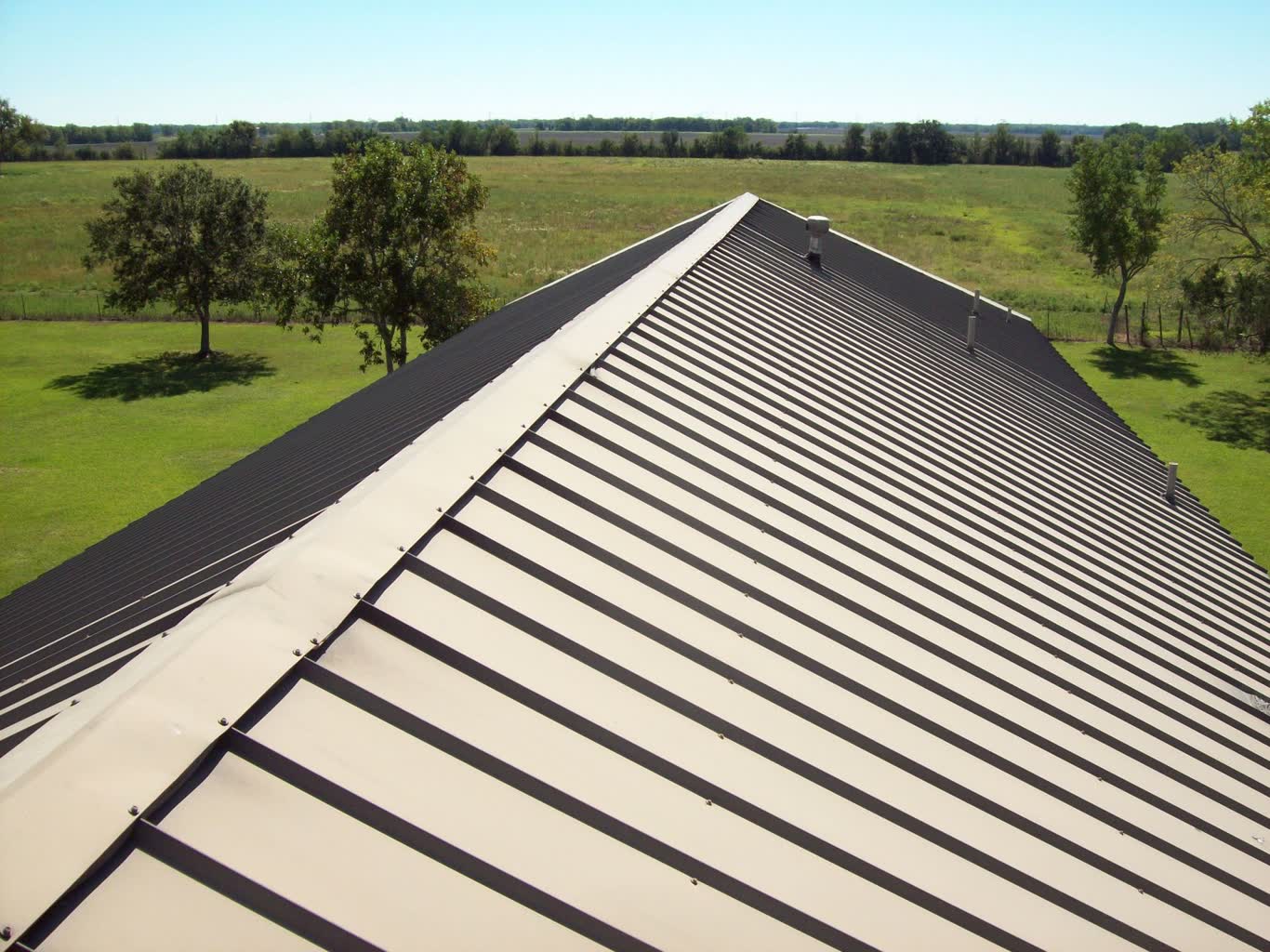
Standing-seam metal roofs use concealed fasteners and interlocking panels that perform very well under wind uplift, with no exposed nail heads to work loose. Modern architectural (laminated) asphalt shingles also carry high wind ratings when properly nailed with the correct number and placement of fasteners. In practice, installation quality and fastening pattern matter as much as the material itself — a poorly nailed roof of either type is the one that fails first.
One note on terminology: the Treasure Coast is governed by the Wind-Borne Debris Region rules, not the stricter High-Velocity Hurricane Zone reserved for Miami-Dade and Broward counties. For storm forecasting and wind context, the National Hurricane Center is the authoritative source. A licensed contractor can confirm which products and ratings apply to your specific address.
Which Roof Handles Florida Heat Better?
Florida's cooling bills make a roof's thermal behavior worth considering. Metal reflects much of the sun's radiant heat rather than absorbing it, and many metal systems are available with reflective "cool roof" finishes designed to keep attic temperatures lower. That reflectivity is one of metal's practical advantages in a climate where the air conditioner runs most of the year.
Standard dark asphalt shingles absorb more heat, though reflective and lighter-colored shingle lines exist that narrow the gap. Either way, attic ventilation and insulation play a large role in how much roof heat actually reaches your living space, so the roof covering is only part of the energy picture. If energy performance is a priority, ask your contractor about reflective options and proper ventilation for whichever material you choose.
How Do Metal and Shingle Roofs Hold Up Near Salt Air?
On the Treasure Coast, proximity to the ocean shapes how every roof ages. Salt-laden air is corrosive, and it affects the two materials differently. Quality metal roofing is manufactured with protective metallic and paint coatings — such as Galvalume substrates and Kynar-based finishes — engineered to resist corrosion in coastal environments, but the metal type and coating quality matter, especially within a mile of the water.
Asphalt shingles do not corrode, but salt and UV exposure still shorten their useful life and can accelerate granule loss. For homes very close to the beach, the right answer often depends on the specific product and the homeowner's tolerance for maintenance. A licensed roofer familiar with coastal installs — like our crews serving Port St. Lucie and the surrounding coast — can recommend the material and finish best suited to your distance from the water.
Do Metal Roofs Lower Your Insurance in Florida?
A common myth is that switching to metal automatically lowers your Florida homeowners insurance. It does not. Florida wind-mitigation insurance credits are based on documented roof features — not the material — recorded on the state's Uniform Mitigation Verification Inspection Form (OIR-B1-1802). The features that drive credits include the roof covering's Florida Product Approval, the roof-deck attachment, the roof-to-wall connection, and the presence of a secondary water barrier.
Because those credits are feature- and code-based, a code-compliant shingle roof can capture the same covering and attachment credits as a metal roof. The savings come from how the roof is built and documented, not from the material being metal. For details on the form and how mitigation features affect premiums, see the Florida Office of Insurance Regulation's wind mitigation resources. This is general information, not insurance advice — confirm specifics with your carrier and a licensed inspector.
Are Metal Roofs Noisy, and Will My HOA Allow One?
The "metal roofs are loud" concern is largely outdated. A modern metal roof installed over a solid deck with underlayment is not significantly louder in rain than a shingle roof; the noisy reputation comes from barn-style panels over open framing with no insulation. On a typical Treasure Coast home, rain noise is comparable between the two.
Aesthetics and neighborhood rules are real considerations, though. Shingles are the familiar look across most Florida subdivisions and come in many colors; metal offers a clean, modern profile and a wide finish range but reads differently on some homes. If you live in an HOA community, confirm what materials, profiles, and colors are approved before you commit — some associations restrict metal or require specific finishes.
Metal vs. Shingle Roofs in Florida at a Glance
Use this side-by-side summary as a starting point, then get a written estimate for your specific roof.
| Factor | Metal Roofing | Asphalt Shingles |
|---|---|---|
| Upfront cost | Higher — often 2–3× the price of shingles | Lowest — the budget-friendly option |
| Typical lifespan in FL | ~40–70 years | ~15–25 years |
| Hurricane wind resistance | High when FBC-rated and properly installed; concealed fasteners on standing seam | High with architectural shingles, FBC-rated and properly nailed |
| Heat & energy | Reflects radiant heat; cool-roof finishes available | Standard shingles absorb more heat; reflective lines exist |
| Salt-air / coastal | Resists corrosion with proper coatings (e.g., Galvalume, Kynar finishes) | Does not corrode, but UV and salt shorten useful life |
| Repairs | Less frequent; matching panels and finishes can be harder | Easy and inexpensive to spot-repair or patch |
| Best for | Long-term owners wanting maximum service life | Budget-focused or shorter-term owners |
So Which Roof Is Right for You?
If you plan to stay in your Treasure Coast home for the long haul and want the longest-lasting, most heat- and corrosion-resistant option you can afford, metal roofing is usually worth the higher upfront cost. If keeping the project affordable matters more, you may sell within a few years, or you want the simplest repairs, a quality architectural-shingle roof is the practical choice that protects most Florida homes well.
Whichever you lean toward, the smartest next step is a written estimate and an honest assessment of your current roof. Dalton Roofing installs both systems to Florida Building Code and can walk you through the tradeoffs for your address, budget, and timeline — including whether a full replacement or a repair makes more sense right now.