Steel corrodes in salt air while aluminum does not, so aluminum standing seam is the common pick for a metal roof close to the coast. Dalton Roofing says this plainly on its metal roofing page. If your home sits near the water in Fort Pierce, Stuart or Jupiter, start with aluminum and ask your roofer to explain any other choice.
Why does salt air matter for metal?
Salt in the air lands on the roof and stays there, and metal that reacts with salt will wear faster than metal that does not. On the Treasure Coast and in Palm Beach County, ocean wind carries that salt inland, so the issue is not limited to beachfront lots.
Rain washes some of it off, but not evenly. Spots under eaves, behind trim and around fasteners stay damp and salty for longer. That is where a coastal roof usually shows trouble first. Our metal roofing page covers the options we install and why the metal you pick matters near the water.
The question to ask is not only how long a roof will last, but what its weakest spot will be after years of damp salty air. A good metal choice for the coast keeps that weak spot from forming.
How does steel behave near the coast?
Steel corrodes in salt air. Even coated steel depends on that coating staying whole, and a scratch, a cut edge or a fastener hole can give salt a way in. Once the base metal is exposed, rust can spread under the paint and lift it.
That does not mean steel is a bad roof everywhere. Inland, away from salt exposure, steel is a common and sensible choice. The concern is the coast, where the same coating has to hold up against salt, humidity and sun at the same time.
If a roof is steel, the details matter more. Check how edges are finished, how panels are cut and how fasteners are sealed. If you are comparing roofs, ask where on the roof rust would start first and how that spot is protected. We also see this question come up in our post on metal versus shingle roofs in Florida.
What are aluminum panels like?
Aluminum does not corrode in salt air the way steel does, which is why Dalton points coastal homeowners toward aluminum standing-seam panels. It is a lighter metal, and its surface does not rust.
That is the main reason to choose it near the coast. You are not betting on a coating to protect the metal underneath. The metal itself holds up to the exposure.
Aluminum is a different material from steel, so the roof is not just a swap of one panel for another. Panel thickness, fastening and trim all need to suit aluminum. Ask your roofer to describe the full system, panels, clips, trim and underlayment, and not only the panel itself.
Do the panel profiles differ?
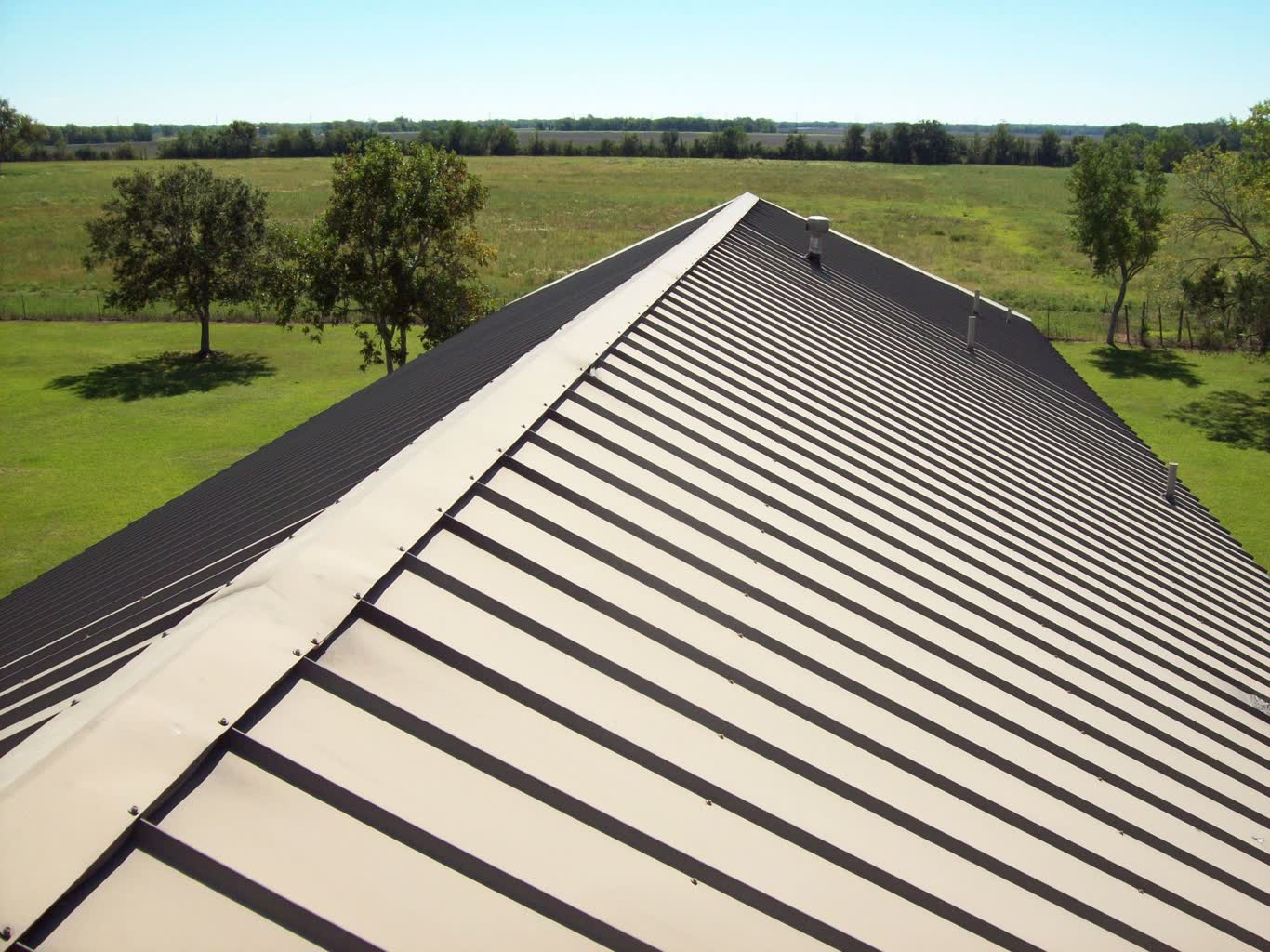
Yes. The profile is the shape of the panel and how it attaches, and it changes how the roof handles wind and water. Standing seam panels lock together along raised seams, and the fasteners are hidden under the panel. Exposed-fastener panels are screwed through the face of the panel.
Near the coast, fewer exposed fasteners means fewer places for salt and water to collect. That is one reason aluminum standing seam is the usual coastal pairing. You can read more in our post on standing seam versus exposed-fastener metal roofing.
The profile does not replace the metal choice. An aluminum panel and a steel panel can look alike from the ground. Ask which metal is in the estimate, not just which style.
How do you choose between aluminum and steel?
Choose aluminum if your home is near the coast, if salt air reaches your roof or if you want the metal itself to resist salt. Choose steel if you are well inland and a roofer has explained how it will be coated and finished for your area.
- Close to the water, or on the island side: aluminum standing seam is the common choice.
- Mainland, some distance from salt exposure: steel may be reasonable, with attention to coating and fasteners.
- Not sure how much salt reaches the roof: treat it as coastal and ask for the aluminum option in writing.
If you are in Port St. Lucie, Vero Beach or Hobe Sound, the distance from the water can differ a lot from one street to the next. A roof inspection is a good way to see what the current roof is telling you about salt exposure.
What should you ask the roofer?
Ask which metal is in the estimate, what the panel profile is and how the edges, fasteners and trim are handled. Ask the same questions of every roofer so the quotes can be compared fairly.
- Is this panel aluminum or steel?
- Is it standing seam or exposed fastener?
- Where will fasteners be, and how are they protected?
- How are cut edges, valleys and trim finished?
- What does the written estimate list for each part of the roof?
At Dalton, estimates are written and itemized after an inspection, so you can see what is being proposed line by line. Dalton is a family-owned company based in Fort Pierce and serves St. Lucie, Martin, Palm Beach and Indian River Counties. English and Spanish are spoken (Se habla espanol).
If the answers are vague, ask again or ask for them in writing. A roofer who knows the system should be able to say what goes on your roof without stalling.
What about an older roof you want to keep?
If your current roof is steel and sits near the coast, look for rust at edges, fasteners and any scratched spots. Small rust spots are easier to deal with early than after they spread.
Do not climb on a metal roof to check. They can be slick, and a fall is a real risk. Look from the ground and from the attic for stains, and have someone inspect it who works on roofs every day.
If you want a second opinion on what you have, or a clear picture of what aluminum would involve, call Dalton Roofing for a free roof inspection with a written summary and no obligation. Phone (561) 662-6622.
Frequently Asked Questions
Does aluminum rust in salt air?
Aluminum does not corrode in salt air the way steel does. That is why Dalton recommends aluminum standing-seam panels for homes near the coast. The trim and fasteners still need to be suited to the same exposure.
Can I put a steel roof on a home that is not right on the water?
Steel can be reasonable farther inland, but salt carries on the wind. Ask your roofer how far your home is from the water and how the steel will be coated and finished before you decide.
Is standing seam better than exposed fasteners near the coast?
Standing seam hides the fasteners under the panels, so there are fewer places for salt and water to collect. Exposed-fastener panels need regular checks of the screws and seals.
Does Dalton Roofing serve my area?
Dalton Roofing is based in Fort Pierce and serves St. Lucie, Martin, Palm Beach and Indian River Counties. Call (561) 662-6622 to confirm service at your address.