
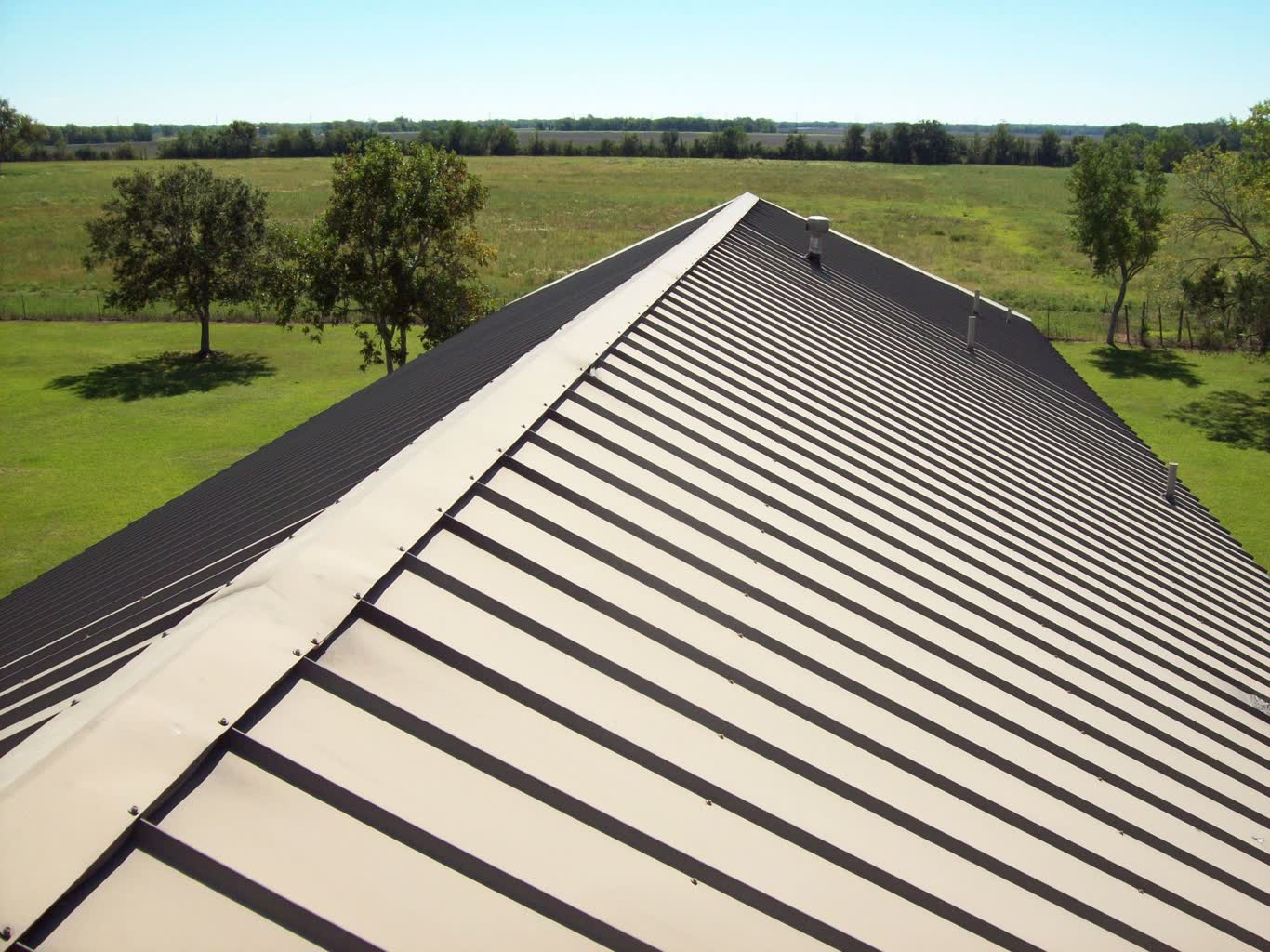
Standing seam metal roofing hides its fasteners under raised seams and lets each panel move as temperatures swing. Exposed-fastener panels are screwed straight through the face of the metal, so the screw washers need periodic checks. Both are metal roofs, but they are built differently and age differently. Dalton Roofing installs concealed-fastener standing seam and can explain both styles during a roof inspection.
If you have two metal roof quotes in hand, this guide shows what to compare. It covers how each style is built, how each handles heat, where water can get in, and what to look for on the written estimate. It is written for homeowners on the Treasure Coast in places like Port St. Lucie, Fort Pierce and Stuart.
How are the two metal panel styles built?
A standing seam panel has raised ribs along its edges that lock together, and the fasteners sit hidden beneath them. An exposed-fastener panel, often called a screw-down panel, is fastened through its flat surface with screws that have rubber or neoprene washers.
That one difference drives almost everything else. With standing seam, the surface you see from the street has no screw heads on it. With exposed-fastener, every screw is a small opening in the roof that depends on a washer to stay sealed.
Dalton installs concealed-fastener standing seam, where panels float independently over the deck as temperatures cycle. Those clips hold the panel down but let it slide a little, which is the core of how the system is designed.
What happens to each style as the roof heats and cools?
Metal expands in the heat and shrinks as it cools, so a metal roof is always moving a little. A standing seam system is made for that movement. Exposed-fastener panels are pinned in place by their screws, so the movement is handled by the screw holes and washers instead.
In Florida, the roof gets full sun in the afternoon and then cools quickly in an evening storm. That daily cycle repeats thousands of times. Panels float independently on a standing seam roof, so the metal can slide against the clips instead of pulling on the fasteners.
On an exposed-fastener roof, that same motion can work the screws over time. Screw holes can widen and washers can dry out or crack from sun exposure. This is not a sign of a bad install. It is how the style behaves, and it is why those roofs need a look every so often.
Where can water get in on each style?
On a screw-down roof, water most often gets in at the fasteners, at the panel overlaps and at the edges and roof penetrations. On a standing seam roof, the likely trouble spots move to the seams, the flashings and the details around vents, chimneys and walls.
Here is a simple way to think about it. Every exposed screw is one more place a leak can start, so a roof with many screws has many points to watch. A standing seam roof has far fewer openings in the field of the panel, which narrows where a leak could come from.
That does not mean standing seam never leaks. Flashing, trim and transitions are still where water finds a way in on any roof. Ask the roofer how those details are handled, because that is where a roof is won or lost. Our article on whether metal roofs are good in Florida goes deeper on how metal handles storms and humidity.
What upkeep does each style need?
A standing seam roof asks for a periodic look at seams, flashings and sealants. An exposed-fastener roof asks for the same, plus a check of the screws and washers across the whole roof.
- Screw heads and washers. Look for backed-out screws, cracked washers or rust streaks below a fastener.
- Panel overlaps. Check that edges still sit tight and have not lifted.
- Flashings. Look at pipes, vents, walls and valleys on either style.
- Debris. Leaves and limbs trap moisture against metal, so clear them after storms.
- Scratches and rust spots. Small surface damage is easier to fix early.
A free roof inspection with a written summary is a good way to catch these early. If you have an older screw-down roof, ask the inspector to point out the fasteners that need attention.
Which suits a home and which suits a barn or shed?
Choose standing seam if you want a clean look, fewer exposed openings and a roof you plan to keep for the long haul on your home. Choose exposed-fastener if the building is a barn, shed, workshop or outbuilding where a simpler panel and a plain look make sense.
Many homeowners in Palm City and Hobe Sound ask about metal for the main house because of the look and the way it sheds rain. A detached garage or farm building has different priorities, and a screw-down panel can fit that job well when the screws are checked on a regular schedule.
The right pick depends on how the building is used, how long you plan to own it and how much upkeep you are willing to do. Dalton handles shingle, tile, metal and flat roofs, so you can compare metal against other materials during the same visit.
What should the written estimate name for the panel style?
The written estimate should name the panel style in plain words, standing seam or exposed-fastener, so you know exactly what is being installed. Estimates at Dalton are written and itemized after an inspection, and you should expect that level of detail from any roofer.
Look for these items on the paper:
- The panel style, written out, not just "metal roof."
- How the panels are attached, with clips or with exposed screws.
- What goes under the metal, such as underlayment.
- How flashings, edges and penetrations will be handled.
- Whether old roofing is removed first.
If two quotes look far apart, the gap is often in these lines. A vague estimate makes it hard to compare apples to apples, so ask for the missing details in writing. If monthly payments would help, see the financing page for how payment plans work.
How do you decide?
Start with the building and how long you will own it. For a home you plan to keep, standing seam is the style Dalton installs, and its hidden fasteners and floating panels are the main reasons homeowners choose it. For a simple outbuilding, a screw-down panel with regular checks can do the job.
Whichever style you pick, the install details matter as much as the panel. Ask who will do the work, how the flashings will be handled and what the follow-up checks look like.
Dalton Roofing is a family-owned company based in Fort Pierce, serving St. Lucie, Martin, Palm Beach and Indian River Counties, with English and Spanish spoken. Call (561) 662-6622 to schedule a free roof inspection with a written summary and no obligation.
Frequently Asked Questions
Is standing seam always better than exposed-fastener?
Not always. Standing seam suits homes where you want hidden fasteners and fewer openings. Exposed-fastener panels can suit sheds and barns when the screws and washers are checked on a regular schedule.
Can I see which style my roof is from the ground?
Often yes. If you can see rows of screw heads across the flat part of the panels, it is exposed-fastener. If the surface looks smooth with raised ribs, it is likely standing seam.
Do exposed-fastener screws need to be replaced?
Over time the washers can dry out or crack, and screws can back out. A roofer can tighten or replace those fasteners during a repair visit before water gets in.
Does Dalton install both styles?
Dalton installs concealed-fastener standing seam. Ask for a roof inspection and the team can walk you through the options and what each one means for your building.
What should I ask a roofer about metal panels?
Ask which panel style is quoted, how panels are attached, how flashings are handled and what regular upkeep looks like. Ask for all of it in the written estimate.