
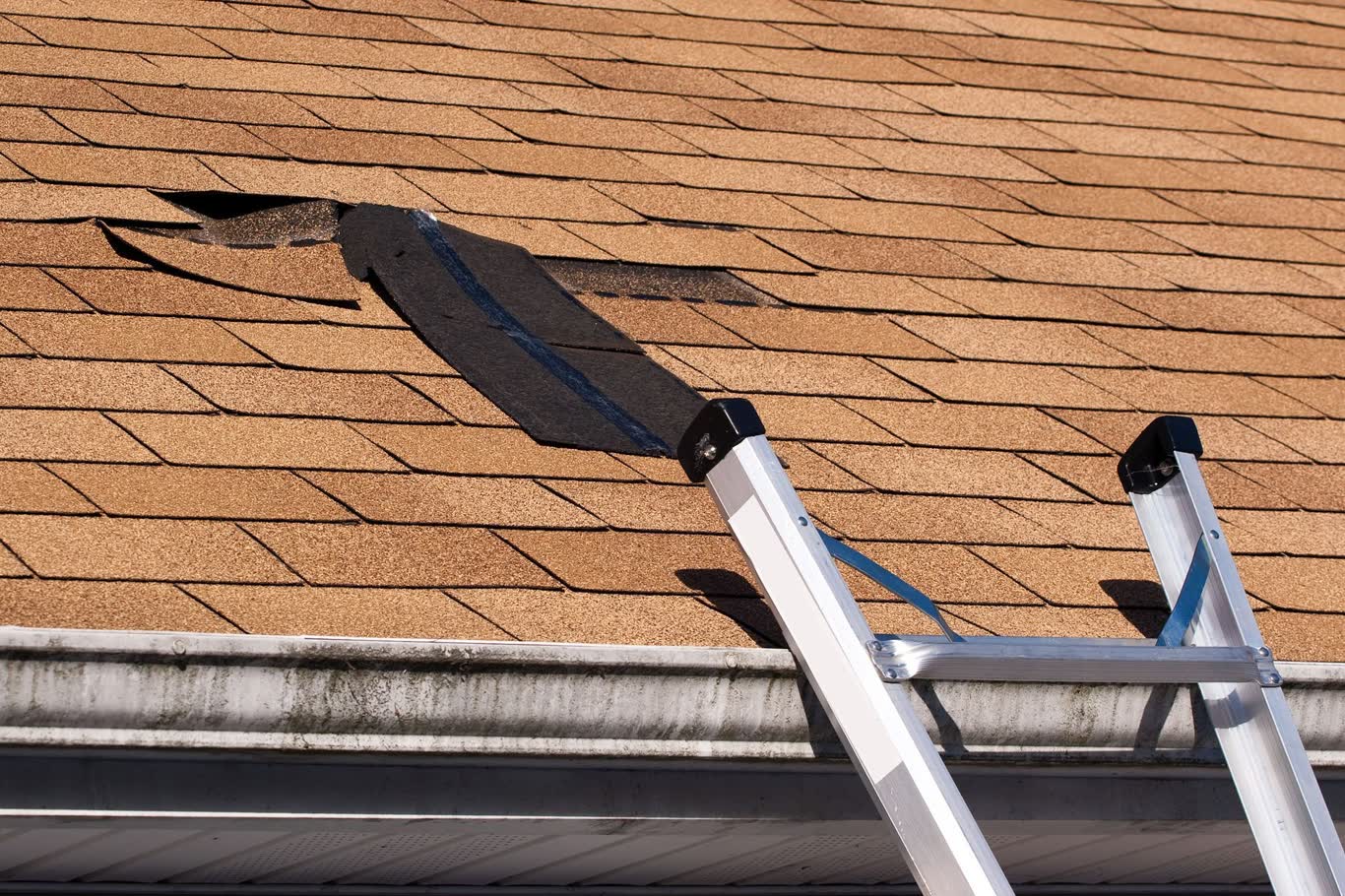
A roof leak rarely shows up right under the spot where water gets in. Water enters at a penetration, a failed flashing, or an open seam, then moves along the roof structure before it drips through the ceiling. That is why the stain you see is usually some distance from the real opening.
Where is the leak if it is not above the stain?
It is usually uphill from the stain, and often several feet away. Dalton Roofing says the leak is almost never directly above the stain, because water travels along framing before dripping through.
So a ceiling stain tells you that water got into the house. It does not tell you where it got onto the roof. Treat the stain as a clue and start your search higher up the slope.
How does water move along the framing?
Water follows gravity and surface tension, and it takes the easiest path. In a typical attic, that path is a rafter, a truss, or the underside of the roof deck.
Here is what that looks like in practice. Water gets past the shingle or tile and lands on the underlayment or deck. It runs downhill along the wood until it finds a joint, a nail hole, or a low spot. Then it drips onto the insulation and soaks into the drywall below. In short, water travels along framing until something gives it a place to drop.
The wood can carry water a long way, sideways as well as downhill. A leak near a roof peak can show up in a room that is closer to the eave. In a Florida attic, with its warm and humid air, a damp spot may stay hidden for days before the ceiling shows anything.
Which spots on a roof let water in most often?
Most leaks start where something interrupts the roof surface. Those spots are called penetrations and transitions, and they are the first places a roofer checks.
- Plumbing vents and exhaust pipes
- Chimneys, skylights and the flashing around them
- Valleys where two roof slopes meet
- Walls and roof edges where flashing meets siding or stucco
- Open seams, cracked sealant or lifted edges
- Loose, slipped or missing shingles and tiles
Dalton Roofing handles shingle, tile, metal and flat roofs, and each type fails in its own way. A tile roof may leak at a cracked tile or the underlayment beneath it. A flat roof often leaks at a seam. You can read more about how the company approaches roof repair on its service page.
How do you trace a leak back to its source?
Tracing a leak means working backward from the stain, one step at a time. A careful inspection looks at the attic, the roof surface, and every penetration in between.
- Mark the stain on the ceiling and note which room it is in.
- Go into the attic with a flashlight, if it is safe, and look at the wood above the stain.
- Look for dark streaks, damp insulation, or rusty nail tips on the underside of the deck.
- Follow the wet trail uphill until you find where it begins.
- Match that point to the roof surface and check for a vent, flashing, seam, or damaged piece.
This is why the source can be hard to see from the ground. You may spot a stain in Stuart and find the opening on the far side of the house. If you want a trained eye on it, Dalton Roofing offers a free roof inspection with a written summary and no obligation. Read about the roof inspection to see what that visit covers.
After a storm, the same logic applies. Our post on a stained ceiling after a storm in Jupiter shows how to think about it once the rain has passed.
What should you do while the source is still unknown?
Limit the damage first, and then get the roof looked at. A few simple steps can keep a small leak from becoming a bigger one.
- Put a bucket under any drip and move furniture away.
- Poke a small hole in a bulging, water-filled ceiling spot only if it is safe, so the water can drain into a container.
- Take photos of the stain with the date, and note when it grows.
- Stay off a wet roof. Wet shingles, tile and metal are slippery.
- Call a roofer rather than patching with caulk, which can hide the real entry point.
If the leak is active during a storm, Dalton Roofing offers 24/7 storm and emergency response. Their storm and emergency roof repair page explains how to reach them.
Why does a patch over the stain not fix the leak?
Painting over a ceiling stain only hides the symptom. The water source is still above, and it will keep soaking the same area every time it rains.
The right order is to find the entry point, repair it, and then fix the ceiling. If you reverse that order, the new paint will stain again, and the wet wood and insulation above it can stay damp.
Does it matter how long the leak has been there?
Yes. A long-running leak soaks insulation, stains drywall, and can leave wood damp for a long time. A small spot that you catch early is easier to trace and repair than a large one.
That does not mean every stain is an emergency. It means you should not wait for a bigger stain to take action, especially in a humid climate like ours in Fort Pierce and Port St. Lucie.
Dalton Roofing is a family-owned company based in Fort Pierce, and it serves St. Lucie, Martin, Palm Beach and Indian River Counties. English and Spanish are both spoken (Se habla espanol). If you have a stain and no clear source, call Dalton Roofing at (561) 662-6622 to schedule a free roof inspection.
Frequently Asked Questions
Can I find a roof leak from inside the house?
Sometimes you can get close. A stain shows where water came through the ceiling, and the attic can show the wet trail. The actual opening is usually higher up the roof, so a roof inspection is the surest way to confirm it.
Should I put roof sealant on the stained area?
No. The stain is not the entry point, so sealant over it will not stop the leak. Sealant in the wrong spot can also hide the real opening. Find the source first, then repair that spot.
Does Dalton Roofing charge for an inspection?
Dalton Roofing offers a free roof inspection with a written summary and no obligation. Estimates are written and itemized after the inspection, so you can see what the roof needs before you decide.
Do leaks only happen during heavy storms?
No. A small opening can let water in during ordinary rain, and the wet wood and insulation may hold it for a while. That is one reason a stain can show up days after the rain has stopped.