
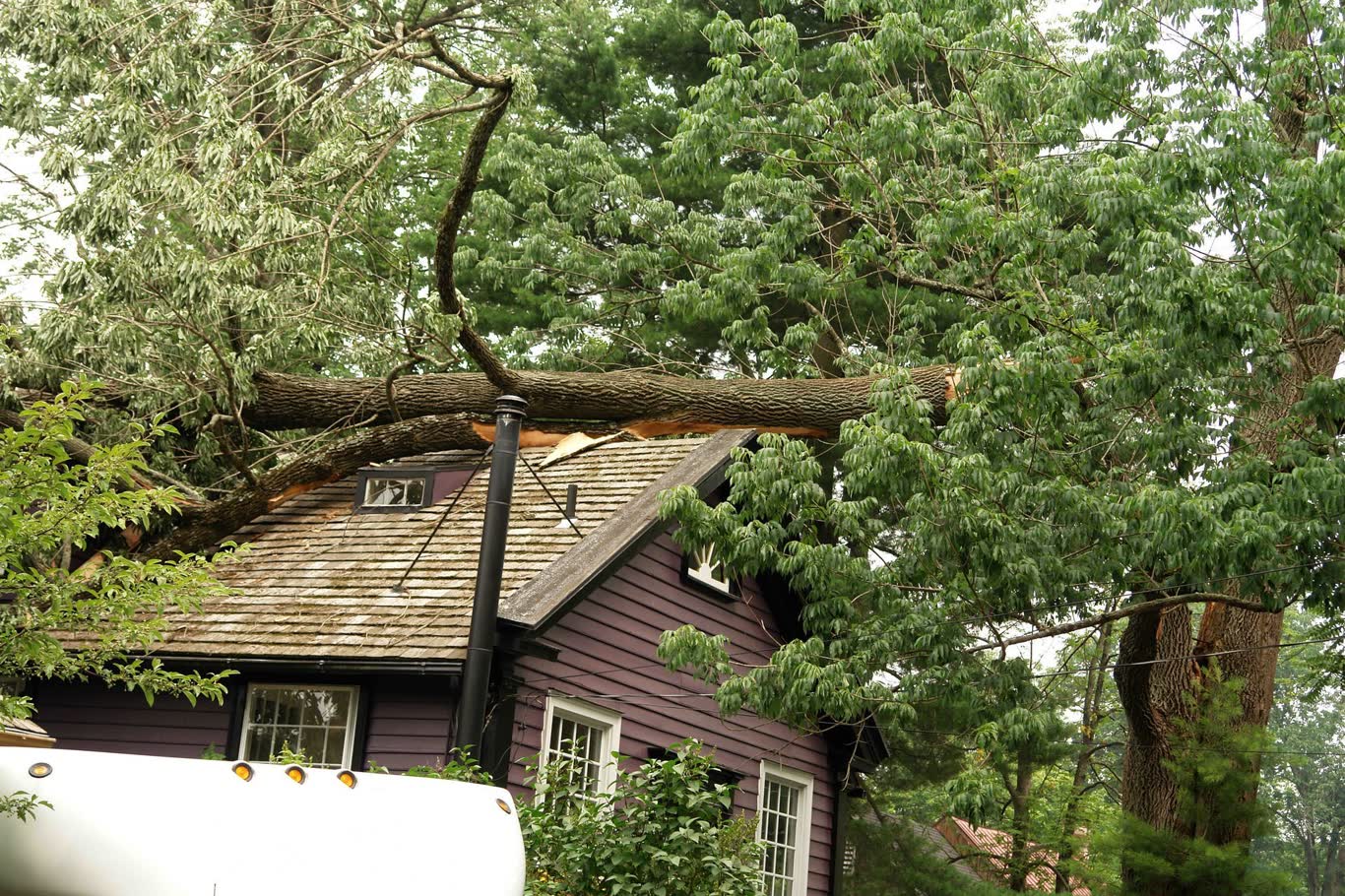
Do not discard storm debris from your yard, because your adjuster may need to see it. Photograph everything from the ground before any cleanup, then keep the pieces out of the way of walkways and driveways. Dalton Roofing Inc gives this same advice to every homeowner after a storm.
Why does storm debris matter to an insurance claim?
Debris is evidence of what the storm did. Torn shingles, broken tile pieces and bent flashing on the ground show the adjuster how the roof was hit and where.
Once those pieces go to the curb, the story gets harder to tell. A photo helps, but the real material can answer questions a photo cannot, such as what kind of roofing it was and how it broke. Dalton's storm guidance says: Do not discard storm debris from your yard until you have photographed it and your adjuster has had a chance to see it.
If you need help right away, our storm and emergency roof repair team responds 24/7. We can talk through next steps by phone, and you can read more in our guide to a Florida roof insurance claim.
What should you photograph before any cleanup?
Photograph the whole scene from the ground first, then move in closer. Start wide so the pictures show the house and the yard together, then take close shots of individual pieces.
A simple order works well:
- The full front, sides and back of the house from the yard.
- Debris where it landed, with part of the house in the frame.
- Close shots of torn shingles, broken tile, bent flashing or loose metal.
- Fallen limbs or trees, especially any that touched the roof.
- Water stains on ceilings or walls inside, if you see them.
- Damage to fences, screens, gutters and sheds.
Stay on the ground. You do not need to climb up to take these pictures, and a wet or damaged roof is not a safe place to stand. If you want a closer look, a roofer can inspect it safely.
What cleanup mistakes weaken a claim?
The biggest mistake is throwing everything away before anyone has seen it. A few other habits cause trouble too, and each one has an easy fix.
Hauling debris to the curb right away
It feels responsible to tidy up. Wait until the photos are taken and your adjuster has said it is fine. If the pile is in the way, move it to one side of the yard and keep it together.
Taking photos only after cleanup
Pictures of a clean yard do not show what fell. Take the wide and close photos first, then clean.
Skipping the date and wide shots
Close-ups alone can be hard to place. Include shots that show where the debris sits in relation to the house.
Making permanent repairs before anyone has looked
A temporary cover to stop water is fine and sensible. A full repair before the damage has been documented can hide what happened. Keep any receipts for temporary work.
Climbing up to check
Do not go on the roof yourself. A fall is a far bigger problem than a delayed photo. Ask a roofer to look, and take your pictures from the ground.
Dalton does not decide your claim, and nobody can promise how an insurance company will respond. What we can do is help you avoid the habits that make a claim harder to explain.
Is it safe to leave debris in place?
Usually yes, if you keep it clear of where people walk and park. The point is to leave debris in place long enough to document it, not to leave a hazard for weeks.
Check a few things first. Stay away from anything near a downed power line, and call the utility if you see one. Watch for nails, sharp metal edges and broken tile. Keep children and pets away from the pile, and wear sturdy gloves and closed shoes if you must move anything.
If debris blocks a driveway or a door, move it just enough to get through, and photograph it first. A big limb leaning on the house is a different case. Call for help rather than pulling it off yourself.
In Port St. Lucie, Fort Pierce, Stuart and across the rest of our service area, storms can leave a mess in a short time. A calm, simple routine of photograph, set aside and call keeps things under control.
Who should you call first after storm damage?
Call your insurance company to report the damage, and call a roofer to make the roof safe. You can do both on the same day. Many homeowners start with the roofer because water coming in cannot wait.
Dalton Roofing is a family-owned company based in Fort Pierce. We serve St. Lucie, Martin, Palm Beach and Indian River Counties, and we speak English and Spanish (Se habla espanol). Our free roof inspection comes with a written summary and no obligation, which gives you a clear record of what we see.
When you call, tell us what you saw and what you have already photographed. We can advise on a temporary cover and set a time to look at the roof. You can also see our roof repair page for what a repair visit involves.
Need a hand after a storm? Call Dalton Roofing Inc at (561) 662-6622 to schedule a free roof inspection with a written summary and no obligation.
Frequently Asked Questions
How long should I keep storm debris?
Keep it until you have photographed it and your adjuster has had a chance to see it. Ask your insurance company when it is fine to dispose of it, and keep it stored away from walkways.
Can I put a tarp on my roof before the adjuster comes?
A temporary cover to stop water is sensible, but do not climb up yourself. Call a roofer, such as Dalton, to place it safely, and keep photos and receipts for the temporary work.
Does Dalton help in Spanish?
Yes. English and Spanish are both spoken at Dalton Roofing, so you can explain the damage and ask questions in whichever language is easier for you.
What if the debris is a safety hazard?
Photograph it first, then move only what you must to clear a door or driveway. Stay away from downed power lines, and call for help with large limbs or heavy pieces.