
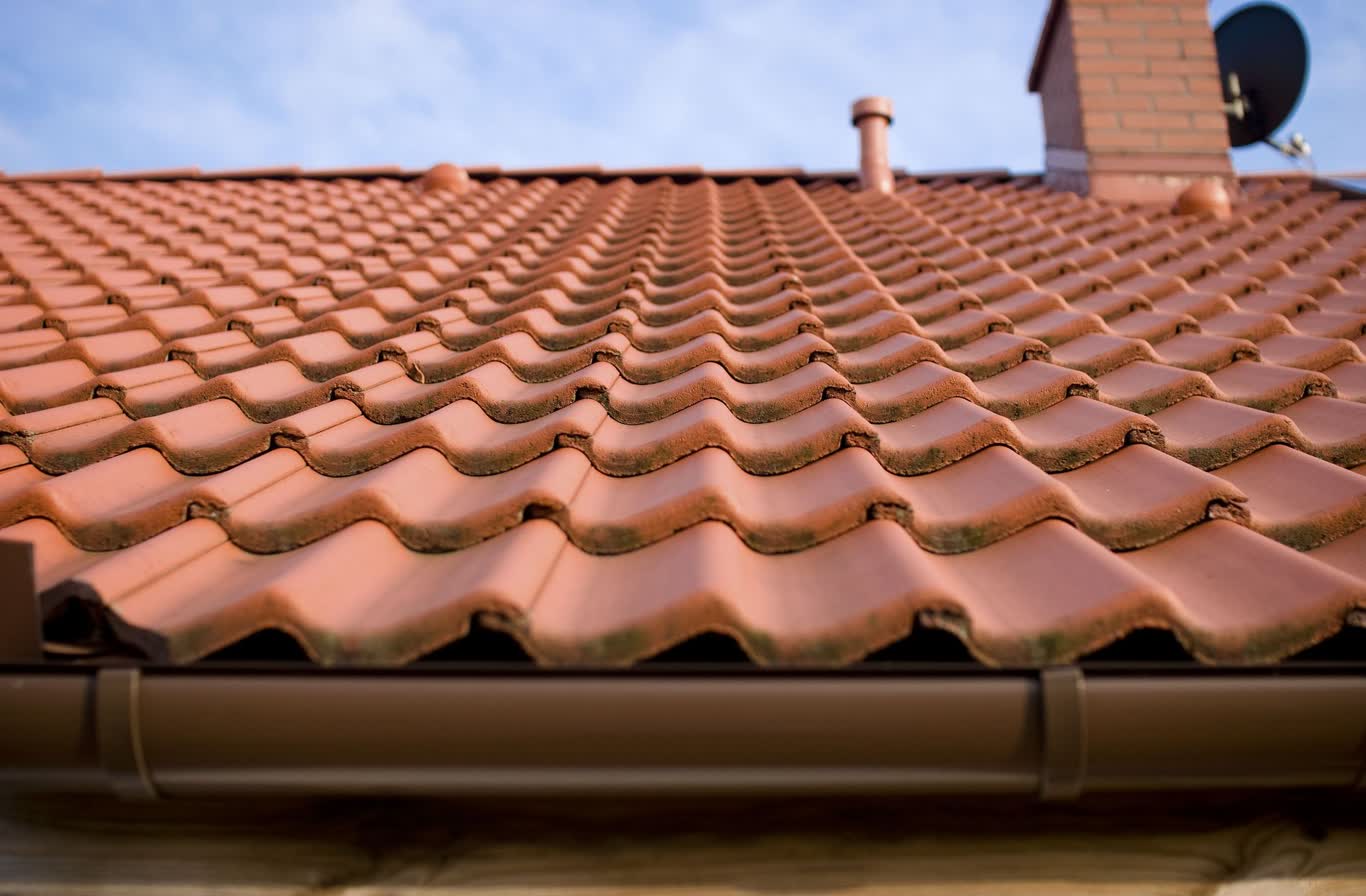
Foot traffic is a leading cause of cracked roof tiles, along with falling branches and hail or storm debris. A single cracked tile can usually be replaced without a full tear-off if the underlayment under it is still intact. Dalton Roofing Inc explains this on its tile roofing page, and it matters for tile roofs in Port St. Lucie and Fort Pierce.
One broken tile does not mean you need a new roof. It does mean the spot needs attention soon, because a crack lets water reach the layers underneath. Here is what usually breaks tiles, when a single tile swap works and when the problem is bigger.
What actually cracks a roof tile?
Most cracked tiles come from weight or impact in one spot. Concrete and clay tile are strong when the load is spread out, but they can snap when a point load lands on them.
The common causes are simple.
- Someone walking on the roof, whether a homeowner, a satellite installer or a contractor who did not know how to move on tile.
- A falling branch or coconut during a storm.
- Wind-blown debris during hurricane season.
- Hail or other hard impact.
- A tile that slipped, shifted and then cracked against its neighbor.
Age and sun exposure can make tile more brittle too, but sudden cracks usually trace back to a single event you can often name.
Why does walking on tile matter so much?
Tile is made to shed water, not to carry a person's weight on one small area. A step in the wrong place can crack a tile you cannot see from the ground.
This is why a quick job on a tile roof can cause new damage. A technician who works on tile roofs knows to step where the roof is supported and to avoid stepping on the middle of a tile. If you hire someone to clean gutters, fix an antenna or run a cable across your roof, ask whether they have worked on tile before. A second set of cracks after a service visit is a common and avoidable problem.
If you need to look at the roof yourself, use binoculars from the ground first. Cracked or missing tile often shows as a dark line, a gap or a tile sitting out of line with the rows around it.
When can a single tile be replaced?
A single tile can be replaced when the damage is limited to that tile and the layer under it is still in good shape. Dalton states that individual cracked or broken tiles are normally repairable without a full tear-off when the underlayment beneath is intact.
In a typical repair, the broken tile is lifted out, the area underneath is checked and a matching tile is set in its place. Neighboring tiles stay where they are. This is a small, targeted job, not a roof replacement.
A few things make this repair easier. The damage should be isolated, the nearby tiles should be sound, and a matching tile should be available. Tile styles and colors vary, so ask whether a close match can be found. If your roof is older, a tile that matches in shape may still differ slightly in color after years in the sun.
If the cracks are in several places, our guide to cracked or slipped tile roofs explains what that can mean.
What does the underlayment have to do with it?
The underlayment is the water barrier under your tiles, and it is what protects the roof deck when a tile cracks. If it is intact, a single tile repair is usually enough. If it is damaged, the repair has to go deeper.
Tile is the outer layer. In Florida, rain that gets past a cracked tile is usually stopped by the underlayment, so a crack does not always mean a leak right away. That can give a false sense of security, because the underlayment is not made to carry water for long periods. A cracked tile left alone through a few rainy seasons can wear the layer under it.
This is why an inspection matters even for one tile. Someone has to lift the tile and look at what is under it. From the ground, you cannot tell whether the underlayment is dry and sound or stained and worn.
How do you know if it is more than a tile problem?
It is more than a tile problem when you see signs of water inside the house, damage across many tiles or a sagging section of roof. Those signs point to something beyond a single swap.
- Stains on a ceiling or wall below the cracked area.
- Many cracked or slipped tiles in one section, not one.
- Tiles that keep slipping out of line.
- Soft or sagging spots you can see from the ground.
- A musty smell in the attic after rain.
When these show up, the question shifts from replacing a tile to checking the underlayment and the deck. A written inspection summary helps here. It tells you what was found, so you can decide on a repair or a larger project with clear information. Dalton offers a free roof inspection with a written summary and no obligation, and estimates are written and itemized after an inspection.
If your roof has taken storm damage, call right away. Dalton offers 24/7 storm and emergency response, and a crack that opens during a storm should not wait. See our roof inspection page for what to expect.
What should you do about a broken tile today?
Do not climb up to look, and do not tape or seal over the crack yourself. Take a photo from the ground and book an inspection.
A fast response keeps a small repair small. Dalton is a family-owned company based in Fort Pierce, serving St. Lucie, Martin, Palm Beach and Indian River counties. English and Spanish are spoken (Se habla espanol), so you can explain the problem in the language you are most comfortable with.
To have a broken tile checked, call Dalton Roofing Inc at (561) 662-6622 to schedule your free roof inspection.
Frequently Asked Questions
Can I walk on my tile roof to check for cracks?
It is best not to. Tile can crack under a single step, and a fall from a roof is a serious risk. Use binoculars from the ground and call for an inspection.
Will one broken tile cause a leak?
Not always. The underlayment often stops water for a while. A crack still lets water reach that layer, so have it checked soon before the area under the tile wears.
Is a replacement tile going to match the rest of my roof?
A close match is often possible, but sun exposure can make older tile look different from a new one. Ask the roofer whether a matching tile is available before the repair.
How do I know if the underlayment is intact?
You cannot tell from the ground. A roofer has to lift the broken tile and look at what is underneath. That check is part of an inspection.