
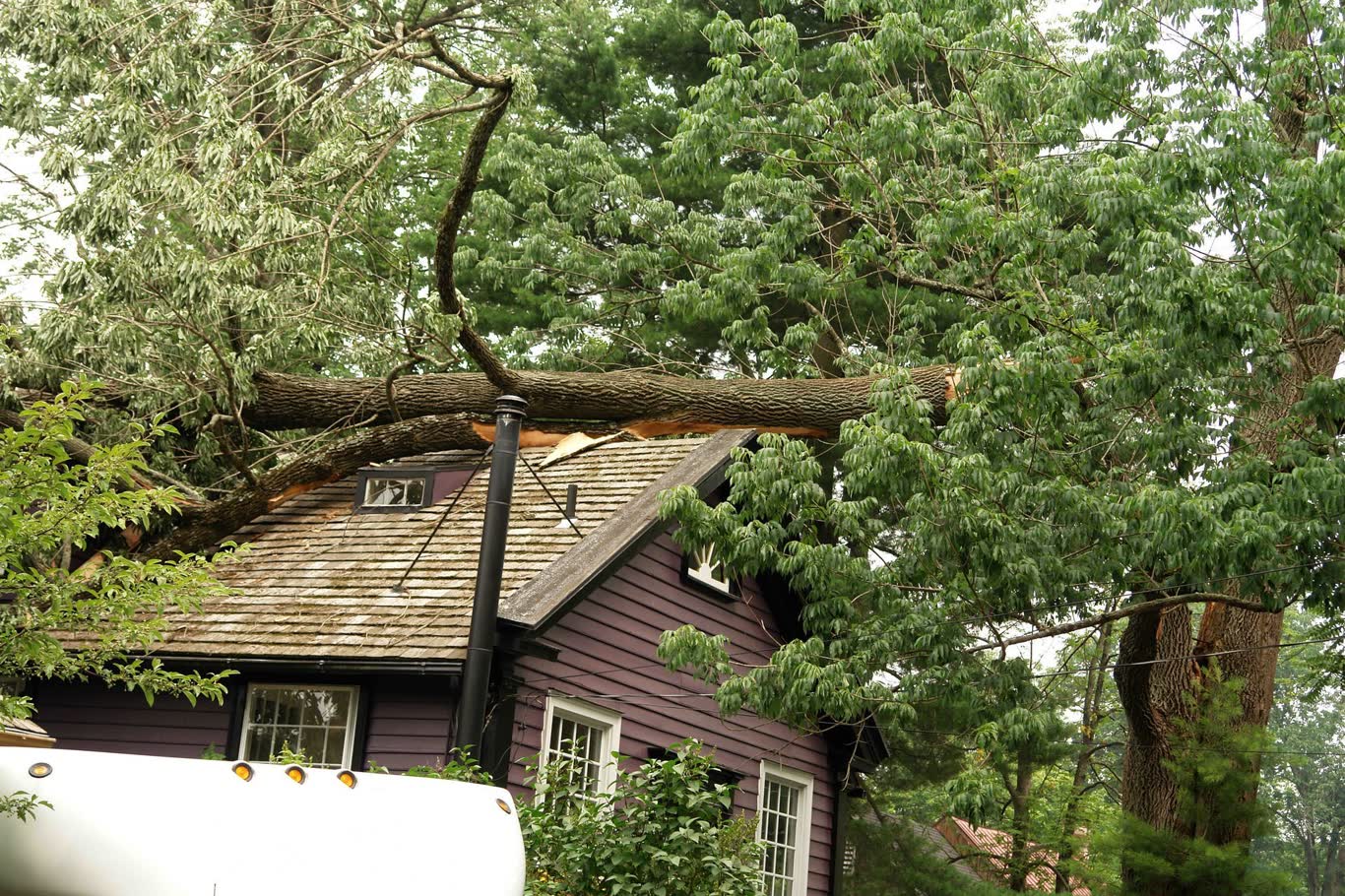
A tree on your roof is serious, and safety comes first. Stay off the roof, and keep people and pets away from the area. Then call a roofer for an emergency inspection and cover any open areas to limit more water damage.
Step One: Keep Everyone Safe
Before you do anything else, check the people around the home. Move children, pets, and visitors away from the damaged area. If the tree is still leaning or shifting, stay clear of it. Storm damage can change quickly. A limb that looks stable may move with the next gust of wind or the next rain. Your first job is to get everyone to a safe spot.
Check for Power Lines and Gas
Look for power lines, broken utility poles, and any sign of a gas leak. If a line touches the tree or the roof, do not touch the tree. Do not walk near the line. Call your power company and emergency services right away. If you smell gas, leave the house and call from a safe location. These risks matter more than any repair. Wait for the right crew before you go near the damage.
Why You Should Stay Off the Roof
Many people want to climb up and see the damage for themselves. That is a bad idea. A roof with a fallen tree on it can be weak in ways you cannot see. Shingles, tiles, and decking may look fine from the ground but be broken underneath. Wet surfaces are slippery, and loose branches can roll off without warning. A roofer has the tools and training to work on storm-damaged roofs safely. Let them handle the climb.
Cover Open Areas to Limit Water Damage
Once it is safe, you can help limit more damage. Move furniture and valuables away from any spot where water is coming in. Place buckets or towels under active leaks. If an opening is large and the weather is still bad, a temporary covering may help keep rain out until a roofer can visit. A temporary covering is not a permanent fix. It only buys you time while you plan the real repair.
Document the Damage
Photos and notes help you keep a clear record. Take wide shots of the whole roof and close shots of the damaged areas. Capture the tree, the limbs, the gutters, and any water stains inside the home. Record the date and time. Write down what you saw and what you did. Keep receipts for any emergency supplies. Good notes make it easier to talk through the damage with a roofer, and with anyone else who needs the details later.
What a Roofer Checks for Hidden Damage
A tree can cause damage that is not visible at first. A good roofer looks at more than the shingles or tiles on top. The crew checks the decking, the rafters or trusses, and the flashing around vents and chimneys. They look at the underlayment for tears. They inspect the attic for water staining, soft spots, and daylight coming through the roof. They also check gutters, fascia, and soffit boards for impact damage. Hidden problems can grow if no one looks for them.
Why Hidden Damage Matters
Water is the biggest threat after a tree strike. Small openings let rain reach the decking and the insulation. Over time, that moisture can lead to rot, mold, and weak framing. Fixing a small leak early is easier than repairing a large area later. That is why a full inspection matters, even when the damage looks minor from the ground. A thorough look now can save you from bigger problems in the next storm.
Tree Removal Is a Separate Job
Removing a fallen tree takes a different set of tools and skills than roof repair. Ask whoever removes the tree about the safest order of work. The roof crew needs clear access to the area once the limbs are off. Coordinate the two jobs so the roof is not damaged again during removal. Good planning keeps everyone safer and avoids extra trips.
Questions to Ask a Roofer
- Will you inspect the attic as well as the roof surface?
- How will you cover open areas until the repair is done?
- Will you provide a written summary of what you found?
- Do you handle shingle, tile, metal, and flat roofs?
- Do you offer 24/7 storm and emergency response?
Service Across the Treasure Coast
Dalton Roofing Inc is a family-owned company based in Fort Pierce. We serve Palm City, Stuart, Hobe Sound, Port St. Lucie, Jupiter, and other nearby communities in St. Lucie, Martin, Palm Beach, and Indian River Counties. We handle residential and commercial roofing. We speak English and Spanish. Whether your home is in Palm City or down the road, the same safety steps apply.
Next Steps
For a quick overview of what to do after a storm, read our guide on spotting roof storm damage after a hurricane. When you are ready for help, visit our page on storm and emergency roof repair. Both pages can help you plan your next move.
If a tree has hit your roof, call Dalton Roofing Inc at (561) 662-6622. We offer 24/7 storm and emergency response. We also provide a free roof inspection with a written summary and no obligation. Our team is ready to help you get started.
Frequently Asked Questions
What should I do first if a tree falls on my roof?
Keep everyone safe and stay off the roof. Check for power lines and gas. Then call a roofer for an emergency inspection.
Should I cover the hole myself?
You can cover open areas once it is safe to do so. A temporary covering can limit rain entry, but it is not a permanent repair.
What does a roofer check after a tree strike?
A roofer checks the decking, framing, flashing, underlayment, attic, gutters, and fascia. They look for hidden damage that is not visible from the ground.