
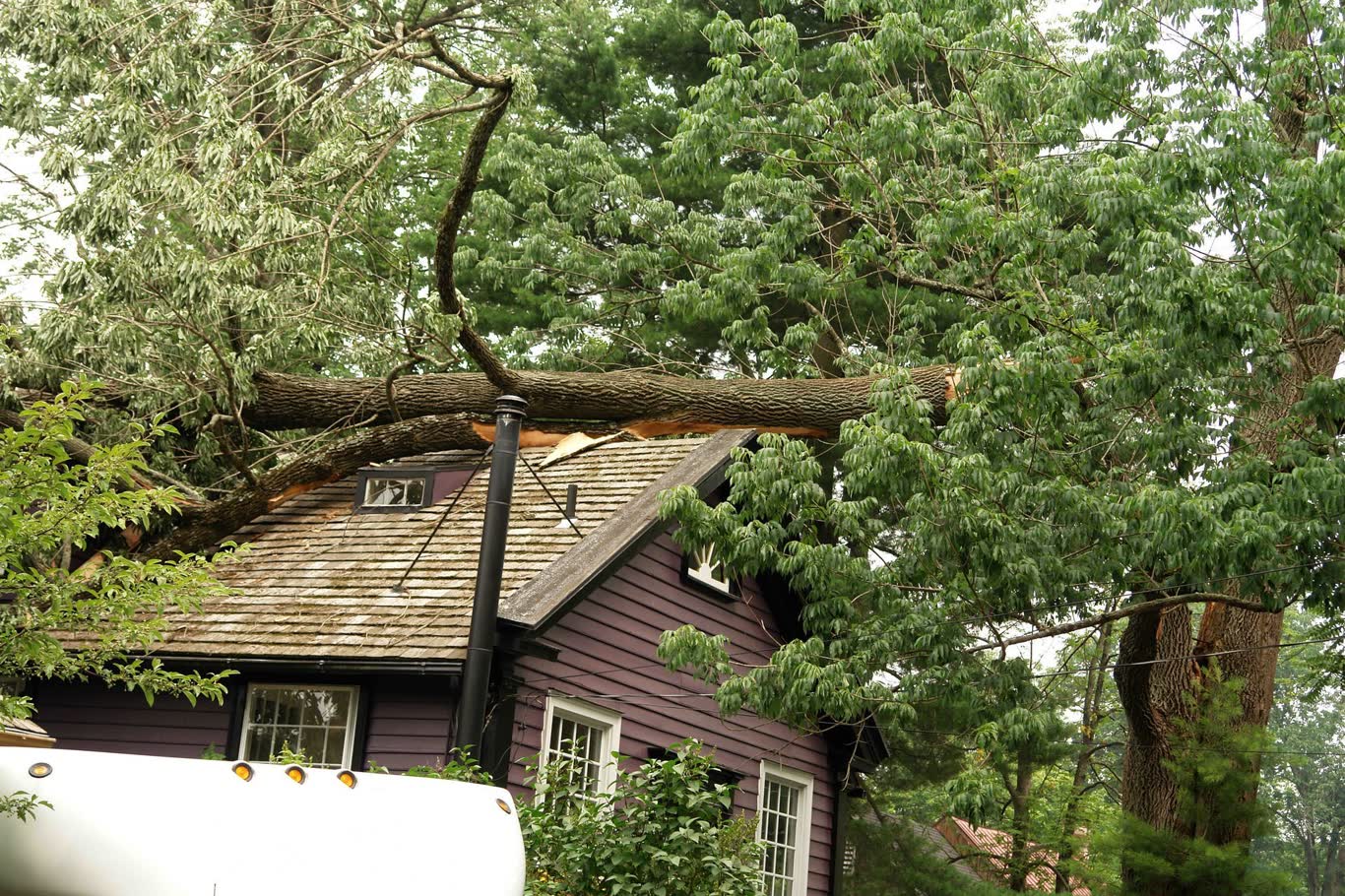
A tarp stops active water from entering your home, and the crew documents the damage. Dalton Roofing then completes the approved repair or replacement once your claim is settled. The tarp is a short-term cover, not the final fix. Our storm and emergency roof repair team handles both stages.
What does the tarp do and not do?
A tarp keeps rain out of the exposed part of the roof so the damage does not spread inside. It does not repair anything. Think of it as a bandage that buys time while the insurance process moves forward.
At Dalton, the storm crew tarps exposed areas and stops active leaks first. That step comes before paperwork because water keeps doing harm every hour it gets in. Wet insulation, stained ceilings and warped drywall can turn a roof problem into an interior problem fast.
A tarp also has limits. Wind can lift an edge, and sun breaks down the material over time. If you want the basics of what a crew does before the permanent work, read our post on emergency tarp basics before a roofer arrives.
What gets documented before the claim moves?
Photos and notes of the damage come first, and they should be taken before and after the tarp goes on. This record shows your insurance company what the storm did to the roof and what the crew did to protect it.
Dalton follows a four-step sequence on storm calls: tarp, assess, document, then complete the approved work. The assessment and the documentation happen while the roof is still in its storm-damaged state, so nothing is lost when the tarp goes on.
Here is what is worth keeping on file:
- Photos of the damaged areas from the ground and, where it is safe, from above
- Photos of the tarp once it is installed
- Interior photos of any stains, drips or wet spots
- The date and time of the storm and of the first leak
- Any written summary or notes from the roofing crew
- Receipts for anything you buy to protect the house
Keep everything in one folder on your phone or in a paper file. When the adjuster calls, you will know where it is.
How long does the temporary stage last?
The temporary stage lasts until your claim is settled, and nobody can promise how long that takes. It depends on your insurance company, the number of claims after a storm and how fast approvals come back.
We do not give a date because we do not control the claim. What we can say is this: the tarp keeps the house protected while you wait, and the crew can check it if the weather turns. If a tarp edge lifts or a seam opens, call us. A tarp that has failed is no longer protecting the home.
During long waits, ask for a quick look at the tarp after any heavy storm or strong wind. Roofs in Port St. Lucie, Stuart, Jupiter and the rest of the coast see wind and rain often, so the cover works hard.
How do you protect the interior while you wait?
You protect the inside by catching water, moving valuables and drying wet spots quickly. The tarp handles the roof, and you handle the rooms below it.
- Move furniture, rugs and electronics away from any wet ceiling or wall.
- Put buckets or towels under active drips.
- Poke a tiny hole in a bulging, water-filled ceiling spot to let it drain into a bucket, only if it is safe to stand under it.
- Run fans and a dehumidifier to dry the area.
- Take photos of every wet spot before you clean up.
- Check the attic if you can reach it safely, and note any wet insulation.
Do not climb on the roof yourself. A wet roof is slick and a damaged one can give way. Let the crew handle anything above the gutter line.
If you smell mold or see dark spots spreading, tell your insurance company and note it in your file. Moisture that sits for days can cause trouble, and the sooner it is on record, the better.
What happens when the claim is settled?
Once your claim is settled, Dalton completes the approved repair or replacement. The crew takes down the tarp, then works to the scope your insurance company approved.
The scope depends on the damage. A few lifted shingles may need a repair. A roof with wide damage may need a full replacement. We handle shingle, tile, metal and flat roofs, so the work can match what is on your home now. If you are choosing between the two paths, our roof repair page explains when a repair makes sense.
Estimates from Dalton are written and itemized after an inspection. That means you can compare the work we list against what your insurance company approved. If something does not line up, ask us to explain it before work starts.
If the payout and the work do not match, tell us early. We can talk through options, including our monthly payment plans, which you can read about on the financing page.
Who should you call while the claim is open?
Call the same crew that put up the tarp. They know the roof, they have the photos and they can answer questions from your adjuster. Dalton is a family-owned company based in Fort Pierce, and we serve St. Lucie, Martin, Palm Beach and Indian River Counties.
We offer 24/7 storm and emergency response. English and Spanish are both spoken at Dalton (Se habla espanol), so you can explain the damage in the language you are most comfortable with.
Tell us what the storm did, where the water is coming in and whether a tarp is already on the roof. We will tell you what to expect next, step by step.
Call Dalton Roofing at (561) 662-6622 to schedule a free roof inspection with a written summary and no obligation.
Frequently Asked Questions
Can a tarp stay on my roof until the claim is settled?
Yes, a tarp is meant to cover the damage while the claim moves forward. It is temporary, so have the crew check it after strong wind or heavy rain. If an edge lifts, call right away.
Should I take photos before the tarp goes on?
Yes. Photos taken before and after the tarp show the original storm damage and the protection step. Keep them with your other claim papers so your adjuster can see the full picture.
Will the tarp make my claim harder?
No. Protecting the home from more water is a normal step after storm damage. Keep your receipts and photos, and tell your insurance company what was done and when.
Do you handle both the tarp and the permanent repair?
Yes. Dalton's storm crew tarps exposed areas and stops active leaks first. The same company then completes the approved repair or replacement, so one team knows the roof from start to finish.