
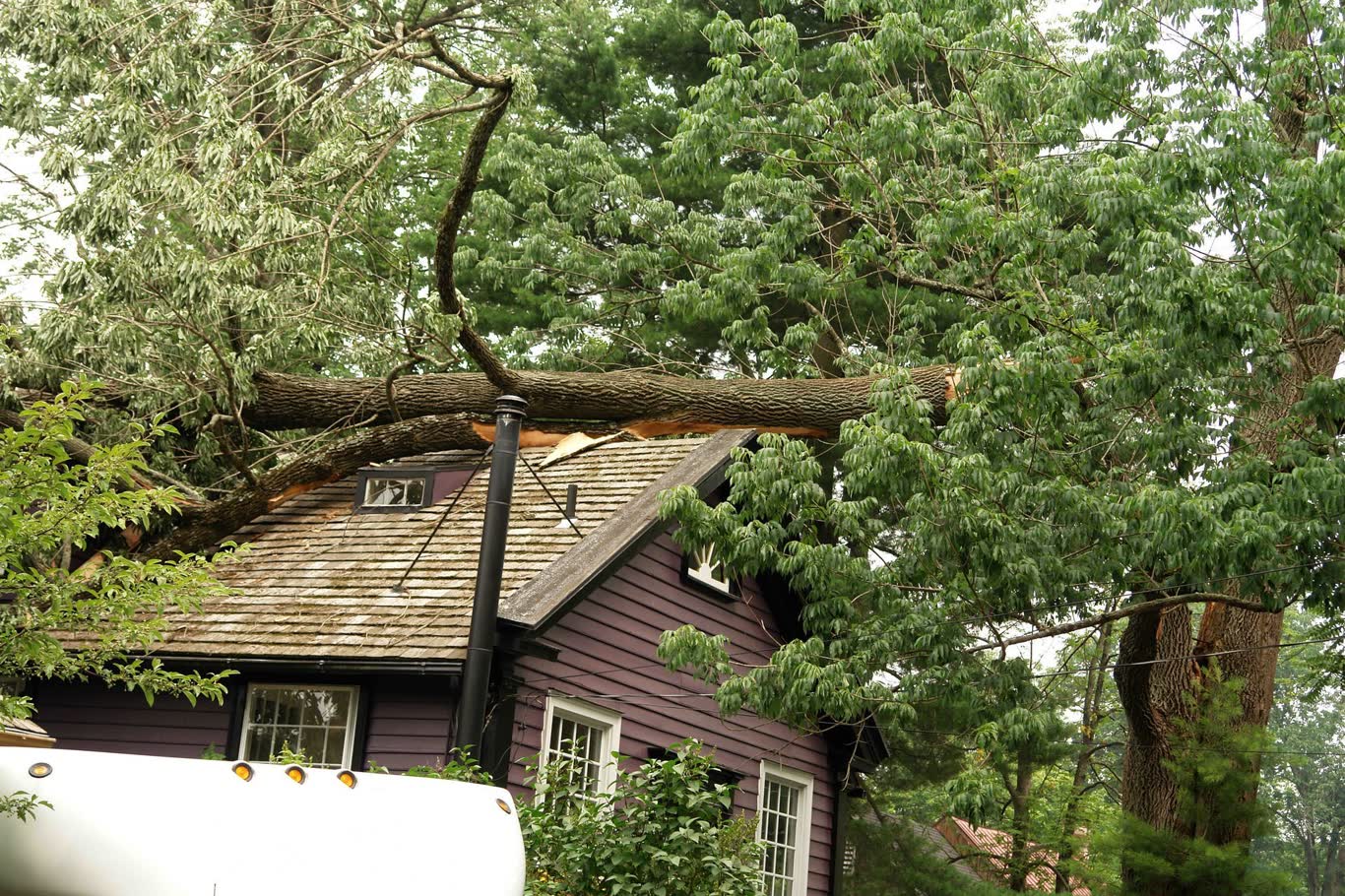
A roof tarp is a temporary cover that keeps water out until the permanent repair can be done. It does not fix the roof. It buys time and protects your ceilings, insulation and belongings. At Dalton Roofing, tarps go on the same day in most cases, so the water stops before more damage spreads.
What does a tarp do?
A tarp covers the damaged part of the roof and keeps rain from getting in. That is its whole job, and it is an important one. Water that reaches the attic can soak insulation, stain ceilings and lead to mold if it sits.
Dalton puts heavy-duty temporary tarps on the same day to halt water intrusion. These are not thin store-bought sheets. They are secured so wind and rain do not peel them back. For storm damage, our storm and emergency roof repair team is available 24/7.
Think of the tarp as a bandage. It protects the wound so the real treatment can happen on a dry day, with the right materials and a clear plan.
What can it not do?
A tarp cannot repair a roof, and it is not a long-term answer. It covers the damage. It does not replace missing shingles, broken tiles or a damaged deck.
A tarp also cannot make an unsafe roof safe to walk on. It does not stop every drip in heavy wind. And it should not stay in place for months while you wait. Sun and wind wear on tarps, and the roof underneath still needs attention.
If you see a tarp on a neighbor's roof, that is a sign the repair is still ahead of them. The goal is to move from a tarp to a permanent fix quickly.
What should you do before the crew arrives?
Stay off the roof and focus on keeping the inside of your home safe. Roofs are slippery after a storm, and damage is not always visible. A fall is a much bigger problem than a wet ceiling.
Here are steps you can take right now:
- Stay inside and away from areas where the ceiling is sagging or dripping.
- Move furniture, rugs and electronics out of the wet area.
- Put buckets or bins under active drips and lay towels around them.
- If a ceiling bulges with water, keep people and pets out from under it and tell us when you call.
- Turn off power to any room where water is near light fixtures or outlets.
- Call us and describe what you see so the crew knows what to bring.
Do not climb up to place a tarp yourself. Wind can lift a sheet like a sail, and a wet roof gives little grip. Leave that part to a crew that has the gear and training to work at height.
What photos should you take?
Take clear photos of the damage and of the inside of your home before anything is moved or covered. Good pictures help when you talk with your insurance company. Take them from the ground or from inside, never from the roof.
Here is a short list of shots worth getting:
- The whole house from the street, so the roof shape is clear.
- Close views of any missing shingles, tiles or metal panels you can see from the ground.
- Water stains, drips or sagging spots on ceilings and walls.
- Wet insulation, if you can see it from the attic hatch.
- Any fallen branches or debris on or near the roof.
- The tarp itself after it goes on.
Add the date and a short note to each photo. Keep them in one folder on your phone. We cannot promise what an insurance company will decide, but clear records make the conversation easier. To learn what storm damage can look like, read our guide on how to spot roof storm damage after a hurricane.
What happens after the tarp?
After the tarp, the next step is an inspection and a written plan for the permanent repair. Dalton offers a free roof inspection with a written summary and no obligation. Estimates are written and itemized after that inspection, so you can see what the work includes.
The inspection looks at more than the spot that leaked. A storm can damage areas you cannot see from the ground. Looking over the whole roof helps you decide between a repair and a larger project.
Once you have the plan, you can choose the timing. If you want help spreading out the cost, monthly payment plans are available. Our financing page explains how that works.
Dalton is a family-owned company based in Fort Pierce. We serve St. Lucie, Martin, Palm Beach and Indian River Counties, and we speak English and Spanish (Se habla espanol). Whether the roof is shingle, tile, metal or flat, the first goal is the same: stop the water.
How do you keep the tarp from becoming a long-term fix?
Set a repair plan right away and keep in touch with your roofer. Ask when the permanent repair can happen and what materials it needs. Ask what could slow it down, like a delivery or a series of rainy days.
Check the inside of your home after each heavy rain. If you see new stains, call us so we can look at the tarp. Wind can shift even a well-secured cover, and a quick adjustment is easier than a new round of repairs.
If a storm is coming, take a minute to move valuables out of the rooms under the damage. Do this before the weather hits, not after. It is a small step that pays off.
If your roof is leaking in Port St. Lucie, Stuart, Jupiter or anywhere else we serve, call Dalton Roofing at (561) 662-6622. Tell us what you see, and we will get a crew moving. When you are ready, ask about a free roof inspection to plan the permanent repair.
Frequently Asked Questions
How long can a roof tarp stay on?
A tarp is meant to be temporary. Sun and wind wear it down over time. Plan the permanent repair as soon as you can, and check inside your home after heavy rain for new stains.
Is it safe to put a tarp on my roof myself?
No. Wet roofs are slippery, wind can pull a tarp like a sail, and damage is not always visible. Stay on the ground and call a roofer who has the gear and training to work at height.
Should I take photos before the tarp goes on?
Yes, if you can do it safely from the ground or from inside. Photos of the damage, the water stains and the whole house help you keep clear records for your insurance conversation.
Does a tarp mean I need a new roof?
Not always. A tarp only covers the damage. An inspection shows whether a repair or a larger project makes sense. Dalton offers a free roof inspection with a written summary and no obligation.