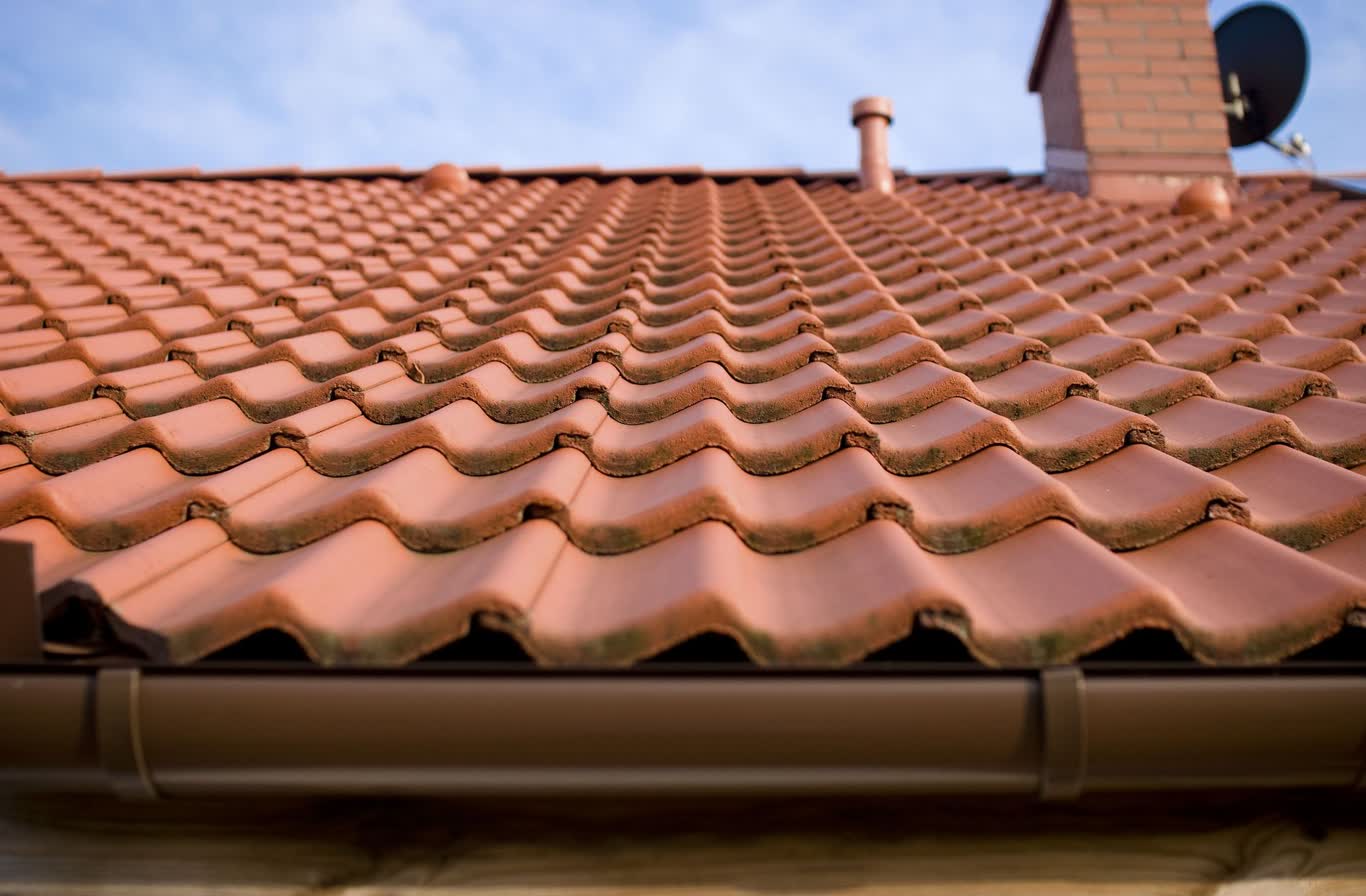
Tile is much heavier than shingles, so the roof deck and framing are assessed before the switch. The goal is to confirm the house can carry the extra load for the long run. Dalton Roofing checks this first on every shingle-to-tile project. Our tile roofing service starts with that structural assessment.
If you own a home in Port St. Lucie, Fort Pierce or Stuart with a shingle roof today, this guide explains what the check covers. You will see what can go wrong, what gets fixed first, and how to decide if tile is still the right call.
Why is tile so much heavier?
Tile is made from clay or concrete, so each piece weighs far more than a shingle. A tile roof puts a steady, heavy load on the deck and on the rafters or trusses that hold it up.
Most shingle roofs were built for a lighter covering. Many houses were framed with shingles in mind, and nobody planned for tile later. That is why you cannot treat a shingle-to-tile swap like a simple material change.
Weight is not the only issue. A tile roof also needs a solid, flat deck to sit on and a dry, sound surface under the tile. If the structure below is weak, the tile will not make it better. It will make it worse.
What gets checked before the switch?
Before any tile goes on, Dalton says the roof deck and structural framing need to be assessed on a home that had shingles. This is the first step, ahead of any material talk.
Here is what a roofer looks at during that assessment:
- The condition of the roof deck, including soft spots, stains and old water damage.
- The rafters or trusses, and any signs of sagging, cracking or rot.
- Past repairs, patches and any areas that were changed over the years.
- The roof shape, the pitch and any low spots that hold water.
- The condition of the fascia and the edges where the roof meets the walls.
A roofer can see many of these things in the attic. Water stains on the underside of the deck tell a story. So do dark marks near the nails and gaps between boards. If the house has an attic, the inspection often includes a look from below.
When the assessment is done, you should get a clear answer in writing. Dalton offers a free roof inspection with a written summary and no obligation. Estimates are written and itemized after that inspection, so you can see what the work involves.
What if the deck needs work first?
If the deck is damaged, it gets repaired or replaced before tile goes on. Tile cannot sit on soft or rotted wood. Putting it over a weak deck only hides the problem until it fails.
Deck work can be small or large. It may be a few boards in one section or a larger area. It depends on what the inspection finds. This is one reason the first look matters so much. It sets the scope before anyone talks about a start date.
If the framing needs attention, that is a bigger conversation. A roofer will explain what they saw and what it means. You can then decide whether to fix the structure and move ahead with tile, or choose a lighter roof instead. Either way you have the facts before you spend more.
If your current roof is old and leaking, you may want to look at roof replacement options too. A replacement is often the right time to look at the deck all at once, since the old shingles are already off.
Does the underlayment change?
Yes, the underlayment matters more under tile than under shingles. The layer below the tile does much of the waterproofing, because tile itself sheds water but does not seal the roof like a solid sheet.
That is why tile jobs pay close attention to what lies under the tile. We cover this in more detail in our post on tile roof underlayment replacement on the Treasure Coast. It helps explain why the layer you cannot see is a big part of the roof's life.
Ask your roofer what underlayment they plan to use and why. A clear answer is a good sign. A vague one is a reason to ask more questions.
Is tile still the right call?
Tile is a good choice when the structure checks out and you want a roof with a classic Florida look. If the framing cannot carry it, another material may suit the house better.
Use these simple signs to decide:
- Choose tile if the deck and framing pass the check, or can be repaired at a scope you are comfortable with.
- Think about metal or shingle if the structure needs major work and you want to stay lighter.
- Ask for a second look if you get conflicting answers from different companies.
Dalton handles shingle, tile, metal and flat roofs, so the advice does not lean one way. You can read about our metal roofing if a lighter option fits your house better. The right roof is the one your home can carry and your budget can support.
If you are in Jupiter, Palm City or anywhere else in St. Lucie, Martin, Palm Beach or Indian River Counties, we can come look. Dalton Roofing is a family-owned company based in Fort Pierce. English and Spanish are spoken (Se habla espanol).
Call Dalton Roofing at (561) 662-6622 to book a free roof inspection with a written summary and no obligation. Tell us you are thinking about tile, and we will start with the deck and framing.
Frequently Asked Questions
Can I put tile over my old shingles?
Not as a shortcut. The deck and framing need to be assessed first, and the old covering is usually removed so the deck can be checked. Tile needs a sound surface under it to last.
How do I know if my attic framing looks healthy?
Look for sagging rafters, water stains, dark marks or soft wood. If you see any, do not guess. A roofer can inspect the attic and tell you what is normal and what needs repair.
Does Dalton inspect the roof before quoting a switch to tile?
Yes. Dalton offers a free roof inspection with a written summary and no obligation. Estimates are written and itemized after the inspection, so you see the scope before you decide.
Are payment options available for a tile roof?
Monthly payment plans are available. You can read the details on the financing page, then ask about them when you book your inspection.