
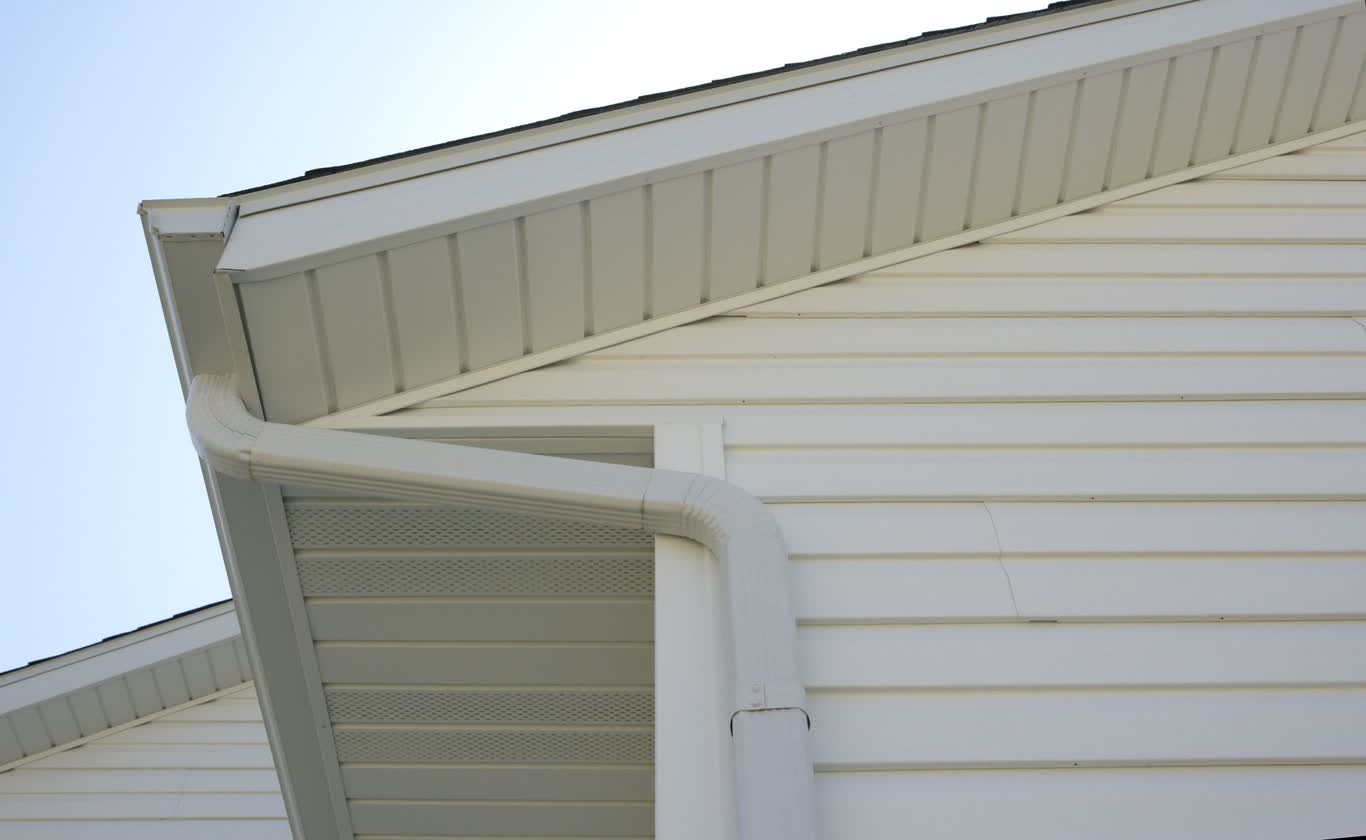
Soft, stained or peeling soffit and fascia after a storm are a sign that water got behind them. Paint alone will not fix wood that is damp or rotting. Dalton Roofing Inc checks these edge parts during a storm inspection as part of roof repair, so the roof and its edges are looked at together.
This guide explains what the parts do, what storm rot looks like and when a repair turns into a replacement.
What do the soffit and fascia do?
The fascia is the board along the roof edge that the gutters attach to. The soffit is the panel under the overhang that closes the gap between the wall and the roof edge. Together they protect the rafter ends and the attic from water, wind and pests.
Many soffits have small vents. Those vents let the attic breathe, which helps keep moisture from building up under the roof. When a soffit is damaged or blocked, that airflow can suffer too.
Because these parts sit at the edge, they take a lot of weather. Wind-driven rain hits them from the side, and water running off the roof or overflowing a gutter lands right on them.
What does storm rot look like?
Storm damage at the roof edge often shows up as dark stains, peeling paint, soft wood, sagging panels or small holes. A screwdriver tip that sinks into the board is a clear sign the wood has gone soft.
Walk around the house and look up from the ground. Check for these signs:
- Brown or black stains on the underside of the overhang
- Paint that bubbles, flakes or peels in one spot
- Boards that sag, bow or have pulled away from the wall
- Gaps where a soffit panel has dropped or blown loose
- Mildew, mold-like spots or a musty smell near the eaves
- Signs of insects or birds getting into the gap
Rot usually starts small. A single stained board near a corner can mean a leak from the roof above it, a bad gutter joint or a flashing gap. That is why it helps to look at what is above the damage, not only the board itself.
Why check them after a storm?
Check them after a storm because wind and rain can push water behind the boards where you cannot see it. Damage that starts small can spread into the roof deck and the attic if it is left alone.
In Fort Pierce, Port St. Lucie and across the Treasure Coast, heavy rain and strong wind arrive together. Water driven sideways finds the joints and gaps at the roof edge first.
Wet wood also stays wet in our humid climate. A board that gets soaked in a storm may not dry out before the next one, and that is how a small stain turns into rot. Looking soon after the storm helps you catch it while the fix is still small.
If you are not sure whether the damage came from the storm or from slow wear, our guide to storm damage versus normal wear walks through the differences.
Repair or replace?
Repair a board if the damage is limited to a small area and the wood around it is solid. Replace it when the wood is soft through, split or crumbling, or when the damage runs along a long stretch of the edge.
Here is how to think about it:
- Paint or caulk only. This fits when the surface is intact and the wood is firm. It does not fit wood that has gone soft.
- Replace a section. This fits when rot is local and the rest of the board is sound.
- Replace the run. This fits when rot, sagging or loose panels spread along the eave.
Fix the cause too. If a leak, a gutter problem or a roof gap let the water in, new boards will rot again unless that is corrected. A new board over an active leak is only a short-term patch.
Sometimes the damage means more than the edge. If the roof deck or the attic framing is wet, the work grows beyond trim. That is another reason to get the whole roof checked, not only the visible boards.
How does the inspection cover them?
Our storm-damage inspection covers the full roof, all penetrations, and the soffit and fascia. We look at the edges and the roof above them together, so you learn where the water came from.
Dalton Roofing Inc is a family-owned company based in Fort Pierce. We serve St. Lucie, Martin, Palm Beach and Indian River Counties, and we speak English and Spanish (Se habla espanol).
After the inspection, you get a written summary. If repairs are needed, the estimate is written and itemized, so you can see what each part of the work covers. A roof inspection is free and comes with no obligation.
To prepare, take photos of any stains, soft spots or loose panels, and note when the last storm hit. Do not climb on the roof or a ladder to poke at damaged boards. Wet or rotten wood can give way.
What can you do before the inspection?
Keep water moving away from the house and protect what you can. Small steps now can keep the damage from getting worse before the inspection.
- Clear leaves and debris from gutters you can reach safely from the ground.
- Look at the attic ceiling below the damaged area for stains or drips.
- Cover openings only if you can do it safely, and call for help if you cannot.
- Keep a record of the date, the weather and photos of the damage.
If water is coming into the house or a panel is hanging loose, call right away. Dalton offers 24/7 storm and emergency response.
If you see soft or stained boards at your roof edge, book a free roof inspection with Dalton Roofing Inc by calling (561) 662-6622, and we will check the soffit and fascia along with the rest of the roof.
Frequently Asked Questions
Can I just paint over a stained soffit?
Only if the wood is firm and dry and the stain came from something already fixed. Paint over wet or soft wood hides the problem and fails fast. Find the water source first, then decide on paint or replacement.
Are soffit vents a problem after a storm?
They can be. Wind can loosen vent panels, and debris can block them. Blocked vents limit attic airflow. During an inspection we check that the panels are secure and the vents are clear.
How soon should I get rot checked?
As soon as you notice it. Wet wood in a humid climate rarely dries on its own, and the damage can reach the roof deck. A prompt look often keeps the repair small.
Does a roof inspection include the gutters?
The inspection looks at how water leaves the roof edge, which includes how gutters sit against the fascia. If a gutter problem caused the damage, we note it in the written summary.