
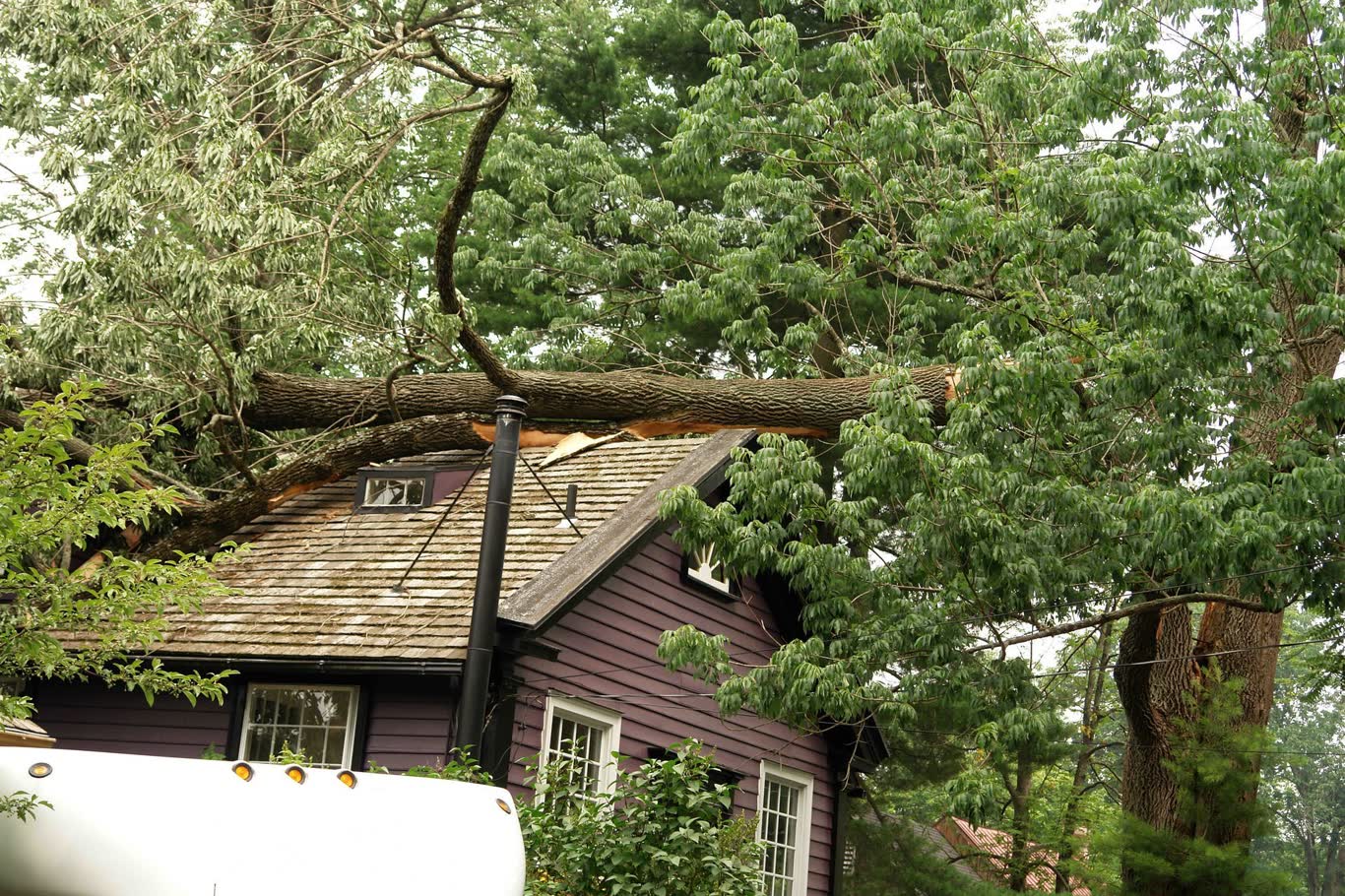
No, stay off the roof. Dalton Roofing tells homeowners not to climb your roof after a storm and to call for an emergency assessment instead. Check what you can from the ground, take photos from a safe spot, and let a roofer go up with the right equipment.
A roof that looks fine from the yard can still be hiding loose material, soft spots and wet surfaces. Climbing up to look is the step most likely to hurt someone. This how-to walks through a safer order of steps and links to our storm and emergency roof repair page.
Why is a wet or wind-damaged roof dangerous to walk on?
A wet or wind-damaged roof is dangerous because it is slippery, and you cannot see which parts are weak. A fall from a roof can cause serious injury, even from a single-story home.
Several things make a roof riskier right after a storm:
- Rain, wet leaves and debris make shingles, tile and metal slick.
- Wind can loosen tiles or shingles that then shift under your weight.
- Water can soften the decking underneath, so a section may give way without warning.
- Limbs and broken pieces may be resting on the surface and can slide.
- Power lines or tree limbs near the roof can be a separate hazard.
Tile and metal can be especially slick when damp, and tile can crack when stepped on, which can turn a small problem into a bigger one. A trained crew uses safety gear and knows where to step. A homeowner with a ladder usually has neither.
What can you safely check from the ground?
You can safely check the roof from the yard, the driveway and the street, and you can check the inside of the house. Most signs of storm damage can be seen without leaving the ground.
Follow these steps, one at a time:
- Wait until the wind and lightning have passed before going outside.
- Walk around the house and look up at the roofline from a safe distance, staying away from downed power lines.
- Look for shingles, tiles or metal panels on the ground or in the yard.
- Scan the roof for missing pieces, lifted edges, bare patches or sagging areas.
- Check gutters, soffits and fascia for bent, loose or hanging pieces.
- Look for limbs or debris resting on the roof or against the house.
- Go inside and check ceilings and walls for stains, drips or bubbling paint.
- Peek into the attic if you can do it safely from a stable floor, looking for damp insulation or daylight.
None of these steps need you to climb the roof after a storm. A pair of binoculars helps you see more from the ground. For more on this, read our guide to spotting roof storm damage after a hurricane.
How do you photograph damage without climbing?
Take photos from the ground, from several angles, and from inside the house if there is a leak. Clear photos help the roofer and anyone else who needs to see what happened.
Try this approach:
- Take a wide shot of each side of the house, so the whole roof is in view.
- Take close shots of anything that looks missing, lifted or cracked, using the zoom on your phone instead of moving closer.
- Photograph fallen pieces and debris where they landed, before you move them.
- Photograph ceiling stains, drips and wet spots inside, with something in the frame to show size.
- Note the date and time of the storm and when you took each photo.
Do not hold a phone over the edge of a ladder or reach out to get a better angle. If a shot needs height, leave it for the roofer. Dalton can document the roof during the inspection.
Who should you call for an assessment?
Call a roofer who offers emergency assessments, and call your insurance company about the claim process as a separate step. Dalton Roofing has 24/7 storm and emergency response, so you can call at any hour.
The Dalton team is a family-owned company based in Fort Pierce. We serve St. Lucie, Martin, Palm Beach and Indian River Counties, including Port St. Lucie, Stuart, Jupiter and West Palm Beach. English and Spanish are both spoken, and se habla espanol.
When you call, have this ready:
- Your address and the nearest city.
- What you saw from the ground and when the storm happened.
- Whether water is coming inside.
- The type of roof, such as shingle, tile, metal or flat.
After a visit, the estimate is written and itemized after an inspection. The inspection comes with a written summary and no obligation. Our roof inspection page explains what is covered.
What should you do about active leaks inside?
For an active leak, protect your belongings and your safety first, and call for emergency help. Keep everyone away from sagging ceilings and wet electrical areas.
Try these steps from inside the house:
- Move furniture, rugs and electronics away from the drip.
- Place a bucket or tub under the leak and lay towels around it.
- If a ceiling is bulging with water, keep clear of it and call right away.
- If water is near outlets, light fixtures or the breaker panel, stay away and shut off power only if you can do so safely.
- Take photos of the leak and the water damage.
Those steps buy time. They do not fix the roof. A temporary cover can often be put in place by a roofer until a full repair is planned. Read about roof repair to see what that process looks like.
Dalton cannot say what an insurance company will pay or approve, and no roofer can. What we can do is give you a written summary of what we found, so you have clear information for any claim conversation.
If a storm has hit your area, call Dalton Roofing at (561) 662-6622 for an emergency assessment or a free roof inspection. Stay on the ground, stay safe, and we will take it from there.
Frequently Asked Questions
Can I use a ladder just to peek at the roof?
Dalton advises against it. Ladders on wet or uneven ground are risky, and what you see at the edge rarely shows the whole roof. Use binoculars from the yard and let a roofer inspect it.
Does Dalton respond to storm calls at night?
Yes. Dalton has 24/7 storm and emergency response. Call the number on the site, describe what you see from the ground, and the team will help you decide on next steps.
Is the roof inspection free?
Dalton offers a free roof inspection with a written summary and no obligation. Estimates are written and itemized after the inspection, so you can see the findings before deciding anything.
Do you speak Spanish?
Yes. English and Spanish are both spoken at Dalton Roofing. Se habla espanol, so you can describe your storm damage in whichever language you are most comfortable with.