
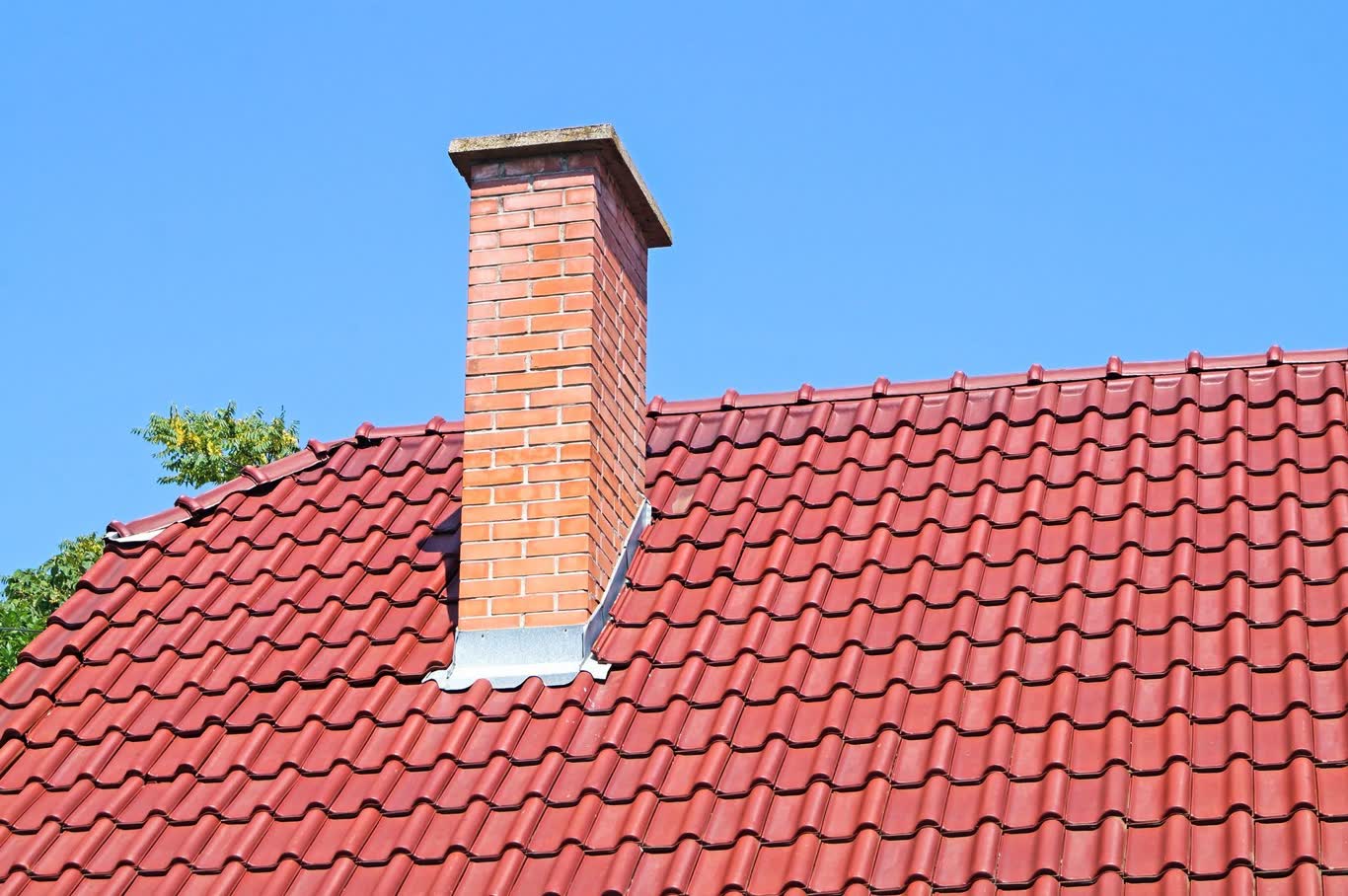
Flashing is the metal and sealant that protects the spots where your roof meets something that sticks out of it. Chimneys, skylights, and pipes are the most common leak points on a Florida roof. A small flashing problem can let water in for weeks before you notice a stain.
Why Flashing Fails in Florida
Florida roofs take a beating. The sun heats metal and sealant every day, then the materials cool off at night. This cycle makes metal expand and contract. Over time, sealant dries out, cracks, and pulls away from the surface it was supposed to protect.
Wind-driven rain adds more stress. Rain can be pushed sideways under the edges of flashing, where a flat roof or a steep roof meets a vertical wall. Coastal homes also face salt air, which speeds up rust on metal pieces.
Chimney Flashing Problems
A chimney is one of the hardest spots to seal. It creates a vertical wall that water must flow around. Good chimney flashing uses two parts. Step flashing runs up the sides, woven into the shingles. Counter flashing is set into the mortar joints of the chimney and overlaps the step flashing below.
When either piece fails, water can run behind the chimney and into the attic or upper walls. Look for cracked mortar, rust streaks, lifted metal, or old tar that has split open. Sometimes the chimney cap is also cracked, which lets rain soak into the masonry.
Skylight Flashing Problems
Skylights bring in natural light, but they also create extra seams. Each skylight sits on a curb or frame, and flashing must seal all four sides. The upper edge should shed water over the top of the unit. The lower edges need to lap under the shingles.
Watch for stains on the ceiling around the skylight, peeling sealant at the corners, or fogging between the glass panes. Any of these signs may point to a flashing failure rather than a problem with the skylight itself.
Pipe Boots and Vent Seals
Plumbing vents poke through the roof, and most have a rubber collar called a pipe boot. The boot slips over the pipe and sits flat against the roof. In Florida sun, the rubber can crack and shrink within a few years. Once it cracks, water runs down the pipe and into the ceiling below.
Animals sometimes chew on pipe boots too. Squirrels and birds can damage the rubber. If you hear scratching near a vent, or see gnaw marks, ask your roofer to check the boot. Older homes may still have lead boots, which can crack or split over time.
Why Sealant Alone Is Only a Stopgap
Many homeowners try to fix a leak with a tube of roofing sealant. It is tempting because it is quick and easy. Sealant can slow a leak for a while, but it does not solve the real problem. If the flashing is bent, rusted, or set in the wrong place, sealant will only hide the damage.
Sealant also cracks and peels in the sun. A dab of it on top of a bad boot or a lifted piece of metal can trap water underneath. This can make the rot and damage worse over time. Use sealant only as a temporary step until a proper repair can be made. If you are not sure whether your leak comes from the roof itself, read our guide to roof leaks that happen without a storm.
What a Proper Flashing Repair Looks Like
A good repair starts with a close inspection. The roofer should look at the flashing, the shingles around it, the underlayment, and the decking below. They should also check the inside of the attic for signs of water.
The repair usually includes these steps:
- Remove old sealant, rusted metal, and damaged boots
- Check and repair any rotted decking or wet insulation
- Install new flashing or a new pipe boot that fits the roof type
- Weave or lap the new pieces correctly with the shingles or tiles
- Seal the joints with the right material, not just a thick layer of tar
- Test the area and clean up debris from the job
Ask your roofer to explain each step. You should understand what they are replacing and why.
Questions to Ask Before You Hire a Roofer
Flashing work is detailed, so ask good questions before you agree to anything. Here are a few to start with:
- Will you inspect the flashing and the attic, not just the shingles?
- Will I get photos and a written summary of what you found?
- Will the estimate be written and itemized, so I can see each part of the job?
- Are you replacing the flashing, or only sealing it?
- Who will be on the roof, and how long will the work take?
A clear answer to each question tells you a lot about the company.
Insurance and Photos
If you think flashing damage may be covered, take photos before any work starts. Capture the chimney, skylight, and pipe boots from several angles. Photograph any stains inside the home too. These photos can help you explain what happened to your insurance company.
We cannot promise how an insurance company will respond. Each policy is different. Our team can still document what we see and provide a written summary you can share.
Simple Checks You Can Do Now
You do not need to climb onto the roof to spot warning signs. Walk around the outside of the home and look up at the chimney, skylights, and vent pipes. Check the attic after a heavy rain, too. A flashlight can show wet decking, dark spots, or drips near the vents.
Keep trees trimmed back from the roof. Falling limbs and debris can crack flashing and boots. Clear leaves from valleys and gutters so water can flow away from the flashing area.
Serving Homes Across the Treasure Coast and Palm Beaches
Our family-owned company is based in Fort Pierce. We serve homes in Port St. Lucie, Stuart, Vero Beach, Jupiter, West Palm Beach, Wellington, Lake Worth, Palm Beach Gardens, Boynton Beach, Palm City, Hobe Sound, and Loxahatchee. We handle shingle, tile, metal, and flat roofs for residential and commercial properties.
We speak English and Spanish, so you can talk through your roof problem in the language that works best for you. Se habla espanol.
Ready for a Flashing Check?
If you see a stain, a cracked boot, or lifted metal around your chimney or skylight, do not wait for the next storm. We offer a free roof inspection with a written summary and no obligation. We can also explain monthly payment plans if you want to plan a repair over time. Call Dalton Roofing at (561) 662-6622 to schedule your inspection today. You can also learn more about our roof repair services on our website.
Frequently Asked Questions
What is roof flashing?
Flashing is the metal and sealant that seals the joints where the roof meets chimneys, skylights, pipes, and walls. It directs water away from those seams.
Why do pipe boots crack?
Florida sun dries and shrinks the rubber over time. Once the rubber cracks, rain can run down the pipe and leak into the ceiling below.
Can I just seal a leaking chimney or skylight?
Sealant can slow a leak for a short time, but it does not fix damaged or badly placed flashing. A proper inspection is the best next step.
Do you offer a free roof inspection?
Yes. We offer a free roof inspection with a written summary and no obligation.