
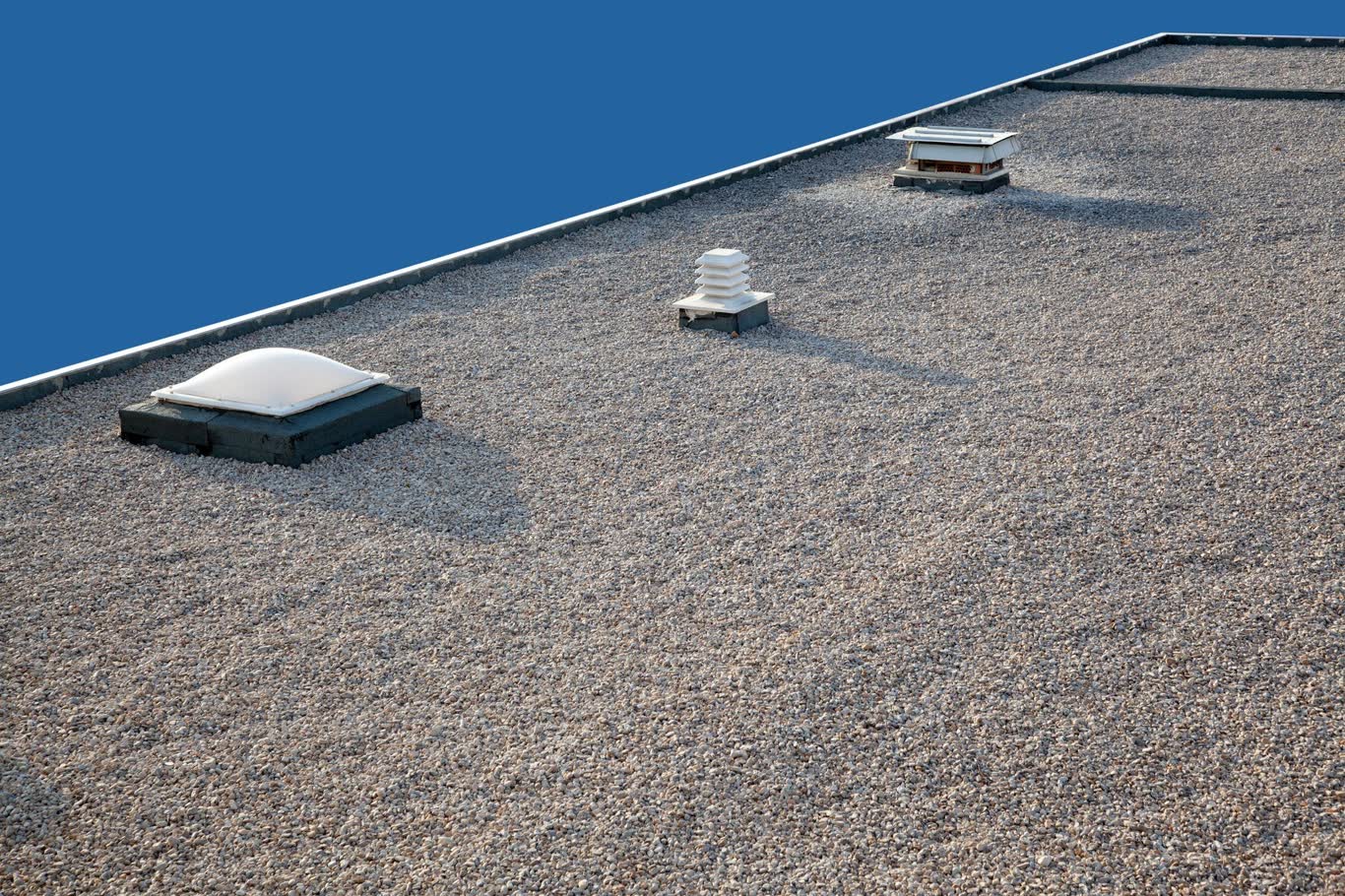
Ponding water is water that stays on a flat roof for more than a day after the rain stops. A thin puddle after a heavy storm can happen on many roofs. Water that lingers, or that leaves a dirty ring behind, is a warning sign that the roof needs a closer look.
What Ponding Water Means
Flat roofs are not truly flat. They need a slight slope so rain can run toward drains, scuppers or edges. When the slope is too weak, or when a low spot forms, water collects and sits. Over time, that standing water can cause real damage.
Ponding is not just a cosmetic issue. Water is heavy. A shallow pool adds stress to the structure, especially if the roof deck already sags. Standing water also gives small leaks an easy path into the building below.
Common Causes
- Weak slope. Some roofs were built with too little slope. Settling and age can make the slope worse over time.
- Clogged drains. Leaves, grit, roof debris and trash can block drains and scuppers. Water backs up even when the roof itself is in good shape.
- Sagging deck or framing. A roof deck that bends or drops creates low spots. Water collects in those dips and keeps coming back.
- Blocked edges. Overflow openings, gutters and edge metal can clog or pull loose. Then water has no way off the roof.
- Added equipment. Units, pipes and mounts can change how water moves. Water may collect around them if they block the flow.
How Standing Water Damages a Flat Roof Membrane
Most commercial flat roofs use a membrane. It might be single-ply, modified bitumen or another system. The membrane keeps water out, but it has limits. Standing water speeds up wear on the surface. Sun and heat in Florida make that wear worse.
Ponding can cause blistering, cracks at seams, and worn surface material in some systems. It can also hide damage. A puddle may look calm while the membrane underneath breaks down. Algae and mildew often grow in standing water, and they can stain the surface and hold moisture against it.
Once water gets under the membrane, it can move along the layers. Wet insulation loses its ability to protect the building, and it adds weight. That is why a small ponding issue can grow into a larger repair if it is ignored.
Signs You Should Not Ignore
- Water stays on the roof for more than a day after rain.
- A dry ring or stain shows where water sat before.
- Soft spots, bubbles or wrinkles appear in the membrane.
- Ceiling stains, damp walls or musty smells show up inside the building.
- Drains or scuppers look full of debris after storms.
What an Inspection Looks At
A good roofing inspection starts with the slope and drainage. When it is safe and possible, the inspector walks the roof after a rain and marks where water sits. They look at drains, scuppers, gutters and edge metal. They check the membrane for blisters, open seams, tears and punctures around pipes and units.
The inspector also checks the roof deck and framing for sagging. Where safe, they look at the insulation. Photos and notes help show the problem clearly. You should receive a written summary that explains what was found and what it means for your building.
Questions to Ask Your Roofer
- Where is the water sitting, and how deep does it get?
- Is the problem the slope, the drainage, or the deck?
- Which repairs fix the cause, and which only treat the symptom?
- Does the plan include drains, edges and seams, not just the spot you can see?
- Will you receive a written and itemized estimate after the inspection?
Estimates are written and itemized after an inspection. Ask for a line-by-line breakdown so you can compare options. Ask how the work will be scheduled around your tenants or staff, too.
Repair Options for Ponding Water
Not every ponding problem needs a full replacement. Clearing drains and adding tapered insulation can improve water flow in some cases. Spot repairs can fix small blisters or seam failures. In other cases, the deck or the whole roof system needs work. The right choice depends on the cause, the age of the roof and how the building is used.
Ponding Water and Florida Storms
Storm season makes ponding more urgent. Heavy rain can fill low spots in hours. Wind can blow debris into drains. After a storm, check the roof from the ground or from a safe access point. Do not walk on a wet or damaged roof. Call for help if you see new puddles, leaks or ceiling stains.
We offer 24/7 storm and emergency response, so you can call when a problem appears. A quick look after a storm can keep a small issue from becoming a leak.
Who We Serve
Dalton Roofing Inc is a family-owned company based in Fort Pierce. We handle residential and commercial roofing across St. Lucie, Martin, Palm Beach and Indian River Counties. Our team works in West Palm Beach, Wellington, Lake Worth, Jupiter, Palm Beach Gardens, Boynton Beach and Stuart, along with Port St. Lucie and Vero Beach. We speak English and Spanish. Se habla espanol.
For more on flat roof systems and upkeep, see our commercial roofing page. For a broader look at roof life and maintenance, read our commercial roof lifespan and maintenance guide.
Water that sits on your flat roof is worth a closer look. Call Dalton Roofing at (561) 662-6622 for a free roof inspection with a written summary and no obligation.
Frequently Asked Questions
How long can water sit on a flat roof?
After a rain, water should drain within a day or so. Water that stays longer is a warning sign. Have a roofer check the drains and the slope.
Is a little ponding normal?
A thin, short-lived puddle after heavy rain can happen. Repeated or deep ponding is different. It needs an inspection to find the cause.
Can ponding water cause leaks?
Yes. Standing water can wear the membrane and find its way through seams or cracks. It can also add weight and stress to the building.
Does Dalton Roofing offer a free inspection?
Yes. We offer a free roof inspection with a written summary and no obligation. Call (561) 662-6622 to schedule.