
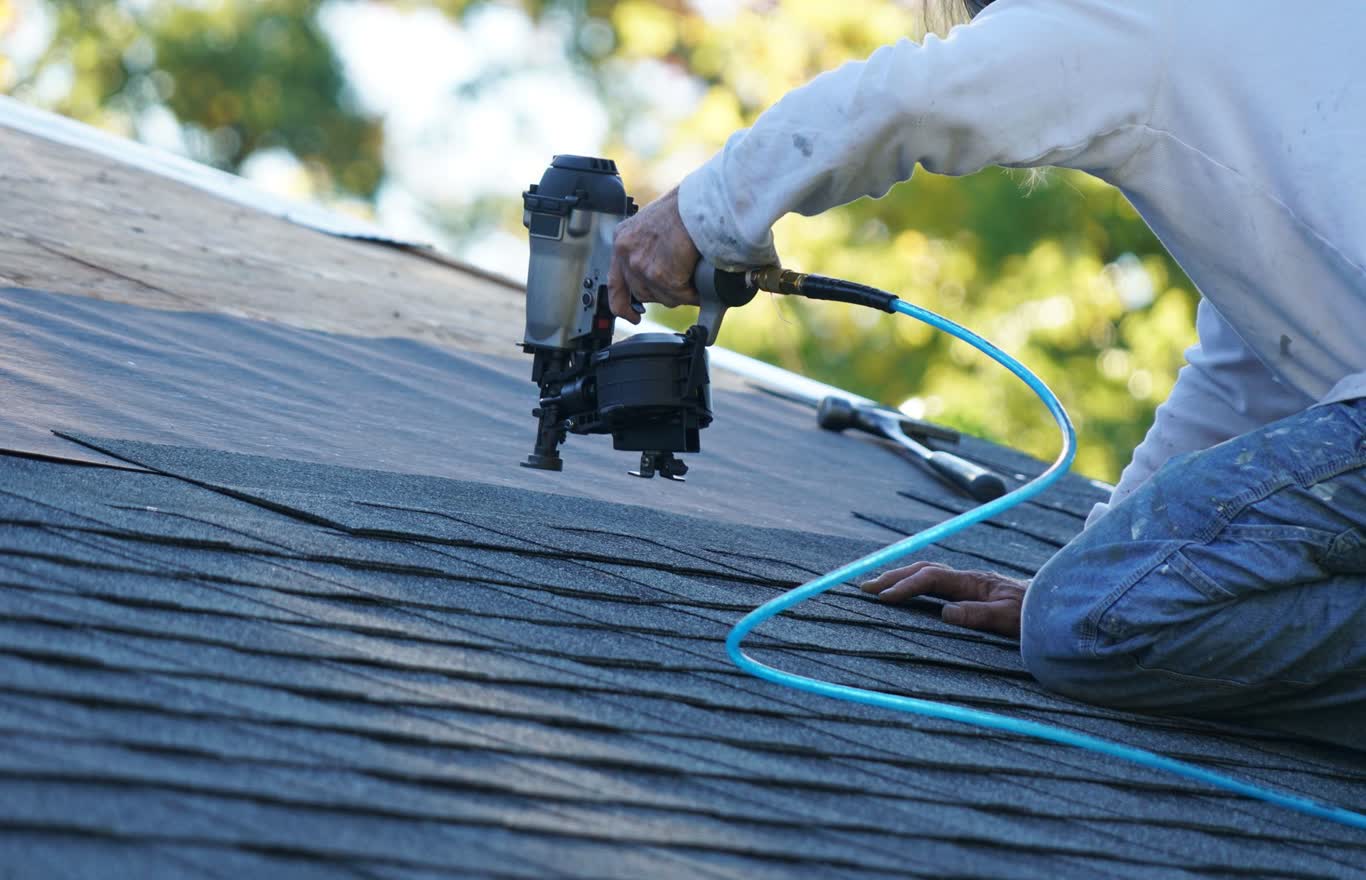
A drone shows the overall condition of a roof, but seams, flashing and penetrations are best judged by someone who can physically access the roof where it is safe. Use a drone or ground view to spot big problems. Ask for a hands-on look when you want a real answer. See our roof inspection service for how Dalton Roofing handles it.
What can a drone see from the air?
A drone can show you the whole roof surface at once. It is good at spotting missing shingles, shifted tile, ponding on a flat section, tarps and storm debris.
That wide view has real value. It lets a homeowner see a steep or tall roof without anyone stepping on it. It also gives you photos to look at and compare over time.
The limit is detail. A camera in the air sees what is on top of the roof. It does not feel soft spots, test a loose edge or look under a lifted shingle tab. Sun glare, shadows and a roof with a lot of surface texture can hide small problems in a photo.
What does a hands-on inspection add?
A hands-on inspection adds touch, close sight and judgment. The inspector walks the roof, looks at each detail from a few inches away and checks what a lens cannot show.
Dalton Roofing inspectors physically access the roof where it is safe to do so. That gives them a close look at seams, flashing and penetrations, which are the spots where Florida roofs most often start to leak. We are a family-owned company based in Fort Pierce, and we serve homes and businesses in Port St. Lucie, Stuart, Jupiter and across Palm Beach, Martin, St. Lucie and Indian River Counties.
Being on the roof also lets the inspector check the feel of the surface. Soft or spongy areas can point to wet decking underneath. You cannot see that from the air or from the ground.
Which details only show up up close?
The small joints and openings on a roof are where water gets in, and most of them need a close look. A drone photo may show a vent pipe. It will not show a cracked rubber boot or dried sealant around it.
These are the details that usually need hands-on checking:
- Flashing at walls, chimneys and valleys, where metal can lift, rust or pull away.
- Vent pipe boots and other penetrations, where rubber and sealant wear out in the sun.
- Seams on flat and low-slope roofs, where a small gap can let water in.
- Nail heads and fasteners that have backed out or rusted.
- Shingle edges and granule loss, which are hard to judge from far away.
- Tile that looks fine from above but is cracked or loose underneath.
Our post on how often a roof should be inspected in Fort Pierce explains why these details matter before the rainy season. Small problems found early are often simple repairs. Small problems missed can turn into wet insulation and stained ceilings.
When is staying off the roof the right call?
Staying off the roof is the right call when walking on it would be unsafe or could cause damage. A good inspector decides this on site, and that is why the phrase is "where it is safe to do so."
Here are the times when a roof walk may not make sense:
- The roof is wet, slick or covered in debris after a storm.
- The pitch is very steep and there is no safe way to set up.
- The surface is already badly damaged and may not hold weight.
- Certain tile or coated roofs could crack or scuff under foot traffic.
In those cases, an inspector can use a ladder, look from the edge, check the attic from below, or use a drone as a backup. The attic is worth a look, since water stains on the underside of the decking can tell you a lot about what is happening above.
A drone can work well as a tool in the kit. It should not replace the close look when a close look is safe. The best answer is often both: a wide view for the whole roof and hands-on checks at the details that matter.
Which one should you choose?
Choose a drone or ground view if you only want a quick look after a storm, or if the roof is too unsafe to walk. Choose a hands-on inspection if you are buying a home, planning a repair, or have seen stains or leaks.
Choose a hands-on inspection for older roofs too. Older roofs have more worn sealant, loose flashing and brittle parts. Those need to be touched and checked up close.
If you are not sure, ask for the hands-on inspection. Dalton offers a free roof inspection with a written summary and no obligation, so you can learn what is going on without committing to a repair or a replacement. If you do move forward, estimates are written and itemized after the inspection.
What should you ask before booking an inspection?
Ask who will go on the roof, how they will check the details, and what you will get in writing. Clear answers up front tell you a lot about how the visit will go.
- Will the inspector go up on the roof, or only look from the ground or the air?
- Which areas will you check closely, such as flashing, vent pipes and seams?
- Will you look in the attic if there is access?
- Will I get photos and a written summary after the visit?
- What happens if you find a problem? Is the next step a written estimate?
- Is the inspection free, and is there any obligation?
Write down anything you have noticed before the visit. Brown stains on a ceiling, a musty smell after rain, or shingles in the yard all help the inspector know where to start. You do not have to be on the roof or at home for the whole visit, but being there for the walk-through is helpful if you can.
Homeowners in West Palm Beach, Lake Worth, Boynton Beach, Vero Beach and nearby towns can book the same way. Se habla espanol, and our team is ready to answer your questions in English or Spanish.
Call Dalton Roofing at (561) 662-6622 to schedule your free roof inspection with a written summary and no obligation.
Frequently Asked Questions
Can I see the roof photos after an inspection?
Ask before the visit. Photos make a written summary easier to follow, because you can see the spot the inspector is describing. Request them when you book so they are part of the report.
Do I need to be home during a roof inspection?
It is not always required, but being there helps. You can point out stains or leaks and hear what the inspector finds. If you cannot be home, ask for the written summary afterward.
Does a roof inspection include the attic?
It often should, if there is safe access. Stains, damp insulation and light coming through the decking can show a leak that the roof surface hides. Ask whether the attic is part of the visit.
What if the inspector says the roof is too unsafe to walk?
Then they should explain why and use another method, such as a ladder, a view from the edge or a look from inside the attic. A good inspector will not take a risk just to say they went up.