
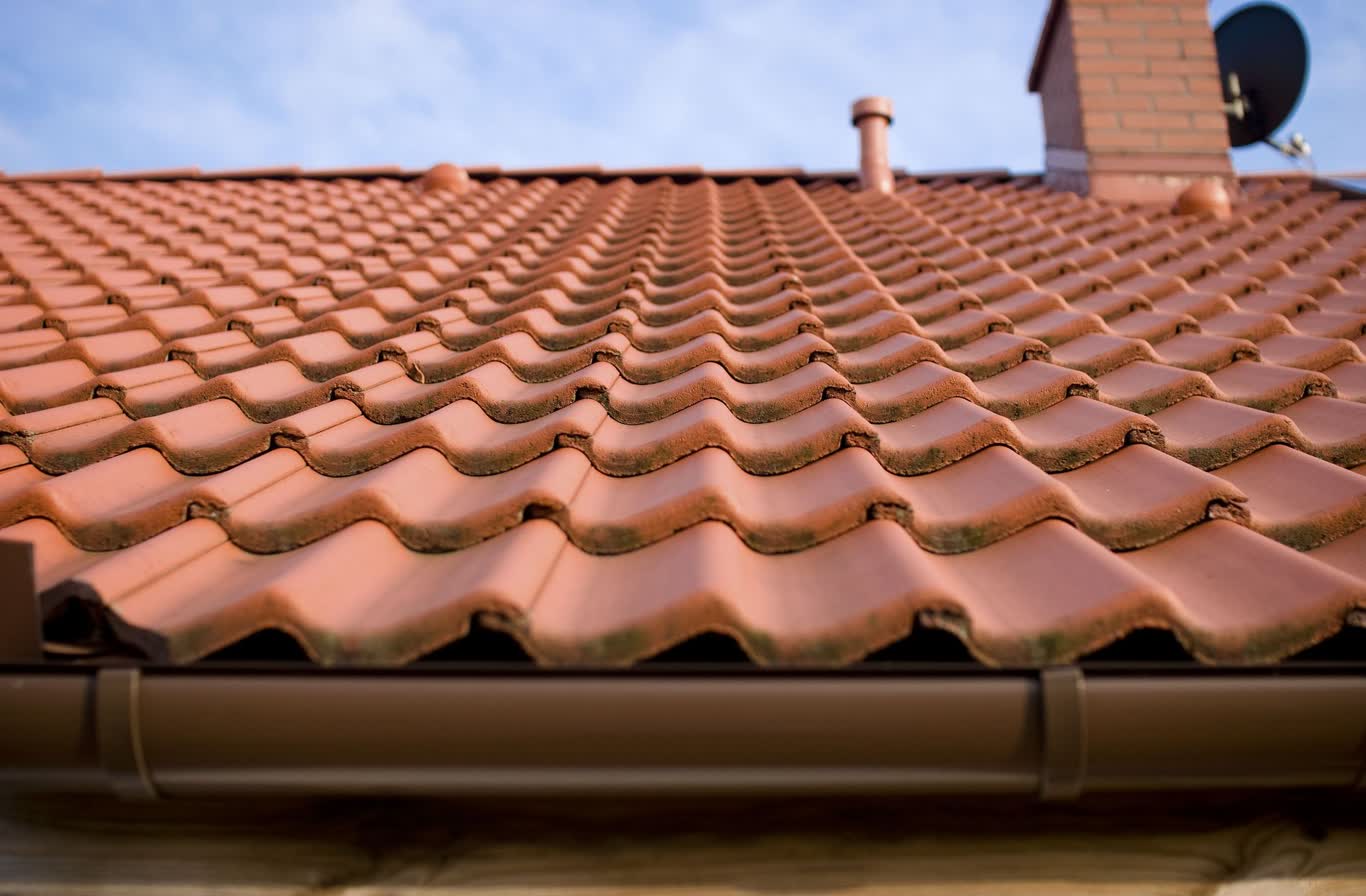
Clay tile has its color fired into the material, so it does not fade. Concrete tile is made from cement, sand and water, and its color is either mixed in or applied as a coating that can fade over time. Clay is heavier and costs more. Dalton Roofing installs both on Treasure Coast homes.
How are concrete and clay tile made?
Concrete tile is molded from Portland cement, sand and water. Clay tile is fired ceramic, baked in a kiln until it hardens. That one difference in how they are made drives most of what follows: color, weight and cost.
Concrete is the most common tile on the Treasure Coast, and it comes in many profiles. Clay is denser and takes more work to make, which is why it usually sits higher on the price list. Both are covered on our tile roofing page.
Which one holds its color?
Clay holds its color best. On a clay tile, the color is fired into the material, so it is part of the tile all the way through and does not wear off in the sun.
Concrete tile color comes two ways. Integral color is mixed into the concrete. Coated color is applied to the surface, and coated color can fade over time. If you plan to keep the same look for decades, ask which type you are being shown and ask to see a sample in daylight.
Florida sun is hard on any surface. A tile that looks bright in the showroom may look different after many summers, so the color question deserves real attention.
One practical tip: hold the sample against your stucco, trim and driveway. Color looks different next to the things around it, and tile is not a choice you want to redo.
How does weight differ between them?
Clay is heavier than concrete. Both are far heavier than shingles, so the roof structure has to be able to carry them.
This matters most when you switch materials. A home with a shingle roof may not be built for tile. A home that already has tile may be fine with either, but it should still be checked. Verified structural capacity is the key point. Do not assume the framing can handle the load.
Dalton looks at the roof during a free inspection and gives you a written summary with no obligation. That is the right time to ask whether the structure suits the tile you like.
Which profiles come in each?
Concrete tile is widely available in profiles that match most HOA requirements. Clay comes in flat, low-profile and barrel shapes.
Barrel tile gives the classic Spanish look many people picture. Flat and low-profile tile gives a cleaner, more modern line. Look at both in person if you can, because photos do not show the shadow lines well.
What does your structure and HOA allow?
Your roof and your community rules set the real limits. Start with the structure, then check the HOA, then choose the color and profile.
If you live in a community with an association, get the written rules before you pick a tile. Many boards approve specific colors and profiles. In towns like Port St. Lucie, Fort Pierce, Stuart and Jupiter, rules differ from one neighborhood to the next.
Dalton helps you compare concrete and clay, profile options and color choices, and provides samples before ordering. If you are also thinking about metal, read our comparison of metal and tile roofs on the Treasure Coast.
What happens during the inspection and estimate?
It starts with a free roof inspection, followed by a written summary of what the inspector found. There is no obligation to hire anyone afterward.
If you decide to move ahead, the estimate is written and itemized, so you can see what each part of the job covers. Bring your questions about color, weight and profile to that visit. It is much easier to compare concrete and clay when the roof is in front of you and the samples are on the table.
We serve homes across St. Lucie, Martin, Palm Beach and Indian River Counties, from Vero Beach down through Boynton Beach. Whatever tile you pick, the same steps apply: check the structure, confirm the rules, then order.
Should you choose concrete or clay?
Choose concrete if you want a wider choice of profiles, a lighter tile and a lower cost. Choose clay if keeping the same color for the life of the roof matters most to you.
- Choose concrete if budget and lighter weight come first.
- Choose concrete if your HOA wants a specific profile that is easy to find.
- Choose clay if you want color that will not fade.
- Choose clay if your structure has been checked and can carry the extra weight.
Neither choice is wrong. The better one is the one that fits your home, your rules and how long you plan to stay.
What should you ask before you commit?
Ask five things. Is the color integral or coated? What does the tile weigh? Has the structure been verified for it? Does the HOA approve this profile? Can I see a sample first?
A good contractor answers these plainly and puts the estimate in writing. At Dalton, estimates are written and itemized after an inspection, and we speak English and Spanish (Se habla espanol).
Want help choosing? Call Dalton Roofing at (561) 662-6622 to book a free roof inspection with a written summary and no obligation.
Frequently Asked Questions
Does clay tile ever fade?
Clay tile is fired ceramic, so its color is part of the material and does not fade. Coated concrete tile color can fade over time, so ask which type you are choosing.
Can my roof carry tile if it has shingles now?
Not always. Tile is much heavier than shingles, so the structure needs to be checked first. A roof inspection can tell you whether your framing can handle the added weight.
Do HOAs care which tile I pick?
Often yes. Many associations approve certain colors and profiles. Get the written rules before you order, and ask for samples so you can show the board exactly what you plan to use.
Does Dalton offer financing for a tile roof?
Monthly payment plans are available. See the financing page for details, or ask during your free inspection so the plan can be reviewed alongside your written estimate.