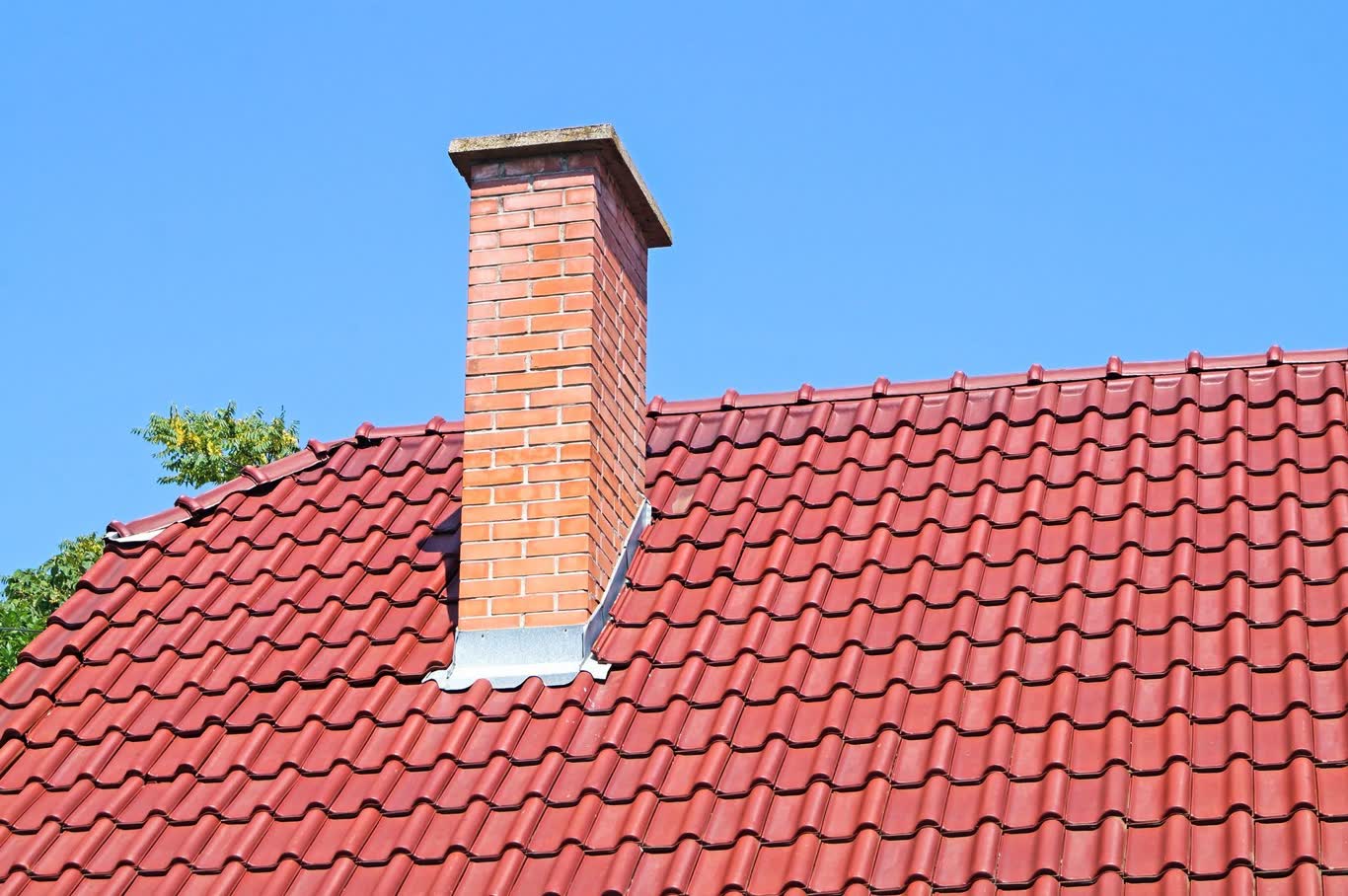
Cracked sealant, lifted or rusted metal, and stains near the chimney are early signs the flashing is failing. A proper repair means we re-bed the step flashing or replace the worn pieces, then seal the joints. Catching it early keeps water out of the attic. Dalton handles this under roof repair.
Flashing is the thin metal that bridges the gap between your chimney and the roof. It is small, but it does a big job. When it fails, water finds the gap first, and the damage spreads out of sight.
What does chimney flashing do?
Chimney flashing keeps water from running down the seam where the brick meets the roof. It sheds rain away from that joint and onto the shingles or tile.
Step flashing runs up the sides of the chimney in small overlapping pieces. Counter flashing sits above it and is set into the masonry, so it covers the top edge. Together they form a layered barrier. Sun, heavy rain and wind in Fort Pierce and across the Treasure Coast wear on those layers over time.
What are the early signs it is failing?
The early signs are visible from the ground or from a quick look in the attic. Use this checklist.
- Cracked, dried out or missing sealant along the chimney edge.
- Rust or white streaks on the metal.
- Flashing that is lifted, bent or pulling away from the brick.
- Counter flashing that is loose in the mortar joint.
- Gaps where the metal no longer meets the roof surface.
- Brown stains on the ceiling or wall near the chimney.
- Damp or dark insulation and wood around the chimney in the attic.
- Shingles or tile that look loose right next to the chimney.
You do not need to check every item. One or two is enough reason to book an inspection. Do not climb onto the roof yourself, because a wet or sun baked surface is slippery.
Sealant is the one most people can spot. Roofing sealant dries and cracks in Florida heat. A thin line of caulk is often the only thing holding a failed joint together, and it will not last.
What does a flashing repair involve?
A proper repair does more than add fresh caulk on top. The goal is to restore the layered metal so water sheds as it should.
Dalton will re-bed step flashing and replace deteriorated counter flashing where it has worn out. That means lifting the loose pieces, cleaning the surface, setting new or reused metal in place, and sealing the joints. The pieces overlap in the right order, so water runs over them and not behind them.
Here are the points to check in any repair estimate:
- Is the old flashing removed or only covered over?
- Will the step flashing be set back in properly?
- Is rusted counter flashing replaced?
- Are the masonry joints sealed where the metal is set in?
A patch over the old flashing may stop a drip for a while. It rarely fixes the cause.
Why is a leak rarely where the stain is?
Water travels before it shows up. A stain on the ceiling is where the water ended up, not always where it came in.
Water can run along a rafter or under the roof deck before it drips. A chimney leak may show as a stain several feet away. This is why a roofer checks the whole area, not only the spot you point to.
It also explains why a quick fix at the stain does not work. Painting over a mark leaves the leak running. The repair has to be at the source, and the source is often the flashing around the chimney. Our guide to flashing failures around chimneys, skylights and pipes covers other spots to watch.
When should you call?
Call as soon as you see cracked sealant, lifted metal or a new stain. Waiting lets water soak the wood and insulation, which turns a small repair into a larger one.
After a heavy storm, take a look as well. Wind can lift flashing that looked fine before. If water is coming in right now, Dalton offers 24/7 storm and emergency response.
Dalton Roofing Inc is a family owned company based in Fort Pierce. We serve St. Lucie, Martin, Palm Beach and Indian River Counties, and we speak English and Spanish (Se habla espanol). We handle residential and commercial roofing.
Not sure whether your chimney flashing needs work? Book a free roof inspection with a written summary and no obligation. Call Dalton Roofing Inc at (561) 662-6622.
Frequently Asked Questions
Can I just add caulk around the chimney myself?
Caulk can slow a drip for a short time, but it does not fix worn flashing. If the metal is lifted, rusted or loose, the layers need to be reset or replaced for a lasting repair.
How do I tell if the leak is from the chimney or the roof?
Stains near the chimney, damp insulation around it and cracked sealant point to the flashing. A roofer can trace the water path, since leaks often show up away from the entry point.
Do I need a roof inspection for a small stain?
Yes, a small stain is often the first visible sign. An inspection finds where the water enters before it soaks into wood and insulation. A written summary lays out what needs repair.
Does the estimate come in writing?
Yes. Dalton gives written, itemized estimates after an inspection, so you can see what the repair covers before you decide.