
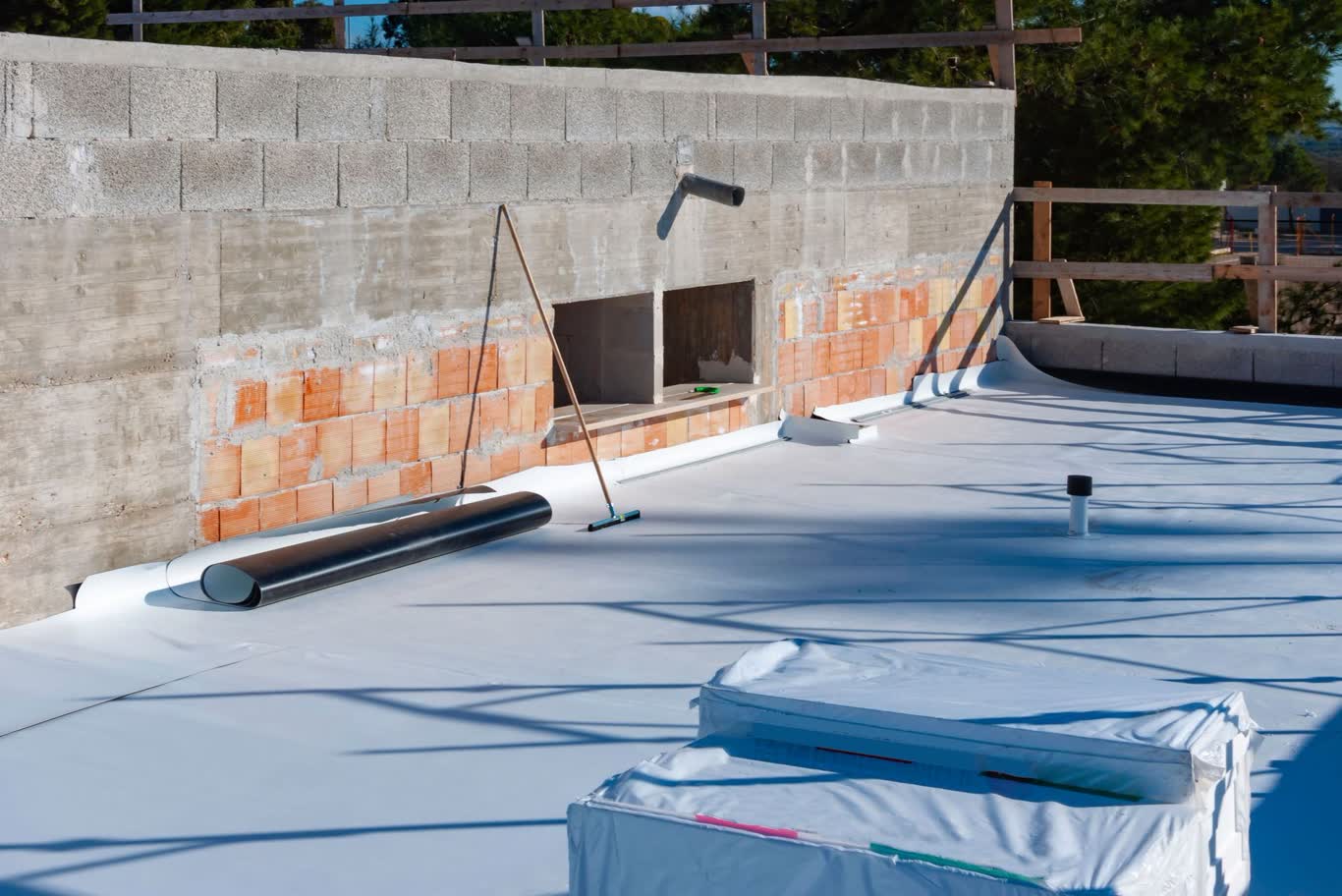
TPO and modified bitumen are two of the most common choices for flat commercial roofs in South Florida. TPO is a single-ply membrane with heat-reflective qualities and heat-welded seams. Modified bitumen is a layered system with a rolled surface that has been used for decades. The right pick depends on your building, your foot traffic, and how you plan to handle repairs over time.
Why the Membrane Choice Matters
A flat roof has no slope to shed water. That puts all the work on the membrane and the seams. Water that sits on the surface can find small openings and cause leaks inside the building. Heat, sun, and wind add stress every day. The membrane you choose sets the pace for how often your roof needs attention.
Property owners in West Palm Beach, Lake Worth, Boynton Beach, and the surrounding area deal with strong sun and heavy summer rain. Those conditions make the membrane decision more important than it may seem at first.
How TPO Works
TPO stands for thermoplastic polyolefin. It comes in large rolls or sheets that are joined together with heat-welded seams. The light surface reflects sun, which can help keep the roof cooler in hot months. Many owners like its clean look and the fact that the seams are fused rather than glued or taped.
TPO can be a good fit for buildings where heat control matters and where the roof will see moderate foot traffic. Good installation is key. Seams that are not welded correctly are one of the most common weak spots in any single-ply system.
How Modified Bitumen Works
Modified bitumen is a layered system made from asphalt that has been modified with polymers for extra flexibility. It is usually installed in several plies, with a surface cap that protects the roof from sun and weather. The layers are joined with heat, adhesive, or a torch-applied method, depending on the product and the job.
Modified bitumen is known for its thickness and its ability to handle some movement in the building. It has a long track record on flat roofs, and many crews are experienced with it. It also has a surface that can take some foot traffic better than some other membranes.
Seams: The Common Weak Spot
Every flat roof has seams, and seams are where most problems start. With TPO, the goal is a clean heat weld that bonds the sheets into one piece. With modified bitumen, the goal is a well-lapped, fully sealed joint between plies and around penetrations like vents, pipes, and drains.
Ask any roofer how they handle seams, flashing, and edges. A clear answer shows care. Vague answers are a warning sign. Seams and edges are where a good crew earns its keep, and they deserve careful attention during the inspection.
Heat and Sun Exposure
Florida sun is hard on roofs. Heat cycles make materials expand and contract every day. A light-colored TPO surface can reflect more sunlight than a dark surface, which may help the building stay more comfortable inside. Modified bitumen usually has a granule or coated cap, and the cap choice affects how well it handles sun over time.
Think about the building as well. Rooftop units, skylights, and dark patches of old roofing all change how heat builds up. Your roofer should look at the full roof, not just the membrane.
Foot Traffic and Rooftop Equipment
Think honestly about who will walk on the roof. Technicians who service air conditioning units, antennas, or solar equipment need a safe path. Heavy foot traffic can damage some membranes faster than others. Walkway pads and clear routes help protect the roof surface and extend its life.
If your roof holds equipment, plan for access and protection from the start. Ask how the chosen system handles repeated trips and whether the roofer recommends walkway protection.
Repairs and Long-Term Maintenance
Every roof needs maintenance. Plan for regular inspections, debris removal, drain checks, and prompt repairs after storms. The right system should be one your crew can repair in a predictable way. TPO repairs often involve patching and heat welding new material. Modified bitumen repairs may involve new plies, patches, or sealant at problem areas.
Keep records of every inspection and repair. A simple log of dates, photos, and work performed makes future decisions easier and helps your roofer see what has changed over time.
What to Ask Before You Choose
Before you pick a system, ask a few clear questions. How do you handle seams and flashing? What type of surface do you recommend for our sun exposure? How do you protect the roof during service visits? Who will inspect the work during and after installation? What will a written estimate include?
A good estimate is written and itemized. It should show the scope of work, the materials, and the steps for prep, install, and cleanup. It should also explain what is not included, so you can compare options fairly.
Who Dalton Serves
Dalton Roofing works with property owners in St. Lucie, Martin, Palm Beach and Indian River Counties. We are a family-owned company based in Fort Pierce, and we handle both residential and commercial roofing. Our team works in English and Spanish, and we respond around the clock for storm and emergency calls. If you want more detail on our commercial work, visit our commercial roofing page.
Start With a Roof Inspection
The best next step is a clear look at your roof. An inspection shows the condition of the membrane, the seams, the flashing, and the drains. It also helps you decide whether the current system can be repaired or whether it is time to plan a replacement. A written summary gives you something to review with your team and your building manager.
Ready to compare options for your building? Call Dalton Roofing at (561) 662-6622 for a free roof inspection with a written summary and no obligation. We can also walk you through the difference between TPO and modified bitumen for your property. For more guidance, read our guide to choosing a commercial roofing contractor.
Frequently Asked Questions
Is TPO better than modified bitumen for a flat roof?
Neither one is better for every building. TPO often suits buildings that need heat control and clean heat-welded seams. Modified bitumen is thick, layered, and well known on flat roofs. The right choice depends on your building, sun exposure, and foot traffic.
Which flat roof system handles foot traffic better?
Both can handle service visits when they are installed well and protected. Walkway pads and clear routes help any roof last longer. Tell your roofer who will walk on the roof and how often.
What should a commercial roof inspection include?
A good inspection covers the membrane, seams, flashing, drains, penetrations, and rooftop equipment. You should receive a written summary that explains what was found and what it means for your options.