
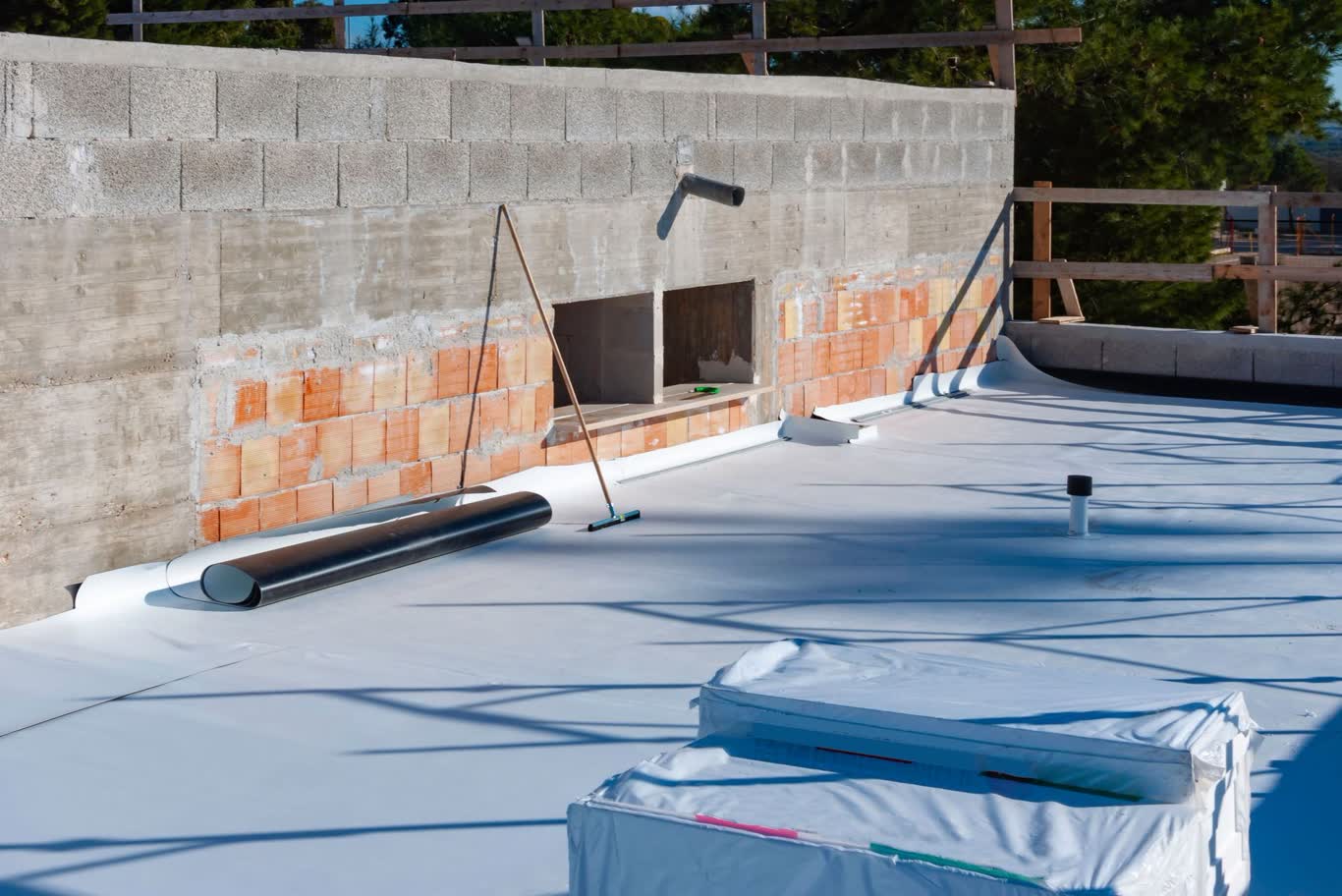
TPO suits many low-slope buildings, but the right choice depends on the substrate, the slope, the occupancy and the building height. A mixed-use building has more of these factors in play than most. Dalton Roofing reviews each one before recommending a system. See our commercial roofing page for the full scope.
What is TPO?
TPO is a single-ply roofing membrane made for low-slope and flat roofs. It comes in large white or light-colored sheets that are laid over the roof and joined at the seams. The reflective surface helps with sun and heat, which matters in Florida.
The seams are where a TPO roof lives or dies. Sheets are joined by heat welding, so the quality of that work matters as much as the membrane itself. A clean, even weld forms a continuous surface. A rushed one leaves a path for water.
TPO is one option, not the only one. Other low-slope systems exist, and a good contractor will tell you when another system fits your building better. That decision comes from the roof, not from a habit.
What do mixed-use buildings need?
A mixed-use building holds more than one kind of space under one roof, such as shops on the ground floor and apartments or offices above. That mix puts different demands on the roof than a single-use building does.
Think about who is under the roof and what runs on top of it. Residents need quiet and dry ceilings. Shop owners need their stock and signage protected. The roof may also carry air handlers, vents and exhaust fans for each use. Every one of those is a possible leak point.
Dalton chooses a commercial system based on substrate, slope, occupancy and height. On a mixed-use job, we look at all four together, because one weak point can undo the rest. A roofer who only talks about the membrane is skipping most of the work.
How does occupancy affect the choice?
Occupancy type changes how the roof is used and how a leak plays out. A leak over a restaurant, a salon or an apartment is a different problem than a leak over an empty storage room.
Here is what occupancy tends to change on the roof:
- Foot traffic. Rooftop equipment needs service, so techs walk the roof. Ask about walkway pads and where they go.
- Equipment curbs and penetrations. More tenants often means more vents, pipes and units to seal around.
- Disruption. Work above living or working spaces needs a plan for noise, access and safety.
- Protection of what is below. Phasing the work so the roof is dried in each day helps keep interiors dry.
Tell the roofer every use in the building, including the ones that seem minor. A kitchen exhaust or a rooftop unit adds detail to the plan.
What about drainage slope?
Drainage slope tells you how fast water leaves the roof. TPO is used on low-slope roofs, but low does not mean level. Water needs a path to drains, scuppers or gutters, or it will sit.
Ponded water that stays for a long time stresses seams and can shorten the life of any membrane. Look for dips, stained spots and debris-filled low areas during the bid walk. They show where water is not leaving.
Dalton looks at drainage slope early because it can change the plan. Sometimes tapered insulation or added drains solve the problem. Sometimes the existing substrate needs repair first. Either way, the fix is written into the scope and not left as a surprise. Property owners in Port St. Lucie, Fort Pierce, West Palm Beach and across our service area deal with heavy summer rain, so drainage deserves real attention.
Why does the substrate matter?
The substrate is what the new membrane sits on, and its condition decides how the roof is built. Soft or damaged decking, wet insulation and old layers all need to be found before a new roof goes over them.
A membrane laid over a wet or weak base will not perform. That is why an inspection comes before an estimate. Dalton offers a free roof inspection with a written summary and no obligation, and estimates are written and itemized after that inspection. You see what was found and what each line covers.
How does building height change the job?
Height affects access, safety and how materials reach the roof. A taller building often means more planning for hoisting, staging and keeping people clear below.
Height also affects exposure. Roofs higher up take more wind, and Florida storms are hard on edges and flashings. Ask how the perimeter and the attachment will be handled for your building.
What should you ask a roofer?
Ask questions that make the roofer show how they think about your building. A short, clear set of answers on a bid walk tells you more than a polished brochure. If you are still comparing contractors, read how to choose a commercial roofing contractor.
- What is under the roof now, and what shape is it in?
- How will you weld and inspect the seams?
- Where does the water go, and what changes if it ponds?
- How do occupancy and tenant use affect your plan?
- How will you protect the spaces below during the work?
- What is in the written scope, line by line?
- Who do I call if a leak shows up after the work?
Write the answers down and compare them across bids. Gaps in an answer usually show gaps in the plan.
Who does the work on a mixed-use roof?
Dalton Roofing is a family-owned company based in Fort Pierce. We handle shingle, tile, metal and flat roofs for homes and commercial buildings, and we serve St. Lucie, Martin, Palm Beach and Indian River Counties. English and Spanish are spoken here (Se habla espanol), which helps when owners, managers and tenants speak different languages.
We also offer 24/7 storm and emergency response. If a storm damages a roof on a building with tenants, that matters. Monthly payment plans are available, and you can see the financing page for details.
Ready to look at your roof? Book a free roof inspection with Dalton Roofing for your Treasure Coast or Palm Beach County building. Call (561) 662-6622 and we will set up a bid walk with a written summary and no obligation.
Frequently Asked Questions
Can TPO go over an existing roof on a mixed-use building?
Sometimes. It depends on the condition of what is under it, including decking and insulation. An inspection shows whether the base is dry and sound enough, or whether it needs to come off first.
Do rooftop units change the roofing plan?
Yes. Each unit, curb and vent is a point that needs sealing, and techs may walk the roof to service them. Tell your roofer about all equipment so the plan includes flashing and walkway protection.
What should be in a written commercial roof estimate?
It should list what is being removed, what is being installed, how seams and edges are handled and what the work covers. Dalton writes estimates itemized after an inspection so you can compare line by line.
Does Dalton work on both homes and commercial buildings?
Yes. Dalton Roofing handles residential and commercial roofing, including shingle, tile, metal and flat roofs, across St. Lucie, Martin, Palm Beach and Indian River Counties.