
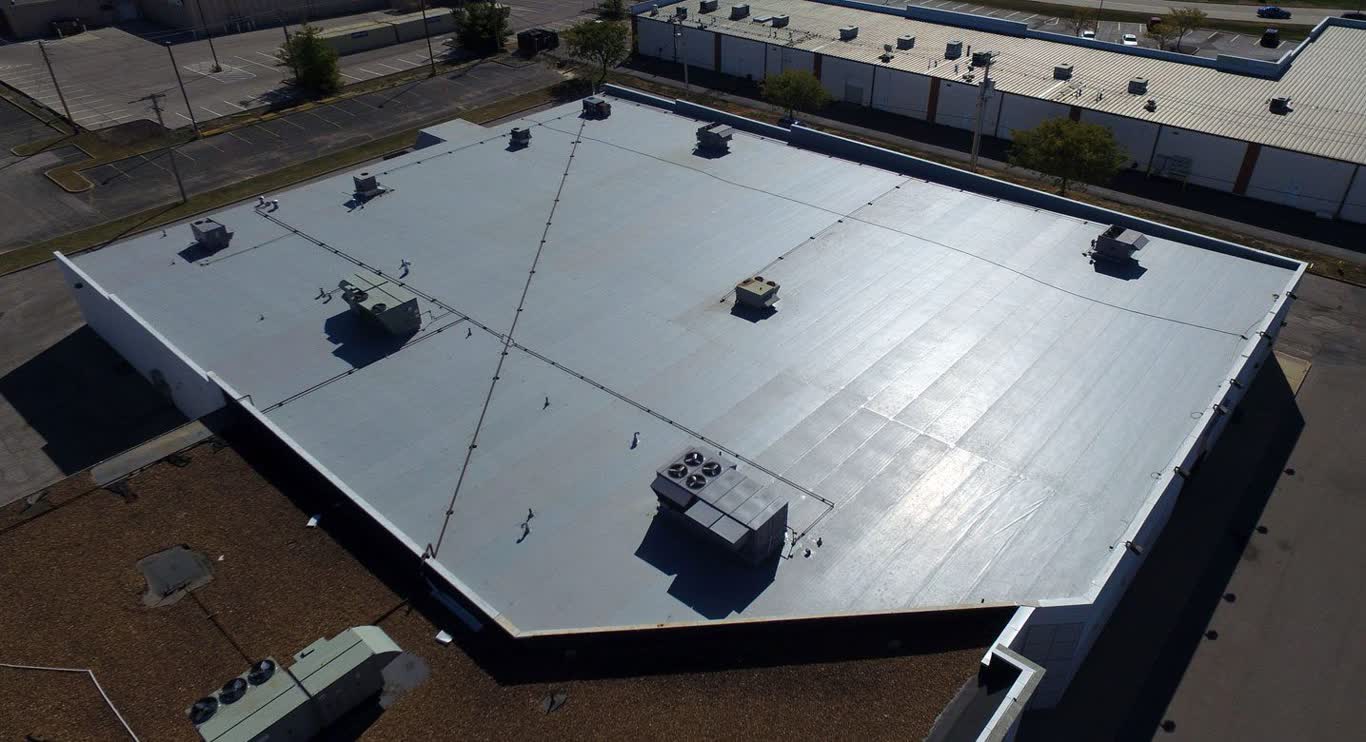
A core test shows how many layers are on a commercial roof and whether the insulation is wet. That decides whether a new membrane can go over the old roof or the old roof has to come off to the deck. Wet or failed layers point to tear-off, and dry, sound layers can allow a re-cover.
Dalton Roofing Inc, a family-owned company based in Fort Pierce, will core-test the existing roof before recommending an approach. This guide explains what the test finds and how to weigh a re-cover against a tear-off. You can also read about our commercial roofing work for flat and low-slope buildings.
What is a core test?
A core test is a small sample cut through the roof, from the top surface down to the deck. It lets a roofer see every layer in cross section instead of guessing from the surface.
The sample shows the membrane, any older membranes below it, the insulation, and the deck. A roofer checks each layer for moisture, crushed or crumbling material, and loose attachment between layers. After the sample is taken, the opening is patched so the roof stays watertight.
A surface inspection comes first. Our article on what to expect from a commercial roof inspection covers that step. The core test goes deeper, because many roof problems hide below a surface that looks fine.
How many layers are already up there?
The core shows the exact layer count, and that number matters. A roof with one older membrane is a different job from a roof with several roofs stacked on top of each other.
Each added layer adds weight and makes the roof harder to inspect and repair. Local rules can also limit how many layers a roof may carry, so ask the roofer to explain what applies to your building. If the roof already has multiple layers, a tear-off is often the cleaner path.
When does a re-cover make sense?
A re-cover makes sense when the existing roof is dry, firmly attached and in sound shape under the surface. In that case a new membrane goes over the old one without removing it.
Choose a re-cover if these conditions are true:
- The core shows dry insulation all the way down.
- The existing layers are firmly attached and not crumbling.
- The deck shows no sign of rot, rust or soft spots.
- The building can safely carry the added layer.
- You need to limit mess, noise and disruption inside the building.
A re-cover usually means less debris and less work on the roof deck, which can help when tenants are working below. The tradeoff is that you are building on top of whatever is already there.
When is a full tear-off the better call?
A full tear-off is better when the core finds wet insulation, a damaged deck, or too many existing layers. Covering those problems traps moisture and lets damage spread out of sight.
Choose a tear-off if you see these signs:
- Wet or soggy insulation in the core sample.
- Layers that are separated, blistered or poorly attached.
- Soft, rusted or damaged decking.
- A roof that already has several layers.
- A history of leaks that keep coming back after repairs.
Tear-off resets the roof. You get to see and fix the deck, and the new system goes onto a clean base. It takes more work and more time on site, but it removes hidden problems before they are sealed in.
How does each option affect tenants and schedule?
A re-cover is usually less disruptive, and a tear-off is usually more. Tear-off means removing old material and hauling it away, which brings more activity at the building.
For property managers, a few questions help plan around occupants:
- Which areas of the building are directly under the work?
- Will the roof be left open at any point, and how is it protected overnight?
- How is debris kept off walkways, parking and entrances?
- What weather could delay the work, and how are stops handled?
- Who is the point of contact on site each day?
Florida weather shapes the schedule more than most buyers expect. Afternoon storms can pause work, and a plan for protecting an open section matters. Ask how the crew handles that before the job starts. Our storm and emergency roof repair team is available around the clock if a roof is damaged.
How do you choose between a re-cover and a tear-off?
Let the core test decide, and use schedule and disruption as the tiebreakers.
Choose a re-cover if the core is dry, the layers are sound, and tenant disruption is a priority. Choose a tear-off if the core finds moisture, damage or too many layers, or if you want a fresh start on the deck. If the findings are close, ask the roofer to show you the sample and explain why they recommend one option over the other.
Ask for the findings in writing. At Dalton, estimates are written and itemized after an inspection, so you can compare options line by line rather than going on a verbal summary. Monthly payment plans are available too; see our financing page for details.
We serve St. Lucie, Martin, Palm Beach and Indian River Counties, including Port St. Lucie, Fort Pierce, Stuart, Jupiter and West Palm Beach. Se habla espanol.
Thinking about a re-cover or tear-off for your building? Contact Dalton Roofing Inc for a free roof inspection with a written summary and no obligation at (561) 662-6622.
Frequently Asked Questions
Does a core test damage the roof?
The sample is small, and the opening is patched right away so the roof stays watertight. A roofer takes only as many samples as needed to see what is under the surface.
Can wet insulation dry out under a new membrane?
Usually not. Moisture trapped under a new layer has nowhere to go and can keep damaging the insulation and deck. That is why wet insulation points toward removal.
Who should be present when the core is taken?
A property manager or owner's representative is welcome to watch. Seeing the layers yourself helps you understand the recommendation and ask better questions about the options.
Does Dalton work on commercial roofs outside Fort Pierce?
Yes. We are based in Fort Pierce and serve St. Lucie, Martin, Palm Beach and Indian River Counties. Call to ask about your building and book an inspection.