
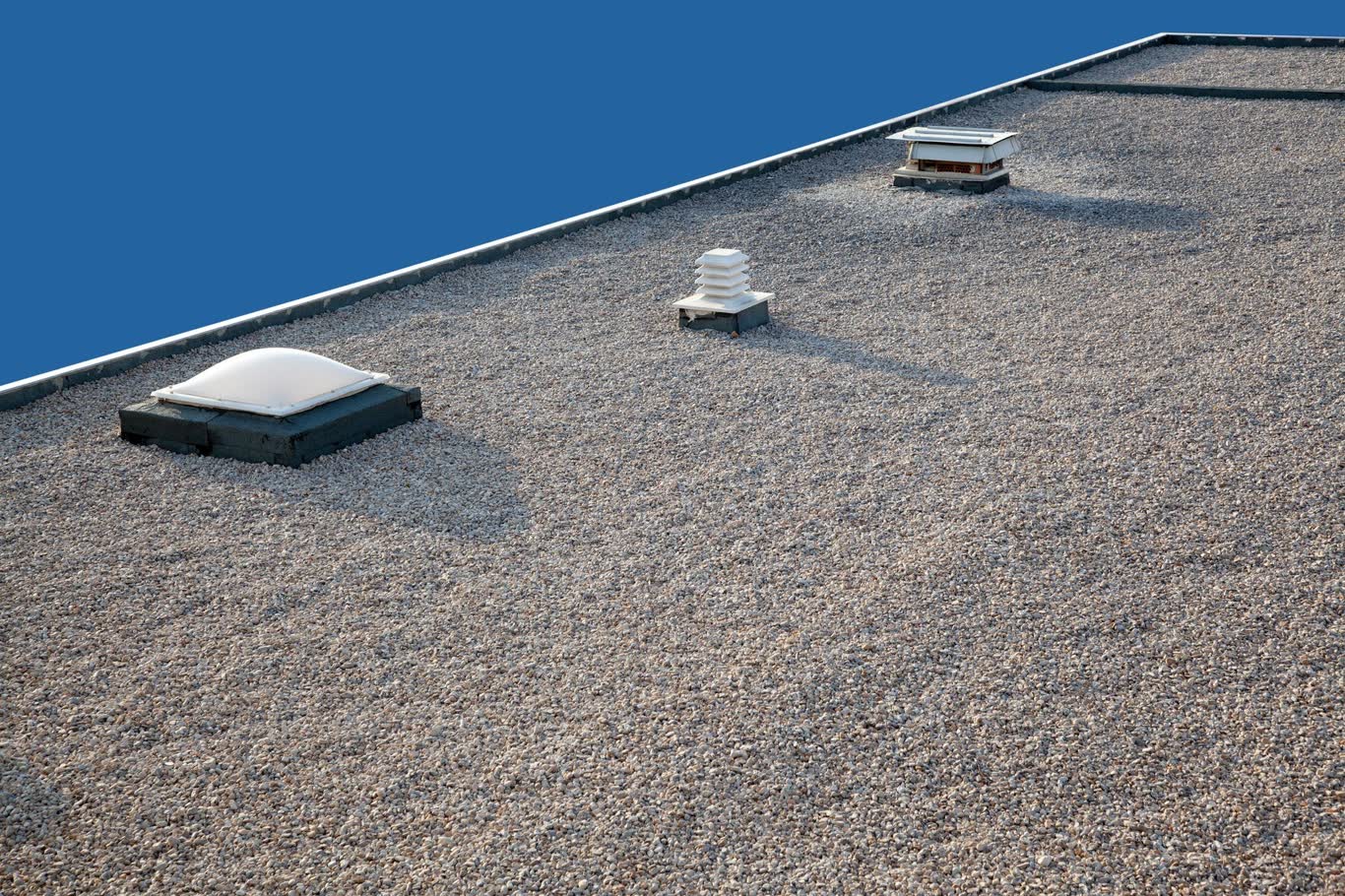
Most flat commercial roofs in Florida should be checked at least once a year, and some are better served by a check twice a year. Dalton Roofing describes an annual or semi-annual check, especially before hurricane season, as the way to catch clogged drains, lifting seams and failed flashing while they are still minor.
Which rhythm fits your building depends on the roof, the trees around it and how much foot traffic it sees. This guide walks through the choice step by step. If you want a pro to look at the roof itself, see our commercial roofing page for what we handle. Our post on what to expect at a commercial roof inspection covers the visit itself.
What does a flat-roof inspection look for?
A flat-roof inspection looks for the places where water can collect or get in. That means drains, seams, flashing, penetrations and any spot where the surface has changed.
A flat roof does not shed water the way a sloped roof does. Water has to leave through drains, scuppers and gutters, so anything that blocks them can turn a small problem into a leak. Here is what an inspector usually checks:
- Drains, scuppers and gutters for leaves, debris and standing water.
- Seams and laps for lifting, cracking or open edges.
- Flashing at walls, curbs and roof edges.
- Pipe, vent and equipment penetrations and their seals.
- The surface for blisters, punctures, worn spots and ponding.
- Rooftop units and anything else that has been added since the last visit.
Each of these is easy to fix when it is small. Each can lead to wet insulation and interior leaks when it is left alone.
When does one inspection a year make sense?
One inspection a year makes sense when the roof is in steady condition, has good drainage and few things happening on top of it. A yearly visit is a reasonable baseline for most flat roofs in Florida.
Choose a yearly schedule if these are mostly true:
- The roof is in good shape and has had no recent leaks.
- Drains are clear and there are few trees nearby.
- Few people or trades walk on the roof.
- The building holds nothing that is hurt by a small leak.
Timing matters as much as the count. Dalton lists routine commercial flat-roof inspections as An annual or semi-annual check, especially before hurricane season. If you only do one, plan it for late spring, so any repairs can be done before storm season starts.
When is a twice-a-year schedule worth it?
A twice-a-year schedule is worth it when the roof has more risk or more at stake. A second visit after hurricane season catches damage from storms and a season of heavy rain.
Consider two visits a year if any of these apply:
- The roof is older or has had repairs before.
- Trees drop leaves or debris onto it and clog the drains.
- Air handlers, vents or other equipment get regular service, so people walk on the membrane.
- Inside the building is something costly to lose, such as stock, records, food or equipment.
- The roof has ponding water after rain that does not drain in a day or so.
For a property manager with several buildings, a twice-yearly rhythm also keeps the schedule simple. One visit goes before hurricane season and one goes after. Owners in Port St. Lucie, Fort Pierce, Stuart and Jupiter often plan this way because the storm season is so well known.
Why does timing before hurricane season matter?
Timing matters because a roof with a small weak spot is more likely to fail in high wind and heavy rain. Fixing a lifting seam or a loose flashing in spring costs less trouble than finding it after a storm.
A pre-season check is the time to make sure drains are open, seams are tight and the edges are secure. Wind gets under loose edges first. Water finds open seams and weak flashing first. A roofer who has already seen the roof can also tell you quickly what changed.
After a named storm passes, a quick check for damage is worth doing even if you are on a yearly schedule. Look at debris, standing water and anything that moved. If you see something that looks wrong, call before the next rain.
Dalton offers a free roof inspection with a written summary and no obligation, and we also provide 24/7 storm and emergency response. We serve St. Lucie, Martin, Palm Beach and Indian River Counties and handle shingle, tile, metal and flat roofs. If a storm leaves your building with a leak at night, you can call us any time.
How do you keep the reports in one place?
Keep every inspection summary in a single folder for each building, with the date, the findings and what was done. A simple record makes the next visit faster and shows how the roof is changing.
Write down a few basics each time:
- The date of the visit and who did it.
- What was found, with photos if you have them.
- What was repaired and what was left to watch.
- When the next inspection is due.
A written summary helps when you plan a budget, talk to a property manager or sell the building. It also helps you see whether a spot keeps coming back. If the same drain clogs every spring, that points to a trimming or a design fix. Our post on roof inspections explains what a written report should cover.
Keep the folder where the next person can find it. If a manager or owner changes, the records should not leave with them.
How do you choose between the two?
Choose once a year if the roof is sound, clear and quiet. Choose twice a year if the roof is older, shaded, busy or protecting something costly. If you are not sure, start with two visits and drop to one after a clean year.
If your building is in Port St. Lucie, Fort Pierce or anywhere along the Treasure Coast, call Dalton Roofing for a free roof inspection with a written summary. We will tell you what we find and what schedule fits. Call us at (561) 662-6622.
Frequently Asked Questions
How often should a flat commercial roof be inspected in Florida?
At least once a year. Dalton describes an annual or semi-annual check, especially before hurricane season. Older roofs, shaded roofs and roofs with rooftop equipment often fit a twice-a-year schedule better.
Should I inspect my flat roof after a hurricane or big storm?
Yes. Look for debris, standing water, loose edges and anything that moved. If you spot damage or a leak, call a roofer right away rather than waiting for the next scheduled visit.
Does Dalton Roofing inspect flat roofs?
Yes. Dalton handles shingle, tile, metal and flat roofs for residential and commercial properties. The inspection is free and comes with a written summary and no obligation.
Can I do a flat roof check myself between visits?
You can look from a safe spot for clogged drains, standing water and debris. Do not walk on a roof you are unsure about. A roofer should check seams, flashing and the surface up close.