
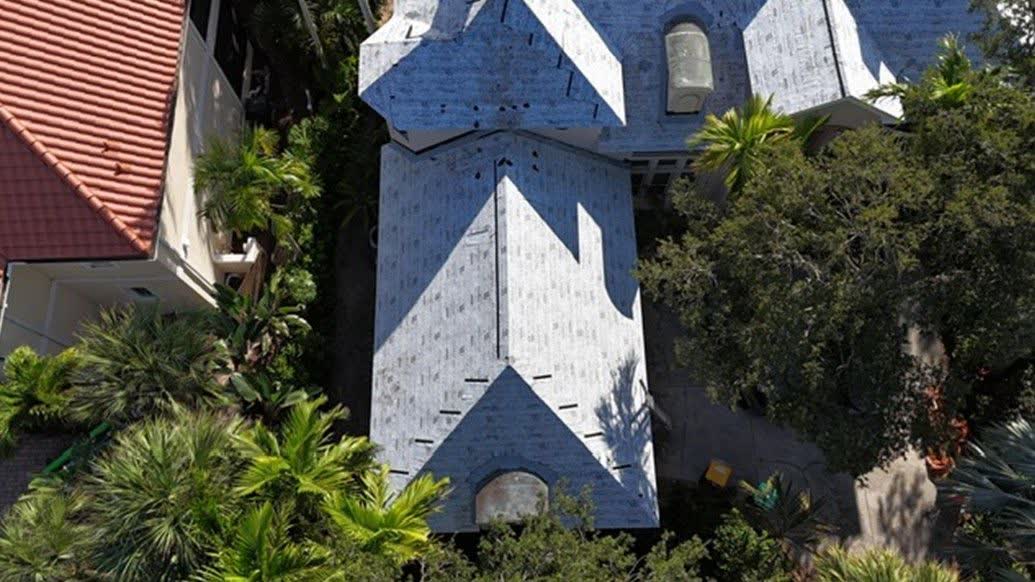
What Determines the Cost of a Roof Replacement in Florida?
There is no single price tag for a Florida roof — the total moves based on the material you choose, the size and shape of your roof, the condition of what's underneath the old covering, and code-required upgrades triggered by the work. Asphalt shingle sits at the affordable end of the range; tile and standing-seam metal sit at the premium end because they cost more to install but last far longer.
One point that trips up many homeowners: your roof area is larger than your home's floor area. A typical single-family house has meaningfully more roof surface than living-space square footage once slope and overhangs are counted, so an estimate built off your home's listed floor plan tends to run low. Roofers price by the "square" (100 square feet of roof area), which is why an accurate measurement matters before any number means much.
Every range on this page is general market information — not a quote from Dalton Roofing. The only way to know what your specific roof will cost is a measured, written estimate. You can learn more about our roof replacement process or request a free assessment, and we'll walk you through an itemized breakdown with no obligation.
How Does Roofing Material Change the Price?
Material is the single largest factor in your total. The table below compares the most common Florida roofing materials by relative installed cost, expected lifespan, and the trade-offs that matter most in our heat, sun, and storm exposure.
| Material | Relative Installed Cost | Expected Lifespan | Notes for Florida |
|---|---|---|---|
| Asphalt / architectural shingle | Lowest of the common options | 15–25 years | Most popular and lowest up-front cost; choose a high wind-rated shingle for coastal exposure. |
| Standing-seam metal | Highest of the common options | 40–70 years | Excellent wind resistance and energy efficiency; higher up-front cost, long service life. |
| Concrete tile | Mid–high | 40+ years | Durable in heat and salt air; heavy, so the structure may need a load check. |
| Clay tile | Highest of the common options | 50+ years | Premium look and longevity; highest material cost of the common options. |
| Flat / low-slope (TPO, modified bitumen) | Low–mid, priced by area | 15–30 years | Common on commercial buildings and some Florida homes; priced by roof area and access. |
Relative cost tiers are general 2026 market comparisons, not a Dalton Roofing quote. Actual pricing varies by roof complexity, material grade, decking condition, and current material costs. Request a written estimate for an exact figure.
Does Roof Size Affect the Total Cost?
Yes — directly. A larger roof area means more material, more labor hours, and more disposal cost for the old covering. Roofing is measured and priced in "squares" (100 square feet of roof area), so the table below shows roughly how roof area translates to squares as a reference point when comparing quotes.
| Approx. Roof Area | Approx. "Squares" | Relative Scope |
|---|---|---|
| 1,500 sq ft | 15 | Smaller single-story home |
| 2,000 sq ft | 20 | Typical single-family home |
| 2,500 sq ft | 25 | Larger single-family home |
| 3,000+ sq ft | 30+ | Large home or multi-level roof |
What Other Factors Change the Total Cost?
Two homes on the same street can get very different quotes for what looks like the same job. Here are the factors that move the number most:
- Roof pitch and complexity. A steep or multi-level roof is slower and riskier to work on, which raises labor cost. Skylights, chimneys, solar arrays, and multiple valleys add more.
- Tear-off and layers. Removing an existing roof — especially two layers, or tile — adds labor and disposal cost. Florida generally does not allow stacking new shingles over old in a full replacement.
- Decking condition. Once the old covering is off, any rotted or delaminated plywood has to be replaced before the new roof goes on. This is the most common source of a price that changes mid-project, because it can't always be seen beforehand.
- Permits and inspections. A roof replacement in Florida requires a permit and a final inspection; fees vary by county and city.
- Code-required upgrades. Current code requires certain hardening measures on a re-roof, covered in the next section, which add cost but also strengthen the roof.
- Timing and demand. Prices and lead times rise after a major storm season, when demand spikes across the state.
Florida's 25% Roof Rule and Code-Required Upgrades
Part of the reason Florida roofs cost more than the national average is the building code. When a roof covering is removed and replaced, the current Florida Building Code requires a secondary water barrier — a sealed layer that keeps water out if the primary covering is breached — and the work must meet wind-uplift standards for our region. These measures add cost, but they are a major reason newer Florida roofs hold up better in storms.
You may have heard of the "25% rule." Under a 2022 state law (SB 4-D, Section 553.844(5), Florida Statutes), if your roof was built, repaired, or replaced in compliance with the 2007 Florida Building Code or any later edition, and 25 percent or more of it is being repaired or replaced, only the affected section must be brought up to current code — a full replacement is not automatically required. Roofs permitted under older codes may still trigger the original whole-roof rule. This matters for cost because it can determine whether a large repair forces a full re-roof. See our full breakdown of Florida's 25% roof rule.
Code interpretation depends on your roof's permit history and your local building department, so treat this as general information rather than a ruling on your home. A licensed contractor can tell you which version applies. You can also verify any contractor's license through the Florida Department of Business & Professional Regulation before signing anything.
Will Insurance or a State Grant Help Offset the Cost?
A new roof is a large investment, but it does not always come entirely out of pocket. A few avenues are worth understanding before you commit to a plan.
Homeowners insurance. Whether your policy helps depends on the cause of the damage and the age and condition of your roof. Many Florida insurers now limit coverage on older roofs or pay actual cash value (the depreciated value) rather than full replacement cost, and roof age can affect whether a policy is offered at all. Damage from a covered event such as a hurricane may be reimbursable; routine wear and age generally are not. Always confirm the specifics with your carrier — this is general information, not insurance advice.
The My Safe Florida Home program. The state's My Safe Florida Home program offers a free wind-mitigation inspection and matching grants toward specific hurricane-hardening upgrades — such as improved roof-deck attachment, a secondary water barrier, roof-to-wall connections, and opening protection. It does not pay for a routine roof replacement, and funding is limited and awarded first-come, so check current status and eligibility on the program's site before counting on it.
Financing. For most homeowners, the practical path is financing the roof over time rather than paying the full amount at once. Dalton Roofing offers roofing financing options so you can move forward on a needed replacement without draining savings. We serve homeowners across the Treasure Coast and Palm Beach County, including Port St. Lucie and the surrounding communities.
The bottom line: a roof replacement in Florida is a real investment, but the right material and a properly permitted, code-compliant install protect both your home and its resale value for decades. The honest next step is a measured, written estimate — general ranges are a starting point, not a quote.